
Qingdao at Your Fingertips | From Tangqiu Fair to Woodblock New Year Pictures, Spend Half a Day on Jiaodong Craftsmen
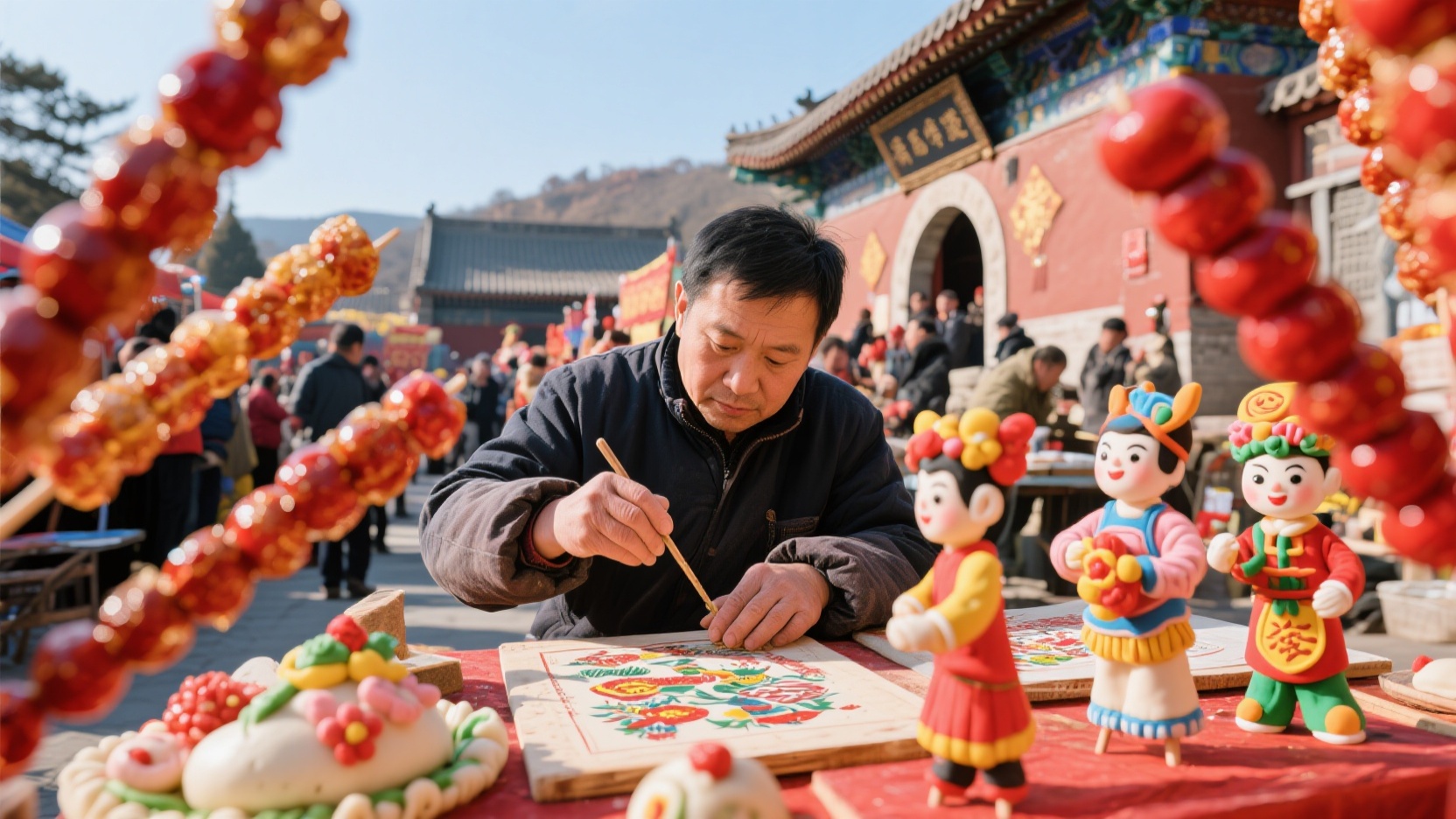
Qingdao's cultural experience extends beyond red-tiled roofs, green trees, and seaside resorts. To truly immerse yourself in Jiaodong life, festivals, folk customs, and intangible cultural heritage handicrafts offer a more solid entry point. This guide selects four engaging venues: Haiyun'an Sugar Ball Fair, Jimo Ancient City Liuqiang Opera and Folk Market, Pingdu Zongjiazhuang Woodblock New Year Paintings, Wanggezhuang Dough Sculptures, and Laixi Puppet Show. It emphasizes time, on-site activities, and hands-on steps, helping you dedicate half a day to "sitting down and experiencing life as a local."
Haiyun Temple Sugar Ball Fair: The sweetest intangible cultural heritage event during the first month of the lunar calendar.
Around the 16th day of the first lunar month each year, the Haiyun Temple area enters Qingdao's most concentrated folk custom period, which usually lasts five to seven days. The main street is lined with stalls selling candied hawthorn berries, but the core experience isn't "buying a skewer," but rather making them. The process involves selecting pitted hawthorns, skewering them in groups of three to five, and inserting bamboo skewers through the stem. Controlling the heat during the sugar boiling process is crucial; when small bubbles appear, quickly dip the skewer in sugar, gently rotate your wrist, and then place it on a stone slab or oilcloth to cool, resulting in a crisp, non-sticky sugar shell. The finished candied hawthorn berries can be taken home. During the same period, Jiaozhou Yangko, Liuqiang, and Maoqiang operas parade through the area at different times, peaking around 10:00 AM and 2:00 PM. Cultural background: Haiyun Temple was first built in the Ming Dynasty. Fishermen often prayed here before going to sea, and the "candied hawthorn berries," a homophone for "reunion" and "sweetness," gradually evolved from offerings into the main attraction of the temple fair. It's recommended to watch the parades first, then try the hands-on experience, avoiding the midday rush.
Jimo Ancient City: Listen to a Liuqiang opera performance, then stroll through the intangible cultural heritage market.
Jimo Ancient City combines Liuqiang opera with Jiaodong handicrafts, with the busiest period being from the Spring Festival to the Lantern Festival. Weekends often feature excerpts from operas and markets. Stages are mostly set up on the main street of the ancient city, and a brief introduction is given before each Liuqiang performance. Experience: No need to understand the Jimo dialect. First, listen to classic excerpts from "Zhao Meirong Watching Lanterns" or "Wang Hanxi Borrowing New Year's Greetings," paying attention to the "oh ho ho" interjections and the rhythm of the clapper. After the performance, you can visit market stalls to experience Jimo lace weaving or Jiaodong kezi carving. Lace is made by wrapping cotton thread around the fingers and crocheting, suitable for beginners; kezi are wooden molds used to make Jiaodong pasta "kahua," which can be carved with auspicious patterns and taken home. Cultural Story: Liuqiang opera evolved from the folk storytelling "Ben Zhou Gu" of western Jimo, sung in the local dialect, and is known as the "Flower of Jiaodong." It was once entertainment in the fields and still retains its high-pitched and simple vocal style on festival stages. It is recommended to go in the afternoon, watch the show first and then browse the market, as the lighting and performance schedule will be more compact.
Pingdu Zongjiazhuang woodblock New Year paintings: Ink application, paper preparation, and color matching
Zongjiazhuang in Pingdu is one of the main production areas of Jiaodong woodblock New Year paintings. Experiences are concentrated from the twelfth lunar month to the first lunar month, with some inheritors' studios also offering experiences outside of festival periods. The process: First, select an old woodblock, often depicting themes like "Abundant Harvest Year After Year," "Qilin Bringing a Child," or "Liu Hai Playing with the Golden Toad." Use a palm brush to apply ink evenly to the block, then place Xuan paper on it and press it outwards from the center using a printing press. When changing colors, align the ink lines and overprint the red, yellow, and green colors. The finished product can be dried and taken away. The wrist pressure is crucial: too little ink will break the lines, too much ink will smudge the block. Cultural background: Pingdu New Year paintings originated in the Qing Dynasty, influenced by Yangjiabu in Weifang, but with bolder lines and more vibrant colors like bright red and emerald green. The themes lean towards fishing, farming, and blessings. In earlier times, after the "Farewell to the Kitchen God" ceremony on the 23rd day of the twelfth lunar month, Jiaodong farmers would paste New Year paintings on the kang (heated brick bed), granaries, and fishing boats, serving both as decoration and protection. Each experience takes about forty minutes, and it is recommended to schedule it on the same day as a local dough sculpting experience.
Wanggezhuang Clay Sculpture and Laixi Puppetry: A Relay of Intangible Cultural Heritage from Steamer to Stage
Wanggezhuang dough figurines and Laixi puppet shows are suitable as supplementary experiences outside of festivals. Wanggezhuang steamed buns are representative of Laoshan dough figurines; the hands-on experience includes kneading the dough, degassing, shaping, and applying red pigment. Common shapes include peaches, ingots, and fish. Steaming takes about forty minutes, and while waiting, you can listen to the inheritors explain the fishermen's offering table customs: the faster the buns "rise," the more auspicious it is for safe voyages and prosperous families. Laixi puppet shows often feature excerpts from "Journey to the West" in festival performances. Actors use three wooden sticks to manipulate the puppets to turn, raise their hands, and kneel. The hands-on experience can start with holding the puppet with one hand, learning to use wrist movements to make the puppet walk. Cultural background: Laixi has unearthed a large Western Han Dynasty wooden puppet and is known as the "Hometown of Puppetry." Puppet shows combine rod puppetry with Jiaodong folk tunes. If time is limited, you can choose one: dough figurines are more static handcrafts, while puppet shows are more dynamic performances; both allow visitors to immerse themselves in the "local" experience within half an hour to an hour.
If you only have one day in Qingdao, prioritize the Haiyun'an Sugar Ball Fair and Jimo Ancient City during the first month of the lunar calendar. If you miss the festival, you can flexibly combine Pingdu New Year paintings, Wanggezhuang dough figurines, and Laixi puppet shows. What these four experiences have in common is that they don't rely on narration; you have to sit down and participate or watch a performance to truly experience the folk customs, transforming them from "activities" into "memories." Allocating three to four hours for these crafts that require waiting and repetition will allow you to understand Qingdao better than simply checking off ten tourist attractions.