
Don't go to Sun Yat-sen Mausoleum in Nanjing | Local's firsthand experience: a four-day in-depth tour with no entrance fee, don't be fooled by travel guides.
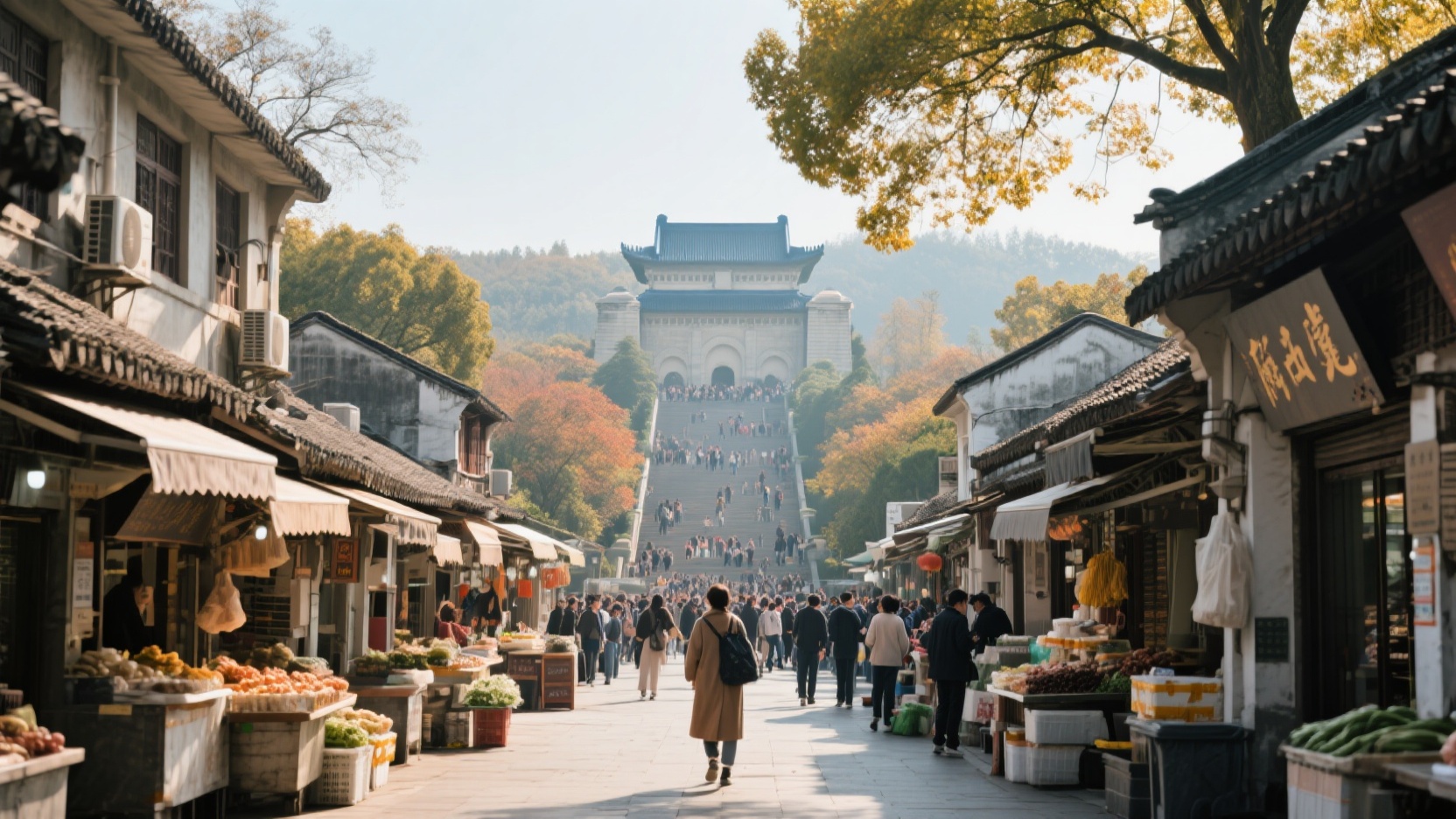
Don't be fooled by the "must-see in Nanjing: Sun Yat-sen Mausoleum" slogan. I've lived in this city for six years and led over twenty groups of friends from other places. My most sincere advice is: don't go to any of the major paid tourist attractions. The truly charming parts of Nanjing are in the alleys, farmers' markets, university backstreets, and old factories along the river, and they're basically free.
This four-day itinerary doesn't involve spending a single penny on entrance fees; the entire trip is done by public transport, subway, shared bikes, and walking. It's not suitable for those who want to visit three attractions in a single day, but if you're willing to savor Nanjing like a bowl of noodles, this itinerary is perfect for you.
Day 1: Old City South Alleys: Turn off navigation and walk under the clotheslines.
The old city south of Nanjing, especially the Laomenxi area, still retains its dense network of narrow alleys and clotheslines hanging overhead. Turning into the market near Sanqiba Lane, GPS navigation becomes largely useless, but your sense of direction is taken over by the aroma of vegetables, the smell of coal stoves, and the clatter of mahjong tiles. Diaoyutai, Yingao Lane, Yinma Lane, and Hehuatang—this area has no entrance fee and no uniformly planned "Instagrammable" signs.
As you walk further in, you'll see elderly people sitting on their doorsteps picking vegetables, and cats crouching motionless on the roof tiles. While Xiaoxihu and Dayoufang Alleys have been renovated and have seen the addition of some small shops, turning into any of the unnamed side alleys nearby still reveals the everyday life of old Nanjing. Don't rush to take photos; first, strike up a conversation with the auntie sitting at the alley entrance, and she'll tell you which shop's ducks are freshly braised today.
I took the subway to Sanshan Street that day and then walked the rest of the way. I ate a bowl of wontons when I was hungry and bought a cup of osmanthus rice wine when I was thirsty. In the evening, I walked from Xinfu River to the outside of Zhonghua Gate Castle. I didn't buy a ticket to go up the city wall, but strolled along Donggan Lane at the foot of the city wall. The route taken by locals to walk their dogs was more comfortable than the route on the city wall.
Day 2: Markets and Communities: Don't fixate on Ke Lane, Nanhu and Nengren Lane are the real local eateries.
Many people rush to Kexiang for their first meal in Nanjing, but locals have long since shifted their focus to Nanhu and Nengrenli. Kexiang isn't bad, but it's too crowded and touristy. The rice cakes you get after queuing for an hour can be found in a more traditional version just around the corner in Nengrenli. The fried skewers, casseroles, and roast duck shops on Nanhu East Road are the true foundation of the local food scene.
The entrance to Nengrenli Farmers Market gets bustling as early as seven or eight in the morning, with more people buying groceries than taking photos. You don't have to buy groceries, but you should definitely take a stroll around the nearby steamed bun stall, chestnut cake stand, and noodle shop. The owners will ask you, "Want some chili oil?"—a phrase more accurate than any audio guide. Eating alone is the easiest option; order small portions, try a few different things, and you can have a decent meal for just over ten dollars per person.
The afternoons at Nanhu are magical. The sounds of shuffling cards drift from the card rooms downstairs in the old residential buildings, while coffee shops and bicycle repair stalls coexist harmoniously nearby. I recommend riding a shared bicycle from Nanhu to the outer ring road of Mochou Lake, avoiding the toll areas. Just along the section between Shuiximen Street and Changhong Road, you can see a very authentic glimpse of daily life in Jianye District.
Day 3: University Area: The plane tree shadows on Hankou Road understand Nanjing better than the steps of Sun Yat-sen Mausoleum.
The areas surrounding universities in Nanjing, especially the Gulou area, are perhaps the most underrated free walking areas in the country. Even if you don't enter Nanjing University's campus, the streets of Hankou Road, Qingdao Road, Jinyin Street, and Shanghai Road combined offer enough space to keep you walking for an afternoon. The shade of the plane trees is more comfortable than the steps of Sun Yat-sen Mausoleum, and secondhand bookstores, record stores, and small cafes are nestled among residential buildings.
The old bookstore on Hankou Road, which has been open for many years, has a quiet owner, but you can always find a Nanjing map from the 1980s among the books. Outside the bakery on Qingdao Road, students and local residents often queue together. Prices here are kept stable because of the student population; for a small amount of money, you can sit by the window and watch the plane tree leaves fall.
Walking near Xiqiao, you can see a typical skyline of old Nanjing neighborhoods, with the Zifeng Tower standing at the end of the alley in the evening. The Republican-era mansions along Yihe Road and Luojia Road also don't require an entrance fee, but they are so quiet that they don't feel like tourist attractions. Many courtyards are closed, and just looking at the walls and plane trees is enough to make it worthwhile.
Day 4: Transformation of the Old Industrial Area: Rust, River Breeze, and Ferries—These are the hallmarks of Xiaguan.
When it comes to renovating old industrial areas in Nanjing, the most worthwhile places to visit aren't those with an overly strong "creative and cultural park" feel, but rather the old factory areas that still retain a touch of wildness. The Chenguang 1865 Creative Industrial Park, formerly the Jinling Manufacturing Bureau, offers free entry, and the old factory buildings' iron beams and sloping roofs haven't been overly artificially renovated. The Guochuang Park area is more dominated by design companies and exhibitions, but the old residential areas of southern Nanjing still connect to the park.
I'd recommend Xiaguan. Take the subway to Longjiang at noon, then ride a shared bike along the riverbank towards Zhongshan Wharf. The ferry from Zhongshan Wharf to Pukou Wharf is cheap; just use your public transport card. The boat moves slowly, and the breeze on the Yangtze River will wash away all your worries. Although you can't go inside the old Pukou Railway Station building, the station square and the riverside area are enough to evoke the scenes from the film "The Back View."
In the evening, we took the ferry back and watched the sunset over the river, elongating the silhouettes of Yuejiang Tower and the Yangtze River Bridge. Several old train carriages were parked in the Xiaguan Train Theme Park; admission was free, and children and the elderly strolled around there. Industrial heritage shouldn't be fenced off and charged for; it's embedded in the daily lives of locals. This zero-cost experience is what makes Nanjing truly unique.
What season is best to visit? Don't rush for cherry blossoms and maple leaves in spring and autumn; you'll find peace and quiet in winter and summer.
Many people ask what the best season is to visit Nanjing, and the standard answer is spring and autumn. But I'd like to add: if you come in spring or autumn, you should avoid the obsession with "flower viewing and leaf viewing." In spring, the cherry blossoms at Jiming Temple are packed with people, but at the same time, the weeping willows along the Xuanwu Lake ring road and under the Ming City Wall are just as popular, but far less crowded. In autumn, it takes two hours of traffic to see the maple leaves at Qixia Mountain; it's better to go to the sycamore-lined avenues along Beijing West Road and Yihe Road, or the reed marshes along the river, which don't even require an entrance fee.
Summer and winter actually offer a peaceful escape. On a sweltering summer morning, a stroll through the alleys near Laomendong reveals shops just opening before the heat sets in; a winter afternoon at Nanhu offers a casserole experience with condensation on the windows. The anxiety of traveling alone due to the season is a major concern, but Nanjing offers unique experiences in every season, free of charge.
In closing: Don't ask the locals if I didn't tell you.
1. Don't buy ducks at the entrance of scenic spots. Locals buy ducks from braised food shops at the entrance of their residential areas. Vacuum-packed ducks are not freshly chopped.
2. Taking the subway is more reliable than taking a taxi. You can ride shared bikes between attractions in the old town, but be aware of "no-parking zones," especially near Sun Yat-sen Mausoleum.
3. When entering old alleys alone, do not wear conspicuous cameras. It is safer to take pictures with your mobile phone and will not disturb the residents.
4. Don't blindly follow "trendy markets". For semi-local places like Nengrenli, Nanhu, and Sanqibaxiang, it's more comfortable to go during off-peak hours, and it's best to go in the morning.
5. When visiting Nanjing in spring or autumn, don't rush to see the cherry blossoms or maple leaves right away. First, check the crowds along Huanhu Road and Wutong District. Often, the alleys before 9 a.m. are the most popular spots.
6. No entrance fee does not mean no cost, but spending the entrance fee budget on food and transportation is closer to local life; a person can easily afford a few snacks a day plus ferry and bus fares within a hundred dollars.