
Eight Flavors of Nanjing Daily Life: From Black Rice in the Morning to Wonton at Night, Three Meals a Day for Nanjing Locals
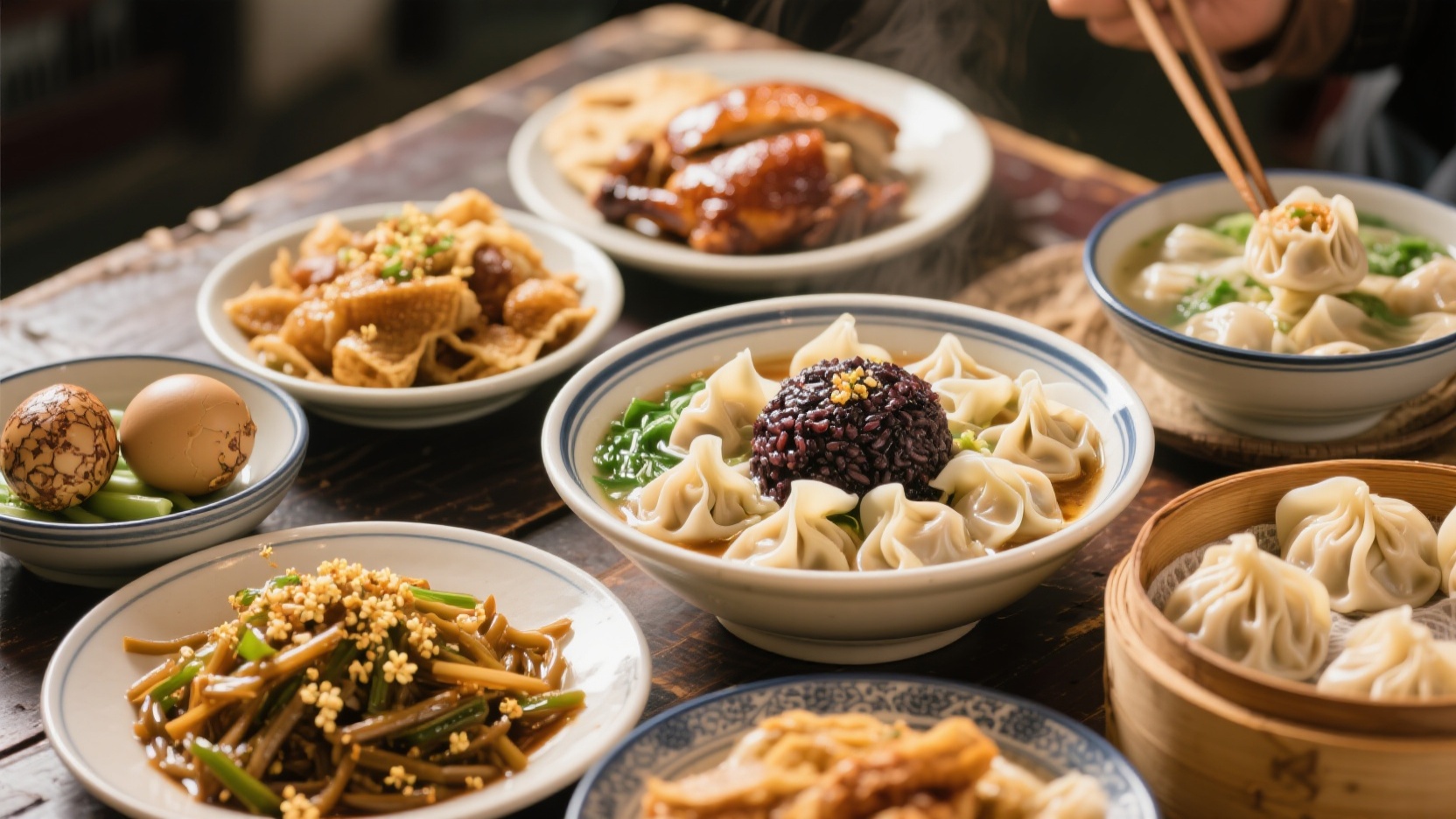
A day in Nanjing begins with a bowl of black glutinous rice and ends with a bowl of wood-fired wontons late at night. Tourists often focus on duck blood vermicelli soup and salted duck, but what truly reflects the lives of locals is a timeline of everyday street food eaten according to three meals and snacks.
Morning: Black rice balls and small wontons
Black glutinous rice balls are a common start to the morning for many students and office workers in Nanjing. The glutinous rice is soaked overnight in the juice extracted from the leaves of the black glutinous rice tree. After steaming, it turns a glossy black color and carries a fresh, herbal aroma. The vendor spreads the hot rice on a gauze cloth, then, according to the customer's choice, wraps it with fried dough sticks, pork floss, salted egg yolk, or sugar and sesame seeds, before shaping it into a firm rice ball. The fried dough sticks should be crispy, offering a chewy exterior and a crunchy interior; both sweet and savory options are available. It was once a quick and easy breakfast staple in the old streets and alleys of southern Nanjing, and it remains a convenient carbohydrate supplement for locals during the morning rush hour.
Black rice balls are often paired with a bowl of small wontons. Nanjing locals are used to saying "drinking wontons" because the wrappers are thin and the filling is small, with the broth being more important than the filling. The bowl is filled with lard, dried shrimp, chopped pickled vegetables, garlic, and salt; boiling water is poured over it, and then the cooked wontons are added. Customers add a spoonful of chili oil and drink it all, the broth and all, a spicy and refreshing experience. Wonton stalls are always steaming hot in the early morning; the dry and wet combination of wontons and black rice balls forms the most common breakfast pairing in old Nanjing.
Lunch: Pig skin noodles and Nanjing roast duck
At lunchtime in Nanjing, the focus is on simple noodles, especially a bowl of pork skin noodles with more toppings than noodles. Pork skin is made by scraping off excess fat, drying it, deep-frying it, soaking it in water, and then cutting it into thin strips, its pores absorbing the broth. The noodle pot is made with a bone broth base, and pork skin, shredded pork, pork liver, sausage, eggs, greens, wood ear mushrooms, and pickled mustard greens are cooked together, keeping the noodles slightly firm. When served, it's a large bowlful, with a bright red broth and chili oil floating on the surface. Nanjing people don't care about fancy presentation when eating pork skin noodles; they value the generous toppings, the abundant broth, and the pungent noodles. A single bite can yield seven or eight different side dishes, making it the most satisfying lunchtime treat.
A common accompaniment to noodles or rice is Nanjing roast duck from street-side braised food stalls. Unlike Peking duck, it's not wrapped in pancakes or dipped in sauce. Instead, it's roasted in a closed oven, chopped into pieces, and then drizzled with a bag of warm, savory-sweet braising liquid. The duck skin is glossy red, and the meat is tender and juicy. The braising liquid contains soy sauce, sugar, spices, and the duck's own drippings. Nanjing locals often "chop up a duck" on their way home from get off work, packing half a breast or hind leg into a box, and then directly pouring the braising liquid over it and serving it at home. It's not just a dish, but also the most convenient and presentable everyday meat dish on the family table.
Afternoon tea: Osmanthus-flavored taro sprouts and plum blossom cake
Around three or four in the afternoon, it's dessert time in old Nanjing. Osmanthus-flavored taro soup is a traditional sweet soup. Small taro is steamed, peeled, and then simmered with lotus root starch and brown sugar, slowly stirred until it reaches a thick, smooth consistency. Dried osmanthus flowers are sprinkled on top before serving. The taro is soft and glutinous, the lotus root starch is smooth, and the fragrance of osmanthus floats above the sweetness. It typically appears most frequently in autumn and winter, serving as both an afternoon snack and a dessert soup to conclude a banquet. For locals, a bowl of taro soup is more in line with the Nanjing spirit than coffee or cake.
Equally common as sweet taro seedlings is plum blossom cake. Glutinous rice batter is poured into a plum blossom-shaped iron mold, filled with red bean paste, purple sweet potato, or sesame sugar filling, and topped with small glutinous rice balls, red dates, and raisins. It's then baked until the bottom is crispy. When you buy one and hold it in your hand, you must take small bites, first touching the soft, chewy surface, then the crispy bottom, and finally the flowing, hot filling. It's a street-side snack, sweet but not cloying, and a taste of after-school life for many Nanjing residents.
Midnight Diner: Wood-fired Wontons and Live Eggs
In Nanjing late at night, the true star of the street food scene is wood-fired wontons. A small stove on a tricycle burns with firewood, water boils in an iron pot, and wontons are made and cooked to order. The broth is simple: dried shrimp, seaweed, pickled mustard greens, lard, and chopped scallions, poured into noodle soup, and topped with a spoonful of chili oil. Late-night taxi drivers, young people finishing their night shifts, and longtime residents from the neighborhood gather around small roadside tables to eat and chat. It's not about thin wrappers and large fillings; it's about the warmth and aroma of the wood-fired food on the streets late at night—the very essence of Nanjing's nightlife.
Alongside firewood-cooked wontons, another common sight at late-night food stalls is "live pearls" (or "live pearl eggs"). These are eggs incubated for about twelve days, with tender egg whites and a fully formed embryo. You crack a small hole to drink the broth inside, then dip it in salt and pepper before eating. It's somewhere between egg and meat, offering a delicate flavor with the aroma of egg and the freshness of meat. Locals in Nanjing enjoy it as a snack with drinks or a late-night treat, and it's especially common late at night. For outsiders, eating live pearl eggs might require a bit of courage, but it represents the most authentic aspect of Nanjing's street food scene.
From the streets to the alleys, you can eat your way to understand this city in a day, experiencing the daily routine of Nanjing people.