
Nanchang Limited Edition Flavors | My Personally Tested List After Four Trips Based on the Four Seasons (with Tips to Avoid Pitfalls)
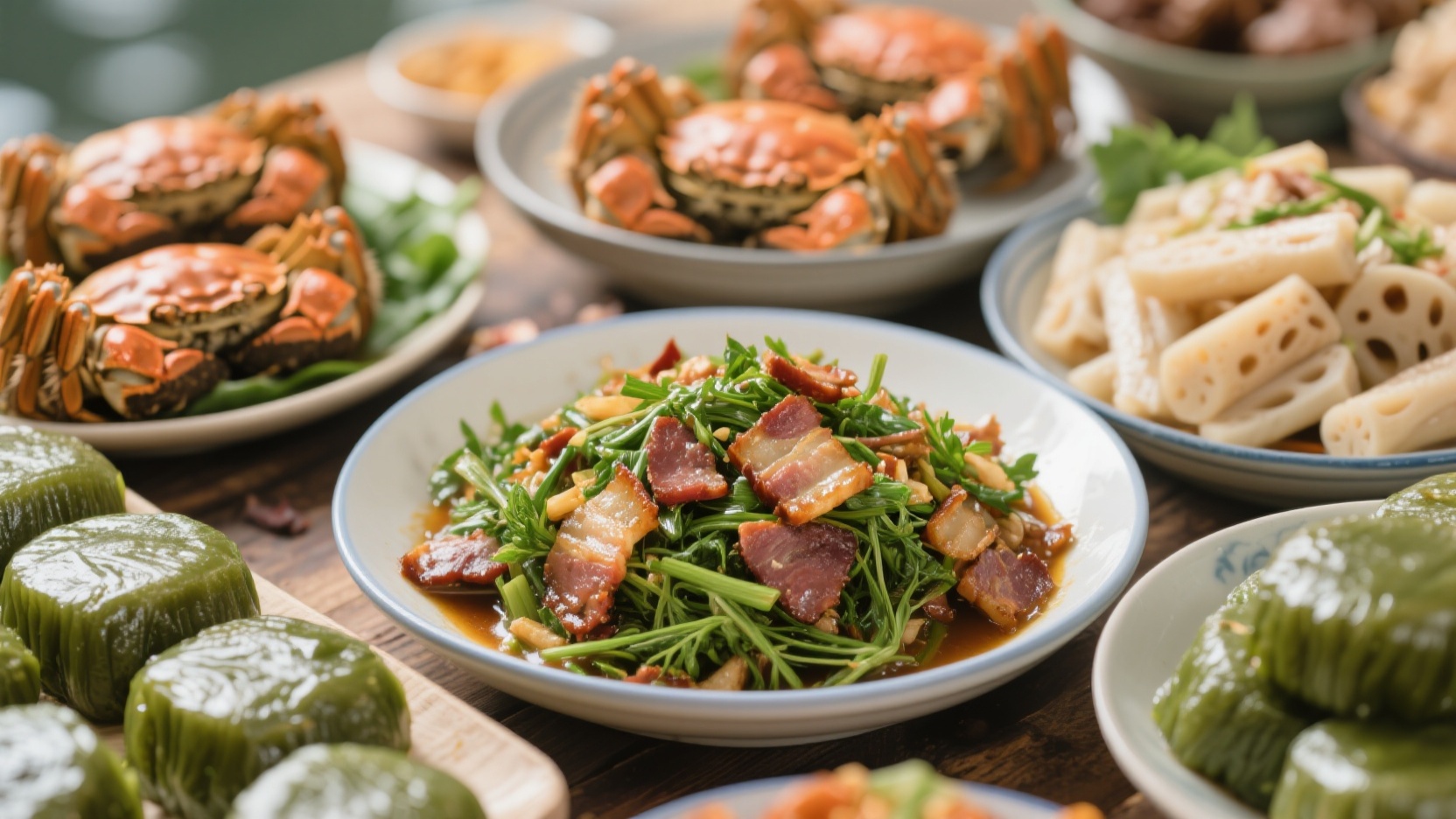
Having visited Nanchang four times, coinciding with the Qingming Festival, Lesser Heat, Autumn Equinox, and Winter Solstice, I'm increasingly convinced of one thing: Nanchang's truly captivating flavors are mostly hidden within the seasonal calendar, not on the signs of trendy restaurants. On my first visit, I also tried the mixed rice noodles and clay pot soup, but later, a woman picking mugwort at the Dashiyuan morning market reminded me: "Mugwort before Qingming is just grass after the season." So I decided to try all the seasonal limited-edition dishes, repeatedly verifying their flavors with both elderly people and children. The following list only includes items "available only during this time of year," suitable for seasonal travel and families.
Spring | Around Qingming Festival: The tenderness of stir-fried water chestnut with cured pork and Qingming cake
Stir-fried water chestnut with cured pork is the first taste of spring in Nanchang. The wild water chestnut, growing on the mudflats of Poyang Lake, produces tender stems only a hand's length long from the second month of the lunar calendar until the Qingming Festival. These stems are fragrant and finely fibrous, turning woody after Qingming and chewing like grass. Locals insist on using only the tender stems, pairing them with cured pork dried after the winter solstice. The pork fat is rendered in a wok, then stir-fried quickly over high heat, bringing out the wild aroma of the water chestnut. It's not blanched or thickened with cornstarch; the dish should be glossy with oil and served with white rice—enough to make you want to eat two bowls. Many restaurants outside the area use chrysanthemum greens or cultivated water chestnut instead; look for those with purplish-red stems and thin, needle-like stalks to be authentic. This dish is almost universally praised when brought to elders; it's mild, not spicy, and has the unique freshness of spring.
Don't miss the Qingming cakes made around the same time. In the Wanli and Anyi areas of Nanchang, the mugwort is at its tenderest before Qingming. The juice is extracted and kneaded into glutinous rice flour, then filled with savory fillings of cured meat, bamboo shoots, and dried tofu, or sweet fillings of sesame, sugar, and peanuts. They are then steamed until they turn a glossy green. Locals bring a basket of these to the graves. They are chewy even when eaten cold, and children especially love the sweet ones. A word of caution: some chain stores in the city use wheatgrass juice for dyeing and re-steam the frozen dough, resulting in a sticky and bitter texture. It's best to go to the morning market and find stalls that make and steam the cakes fresh. If you see dark green mugwort fibers in the dough, it means they haven't cut corners.
Summer | From Lesser Fullness to Lesser Heat: A Window to the Crisp Sweetness of Lotus Root Shoots and Fresh Lotus Seeds
Lotus root shoots are a hidden gem in Nanchang's summer. From the Lesser Fullness of Grain (Xiaoman) to the Summer Solstice, the lotus root shoots from ponds around Nanchang and the Poyang Lake wetlands are at their tenderest, snow-white, slender, and long like "dragon whiskers," bursting with juice at the slightest touch. Local street food stalls prepare them simply: slice them diagonally, toss them with pickled peppers, white vinegar, and a little sugar, or stir-fry them quickly with a spicy kick—just a few seconds in the pan, never overcooking, otherwise they'll lose their crispness. While travel guides rarely mention them, in summer, stepping into any Nanchang street food stall and having this dish on the table is essential to truly experiencing summer. Its tangy and spicy flavor is appetizing, perfect for those who lack appetite in the heat.
Around the time of Lesser Heat (Xiaoshu), vendors begin selling fresh lotus pods on the streets. The freshly peeled lotus seeds are eaten raw like fruit, sweet and refreshing, while the tender green lotus hearts can be steeped in water to make a cooling drink. Housewives in Nanchang often cook fresh white lotus seeds with lily bulbs and white fungus, adding only rock sugar and simmering over low heat until the lotus seeds are soft but not falling apart, retaining their texture. Once Greater Heat (Dashu) has passed, the lotus pods become tough and powdery, only suitable for drying, and their fresh, juicy texture is rarely seen again. Families with children can buy a few lotus pods and peel them as they walk, finding it more interesting than snacks for kids.
Autumn | From Autumn Equinox to Frost's Descent: The "Contrasting Limited Edition" of Junshan Lake Crab and Stir-fried Pomelo Peel
Junshan Lake hairy crabs are a highlight of Nanchang after the Autumn Equinox. The waters of Junshan Lake in Jinxian County are clear, giving the crab meat a naturally sweet flavor. From the Autumn Equinox to the Frost's Descent, the crab roe is at its firmest, and the male crab's paste gradually becomes creamy. Locals only know how to steam them: place them in cold water, belly up, with ginger slices and perilla leaves underneath, without adding salt or vinegar, just to enjoy their original flavor. The blogger personally tested that the period around the Frost's Descent is the best time to enjoy them, with female crabs full of roe and male crabs having creamy paste. Trying them too early may result in empty shells, especially around the Mid-Autumn Festival, when prices are high and the taste may not be right. If you're specifically going to eat crabs, it's recommended to go directly to the farmhouses by Junshan Lake in Jinxian County, where they are caught and steamed fresh, offering a better guarantee than restaurants in the city.
In the same season, people in Nanchang serve pomelo peels. Around the Mid-Autumn Festival, pomelos are abundant. After eating the fruit, the peel isn't thrown away; the outer layer is scraped off, leaving the white spongy layer. This is then sliced thinly, repeatedly salted, blanched to remove bitterness, and then stir-fried with millet peppers, fermented black beans, and minced garlic. It tastes like a sponge soaking up the sauce, slightly bitter with a sweet aftertaste, and is especially good with rice. This dish is rarely seen in restaurants, but it's a hidden autumn dish among Nanchang mothers. If the bitterness isn't completely removed, it can be difficult to swallow, so patience is required; it's not recommended for beginners to try at home. If you get this dish when visiting a local friend, it means you're considered one of their own.
Winter | From Winter Solstice to Spring Begins: The Festive Temperature of Fish in Fermented Rice Wine and Thick Soup
Around the winter solstice, families in Nanchang begin pickling grass carp to make fermented fish. The fish pieces are sun-dried until semi-dry, then pan-fried and buried in homemade glutinous rice wine lees. The mixture is sealed and fermented until around the time of the Lesser Cold solar term. The resulting fish is firm, with a sweet, wine-like aroma, and is excellent with congee or as a snack with alcohol. This dish is only available in winter because the low-temperature fermentation prevents it from turning sour; it spoils easily in summer. Vacuum-packed versions bought from other places are often too sweet and hard, lacking the freshness and juiciness of the locally made fermented fish. If you visit Nanchang in winter, keep an eye out for stalls selling loose fermented fish in the market. Try a piece on the spot before deciding, and it's best to consume it within a week of refrigeration.
Hugeng (糊羹) is the warmest, limited-time dish during the Spring Festival in Nanchang. From New Year's Eve to the Lantern Festival, Nanchang families make a large pot of "Fugeng" (福羹): chicken broth as a base, with tofu, dried bean curd sticks, shiitake mushrooms, carrots, water chestnuts, and minced meat all diced and thickened into a soup, symbolizing the gathering of blessings. A bowl of this on the morning of New Year's Day is both warming and filling. Why is it only available during this period? The ingredients are essentially leftovers from the New Year's feast, and after the festival, people prefer lighter fare, so it rarely appears on the table after the Lantern Festival. To experience the festive atmosphere of Nanchang, head to the breakfast stalls in the old streets any morning before the Lantern Festival; you're almost guaranteed to find it.
Blogger's Summary and Practical Tips
To truly understand the food scene of Nanchang, it's recommended to align your itinerary with the solar terms, rather than just focusing on trendy streets. Around Qingming Festival, enjoy water chestnut shoots and Qingming cakes; around Lesser Heat, eat lotus root shoots and fresh lotus seeds; around Frost's Descent, head to Junshan Lake for crabs; and between Winter Solstice and the Beginning of Spring, seek out fermented fish and thick soup. A few practical tips: The week before and after Qingming, Frost's Descent, and Winter Solstice is the safest time to visit; going too early or too late may result in disappointment; early morning markets are more reliable than trendy restaurants, especially for Qingming cakes and fermented fish; seasonal dishes often have a slightly bitter, medicinal, or fermented flavor, so avoid trying them on an empty stomach for the first time; if you want to try all four seasons' specialties in one trip, it's recommended to plan shorter trips for each season, which will be more satisfying than trying everything at once. Eating according to the solar terms is the right way to experience a city.