
A Day in the Life of Nanchang: From Mixed Rice Noodles and Clay Pot Soup to Late-Night Boiled Dishes
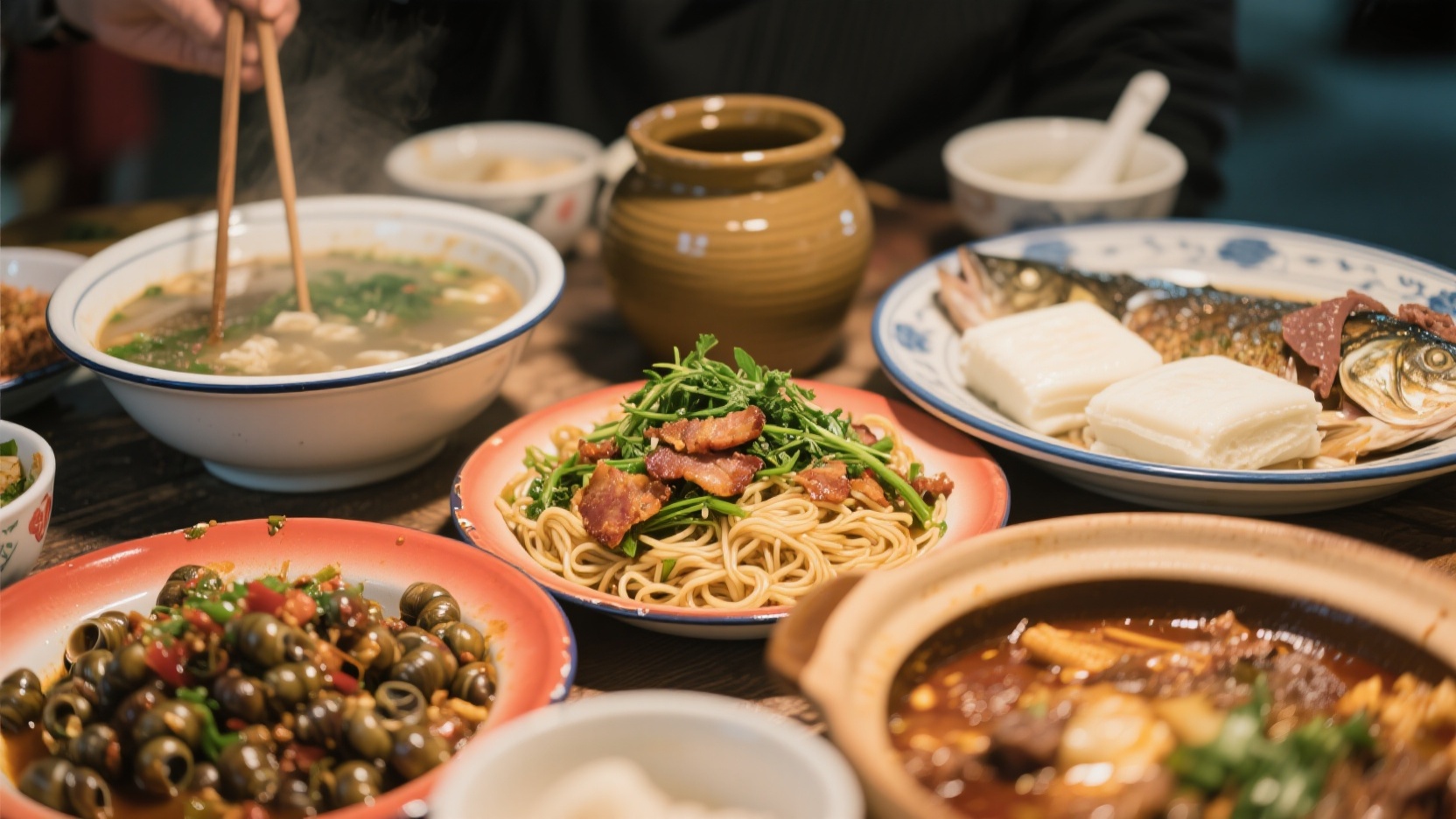
A day in Nanchang begins with the rising steam from a rice noodle shop. The produce of the Gan River and the character of this port city give the local dining table a clear temporal scale: rice noodles with earthenware pot soup in the morning, a couple of hot Jiangxi-style dishes at a local eatery at noon, traditional snacks in the afternoon, and late at night, a trip to a boiled dish stall or food stall in an alley. Below are eight representative dishes of Nanchang's daily diet, arranged chronologically.
Morning: Mixed rice noodles and earthenware pot soup
The rice noodles for Nanchang mixed rice noodles are mostly made from late-season indica rice, which is soaked, ground into a paste, steamed, cut into strips, and then shaped in cold water. When the stalls open in the early morning, the rice noodles are blanched in boiling water for a few seconds and then placed in an enamel bowl. While still hot, soy sauce, minced garlic, minced chili, dried radish, and peanuts are added, and finally, a spoonful of rendered lard is drizzled over the noodles. Customers mix it themselves; the rice noodles, coated with the sauce, are glossy, smooth, and chewy, with a savory base followed by spiciness, and the aroma of garlic and lard clinging to each noodle. These mixed rice noodle shops mostly operate only in the morning, gradually closing after 10 am. A classic accompaniment to the mixed rice noodles is a clay pot soup. Meat patties, eggs, or cuttlefish are placed in a small earthenware pot, water is added, the pot is sealed, and it is simmered for several hours in a large vat over charcoal. The meat patties are made from minced pork shoulder, without added starch, resulting in tender yet firm meat after simmering; the soup is clear, with a subtle meaty aroma and the scent of charcoal, and the flavor is the pure freshness of the broth. The strong flavor of rice noodles and the clear, refreshing taste of soup in a clay pot together form the basic taste structure of Nanchang breakfast.
Lunch: Stir-fried water chestnut with cured pork and Poyang Lake bighead carp head
During lunchtime, the most popular dish in local eateries is stir-fried water chestnut with cured pork. Water chestnut is a wild aquatic plant from the mudflats along the shores of Poyang Lake. Its tender stems are harvested and eaten every spring, then chopped and stir-fried with cured pork. The method involves first frying the cured pork to render its oil, then adding the water chestnut and stir-frying quickly over high heat until just cooked through. Water chestnut has no fibrous texture, is crisp and tender, and has a slightly bitter taste similar to mugwort or water celery; the cured pork, after being stir-fried, is salty, fragrant, and oily. Chewing both together, the oil coats the slightly bitter taste, and the aroma spreads throughout the mouth. Another common dish is Poyang Lake bighead carp head. The head of a bighead carp is split in half and topped with fermented bean paste, millet peppers, ginger, and garlic. Some restaurants steam it, while others braise it. The fish head has a thick layer of collagen, and the cheek meat is tender and smooth, easily falling off the bone with a gentle touch of chopsticks; the sauce is salty, savory, and slightly spicy, making it especially delicious with rice. These two dishes, one with a slightly bitter aftertaste and the other with a rich, savory sauce, both illustrate the essence of Nanchang cuisine: "salty, spicy, fresh, and fragrant, with skillful use of river delicacies."
Afternoon tea: White sugar cake and ox tongue
Around three or four in the afternoon, old Nanchang residents habitually stop by pastry stalls. Making white sugar cake is simple: glutinous rice flour is kneaded into long, thin strips, coiled into three circles, and deep-fried in warm oil until slightly golden. It's then immediately rolled in granulated sugar. The outer sugar granules partially melt upon heating, resulting in a slightly sweet, sandy texture, while the inside remains soft and chewy, with a lower sweetness than it appears. "Ox tongue" is another representative traditional Nanchang tea snack. It has no relation to ox tongues, but is named for its resemblance. It's made by mixing flour, sugar, and oil, rolling it into a tongue shape, deep-frying it until golden brown, and then sprinkling it with toasted sesame seeds. The ox tongue is crispy on the outside and soft on the inside, with a subtle fermented wine aroma when broken open, perfect for enjoying slowly with tea. These two snacks are small, offering more of a buffer time in the afternoon than a feeling of fullness. Many stalls still use old-fashioned deep-fryers, frying only a few portions at a time.
Late at night: Boiled and stir-fried snails from Nanchang
As night falls, the boiled food stalls hidden in the alleys of residential areas begin to steam. The difference between Nanchang boiled food and mala tang (spicy hot pot) is that the ingredients are soaked in a spicy broth for a long time before being cooked, rather than being blanched and served immediately. Commonly found items on the stalls include tofu puffs, lotus root balls, intestine knots, heart and lungs, chicken feet, and dried bean curd. After ordering, the ingredients are scooped out, cut into pieces, and topped with a spoonful of old broth, then garlic, chili, and dried radish are added according to taste. The tofu puffs soak up the broth and burst with juice when bitten; the intestine knots are made from knotted small intestines and braised, chewy yet crisp, with the spiciness slowly rising from the back of the tongue; the lotus root balls contain small pieces of lotus root. Next to the boiled food stalls, there is usually stir-fried snails. Locals choose green-shelled snails, trimming their tails to remove sand, then stir-frying them with millet peppers, minced garlic, perilla leaves, and cooking wine. Before serving, a light cornstarch slurry is added so the broth coats the snail shells. When eating, suck on the shell first, sautéing the perilla aroma and spiciness, then picking out the snail meat, which is springy and slightly chewy. Boiled and stir-fried snails form the basis of Nanchang's late-night eateries. People eat slowly and chat for a long time before the day truly comes to an end.
From the simple rice noodles and clay pot soup of early morning to the boiled and stir-fried snails of late night, the daily meals of Nanchang unfold along the seasons. While not overly elaborate in their presentation, they encapsulate the produce and spirit of the Gan River region in a single bowl. Beyond the three daily meals, these dishes also mark the rhythm and temperature of the streets and alleys. From one end of the street to the other, experience the city through its diverse cuisine in a single day.