
Avoid these 3 artsy spots in Nanchang | Locals' firsthand experience: The 5-kilometer stretch from Jiangfang to Wenjiao Road is the real daily routine for local artsy types.
If you spend an entire day in Nanchang at Wanshou Palace, 699 Art Zone, and a certain "trendy library," you'll most likely end up with a phone full of unusable photos, a mediocre cup of coffee, and white shoes that have been stepped on so badly you'll question your existence. This isn't an exaggeration; it's the honest truth I want to share after living here for over five years and traveling back and forth twenty times.
Nanchang is never short of "artsy photo spots," but the more popular a place is on travel guides, the less likely locals are to go. The reason is simple: crowded, unattractive photos, and lackluster content. This article won't list "must-see" spots; instead, it will first help you avoid the pitfalls and then give you a walking route that local artsy types would actually take. Approximately 5 kilometers long, it starts from Jiangfang 1953 and walks along Wenjiao Road, connecting old factories, community parks, independent bookstores, and farmers' markets, allowing you to see another side of Nanchang without spending a penny.
First, a dose of reality: three "artsy traps" even locals wouldn't fall into.
The first is the Wanshou Palace Historical and Cultural District. It's not that the location is bad, but it's no longer Nanchang. The renovated antique-style buildings, the nationwide-standard cultural and creative shops, and the ridiculously long queues for snacks mean locals only go there when visiting out-of-town relatives and friends. The real charm lies in the old alleyways next to it, but travel guides don't mention them.
The second is the 699 Cultural and Creative Park. The transformation of an old knitting factory sounds appealing, but stepping inside feels like entering a wedding photography studio. A single graffiti wall can have five or six groups of people queuing up, the coffee is expensive, and the exhibitions are dwindling. Locals in Nanchang don't consider it a regular haunt, let alone make a special trip there to see exhibitions.
The third is a certain "Instagrammable library." The tall bookshelves and floor-to-ceiling windows are indeed photogenic, but going on weekends means seeing a sea of heads, and any shot taken from a slightly lower angle is just staged. People who want to quietly flip through a few pages have long been advised by locals to go to an old bookstore.
The route that's truly worth taking is the Jiangfang-Qingshanhu-Wenjiao Road walking trail.
This route starts at Jiangfang 1953 on the north side of Qingshan Lake, runs south along the west bank of Qingshan Lake, passes through camphor forest and Xianshi Lake, and finally turns onto Wenjiao Road. It is about 5 kilometers long, taking an hour and a half to walk briskly, or an afternoon to stroll along slowly. It doesn't feel like a tourist attraction, but every step reflects the real daily life of the people of Nanchang.
It's best to visit in autumn and winter, especially when the plane trees turn yellow. You don't need to rush to see the sights; just set off before 10 a.m., have lunch near the camphor tree grove, and spend the afternoon browsing books on Wenjiao Road, where the lighting is perfect for taking photos.
Jiangfang 1953 and the old street of the factory area: Red brick chimneys are better than filters
The first stop was the old Jiangfang factory area. The red brick workshops, water towers, and chimneys are still there, and the shadows of the trees on the old walls are more pleasing to the eye than any graffiti wall. Why it's worth stopping for 10 minutes: This is the raw evidence of Nanchang's industrial history. It's not fenced off and there are no entrance fees or signs for "best photo spot."
The camera position is located in the southeast corner of the factory area, below the old water tower. Shooting from a low angle upwards avoids the utility poles, with red bricks and the sky as the background. Nearby, there are several places to eat: a rice noodle stall and a clay pot soup stall near the factory's residential compound. They're open from morning until noon, costing only a few yuan per person, and the food is very authentic.
Further in lies the old streets and alleys of the Jiangfang residential area. Two rows of old plane trees form an archway around the road, elderly people are picking vegetables at their doorsteps, and cats are lounging on wicker chairs. I positioned my camera in the section with the densest plane trees, using a telephoto lens to capture the depth of the scene. Nearby, there are small carts selling rice cakes; I buy one whenever I see it, as it's most fragrant when it's hot.
The west bank of Qingshan Lake and the camphor forest: Local art and culture growing from old factory buildings
The lakeside walkway is a popular spot for locals to jog in the morning and stroll after dinner. The 10-minute stop was to watch the wind rustle the camphor leaves across the lake; the high-rise buildings on the opposite shore appeared blurry, like a cityscape backdrop. The best vantage point was at the bend in the wooden boardwalk on the west bank of the lake, where the light was softest in the evening.
Turning off from the lake into the Camphor Tree Forest Cultural and Lifestyle Park, you'll find a former chemical fiber factory that now houses a small theater and independent bookstores. A stroll inside might reveal young people rehearsing plays, or you could browse the independent bookstores nestled in the old factory buildings and pick out a book by a local Nanchang author. For food, try the small, unassuming eateries near the park's back gate; their fried noodles and white sugar cakes are under ten yuan, much more affordable than the chain restaurants within the park.
Xianshi Lake Park and Wenjiao Road Used Book Street: Overlooked Particles of Everyday Life
Xianshi Lake Park is small, mostly frequented by locals. People play chess, sing tea-picking opera, and walk their birds. A 10-minute stop isn't for sightseeing, but for sitting on a lakeside bench and listening to a tea-picking opera performance, or watching a game of chess under the shade of a tree. The best vantage point is at the pavilion in the middle of the lake, looking east to capture both the old buildings and the lake.
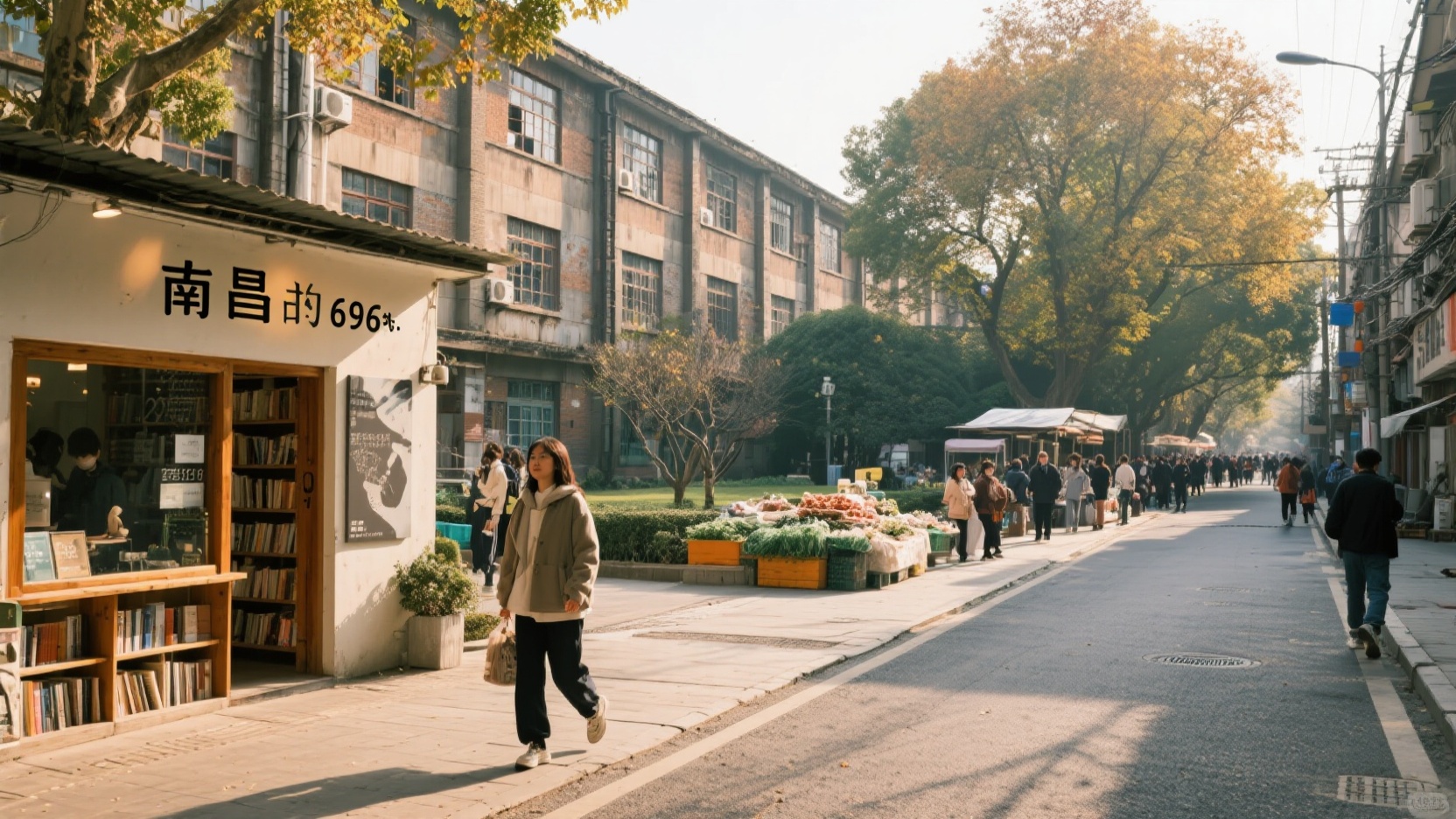
There's a side entrance to a vegetable market next to the park. I bought two freshly fried chive pancakes and ate them as I walked. Further south is Wenjiao Road, the old bookstore street. This area is near the old Nanchang University, where secondhand bookstores and stalls are crammed under the plane trees. Occasionally, you can find old books from the 1980s published by Jiangxi People's Publishing House. I positioned my camera at the corner of the bookstore, using the stalls as a foreground, to capture pedestrians bending over to browse books. Nearby, there's a boiled food restaurant that's been around for many years; you need to specify the spiciness level beforehand—mild is enough.
Qingyuan Bookstore's Final Chapter: The True Living Room for Nanchang's Literary Youth
Finally, we arrived at Qingyuan Bookstore. This is a long-established independent bookstore in Nanchang. The storefront is inconspicuous, but once inside, it's a quiet haven. A 10-minute stop allows you to browse a book about Nanchang or Jiangxi local culture at a window seat, or read the owner's handwritten recommendation cards.
The best vantage point is in the glass reflection at the bookstore entrance, where you can capture the overlapping images of passersby and bookshelves. Nearby, there's an old neighborhood noodle stall that opens in the evening, perfect for a quick bite after your walk.
In closing: Don't ask the locals if I didn't tell you.
First, avoid hiking this route in the height of summer, as the humidity and heat in Nanchang will turn a 5-kilometer hike into a long training session; autumn and winter are the best times, when the plane trees turn yellow, the camphor trees turn green, and the lake breeze is gentle.
Second, there's no need to rush to tourist attractions. Depart from Jiangfang before 10:00 AM, have lunch near the camphor tree grove, and browse for books on Wenjiao Road in the afternoon, where the lighting is perfect for taking photos.
Third, don't ask locals if "Qingyuan Bookstore is worth visiting," because they'll just tell you to take a used book with you when you pass by; if you want to take photos, go to Wenjiao Road, don't set up your tripod in the bookstore.
Fourth, this route does not have an official name. When taking a taxi, do not say "Jiangfang 1953 Scenic Area". Instead, say "Jiangfang Family Area" or "Zhangshulin" for the driver to understand.
5. If you only have one afternoon, walk the 2 kilometers between the camphor tree grove and Qingyuan Bookstore. You'll find all the essentials there, and you won't get so tired that you'll give up.