
A 7-Day Slow Travel in Wuzhou | A Deep 7-Day, 6-Night In-Depth Slow Travel Guide to Jinhua for Families and Seniors
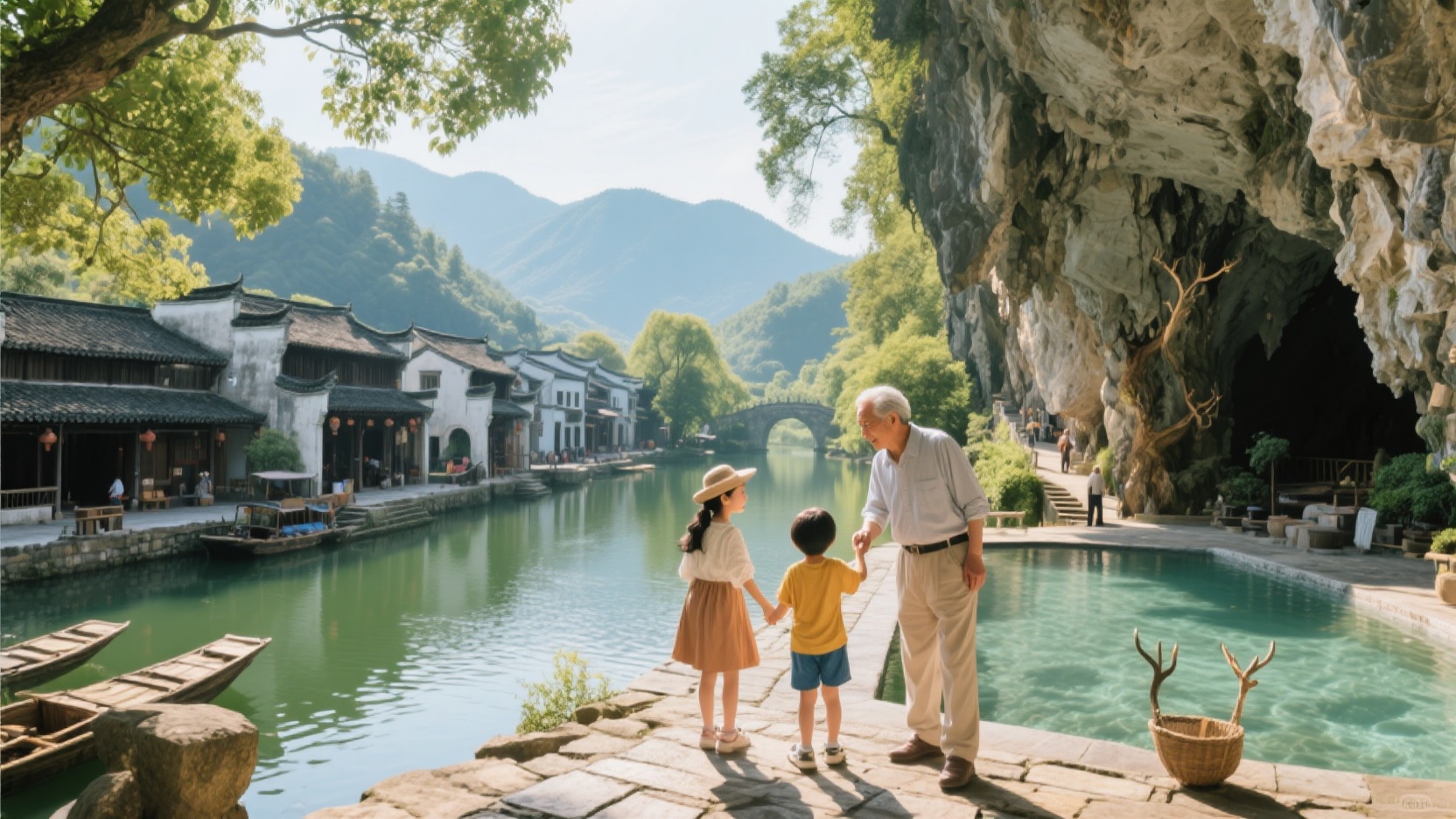
The core logic behind Jinhua's suitability for slow travel is to break the itinerary into three segments: "Ancient City - Mountains - Suburbs," avoiding frequent overnight stays. The following 7-day, 6-night itinerary assumes accommodation in the Guzicheng area of Wucheng District, with only 2 to 3 key locations planned each day, allowing time for a midday rest or free time at the hotel. This is suitable for travelers with elderly people, children, or those taking time off work.
Day 1 Arrival Day: First Impressions of Wuzhou Ancient City
After arriving in Jinhua in the afternoon, don't rush to see the sights. Focus on the Bayong Tower as a center point, taking a walk around the ancient city historical district, paying particular attention to the Bayong Tower, Baoning Gate, and Jiufang Alley. In the evening, walk along the Wujiang River Trail to the Wanfo Pagoda; the illuminated pagoda offers the best spot for taking photos of Jinhua's night view. Dinner can be found around the ancient city; avoid the long queues at popular trendy restaurants and opt for Wuzhou cuisine restaurants frequented by locals.
Day 2 Jinhua Mountain: Shuanglong Cave and Lunu Lake
In the morning, visit Shuanglong Cave. The walking path inside is gentle, and the boat ride is short, making it suitable for both the elderly and children. After exiting the cave, walk along the gentle slope of the Xiake Ancient Trail to Lunu Lake. The lakeside boardwalk is suitable for strollers. In the afternoon, visit Huang Daxian Ancestral Temple. The plaza in front of the main hall is spacious, so there's no need to climb. After returning to the city, if your energy permits, you can visit the Zhizhe Temple gate along the way, but there's no need to go into the back mountain.
Day 3-Day 4 Branch A: Lanxi Ancient Town Slow Route
If you choose this itinerary, it's recommended to stay overnight in Lanxi. On the morning of Day 3, take a bus from Jinhua Station to Lanxi, first visiting Youbu Ancient Town, focusing on the morning tea atmosphere of the street; if you miss the morning market, save Youbu for the morning of Day 4. On the afternoon of Day 3, visit Zhuge Bagua Village. The village lanes are gentle, and the area around Zhongchi Pond is suitable for leisurely strolls. Highlights include the Grand Hall, the Prime Minister's Ancestral Hall, and several well-preserved Ming and Qing dynasty residences. On the morning of Day 4, have another morning tea in Youbu, followed by a trip to the Liudongshan Underground River. The boat ride is smooth and takes about an hour. Return to Jinhua city in the afternoon.
Day 3-Day 4 Branch B: Wuyi Hot Springs and Ancient Villages Route
If elderly travelers are sensitive to cold joints, or children enjoy water activities, Wuyi is a good option. On Day 3, check into the Wuyi Hot Spring Resort in the afternoon. The day will only include hot spring bathing and a walk around the hotel; there will be no rush to see attractions. On Day 4, visit Guodong Ancient Ecological Village in the morning. The path from Huilong Bridge at the village entrance is mainly a gentle downhill slope, and the ancient forest trails within the village take about an hour to complete. Have lunch near Guodong. In the afternoon, visit Jingyuan Ancient Residence Museum. The exhibits are concentrated, and the ground is flat, making it suitable for wheelchairs or strollers. Return to Jinhua in the evening.
Day 5 Jinxi Slow Route: Sipin Ancient Village and Jiufeng Mountain
From the city center, hire a car or drive to Tangxi Town. In the morning, visit Sipin Ancient Village, focusing on the brick-carved gate tower and the "Seven Stars Surrounding the Moon" architectural pattern. The main lanes within the village are straight with no steep slopes. In the afternoon, head to Jiufeng Mountain, avoiding deep into the mountains and only walking along the gentle slope from the scenic area entrance to the Grand Hall. The round trip should be completed within two hours. If you're not particularly interested in mountain scenery, you can opt for a walk through the Jiufeng Tea Garden, which offers expansive views and is more suitable for taking photos.
Day 6 Dongyang Wood Carving and Lu Residence
Dongyang is about an hour's drive from Jinhua city, making it suitable for a full day trip. In the morning, visit the China Woodcarving Museum; the layout is clear, and there are many rest areas, making it suitable for families with children. In the afternoon, visit the Lu Residence, focusing on the central axis of the Suyong Hall. While there are many thresholds, there are few steps, and wheelchairs can use the side entrance. There's no need to rush back to Jinhua city in the evening; you can stay overnight in Dongyang for a more relaxed return journey the next day.
Day 7: Return Trip: Ancient City Morning Market and Souvenirs
On the last day, avoid long-distance travel. Get up early and go to the Guzicheng morning market or Bayong Road Old Street to buy Jinhua shortbread, sliced ham, or local pastries. It's recommended to sample the food before buying. Choose freshly baked, short-shelf-life shortbread and buy small packages or slices of ham to avoid carrying whole hams. Check out before noon and allow one hour to get to the high-speed rail station according to your return train schedule.
Recommended gentle slope routes suitable for the elderly and children
The highest priority routes are the Lu Nu Lake lakeside boardwalk, the section from the entrance of Guodong Village to the ancient forest, the entrance section of Jiufeng Mountain, and the riverside walkway of Guzicheng; followed by the route inside Shuanglong Cave, the main alley of Zhuge Bagua Village, and the central axis of Luzhai Residence. These routes share common features: paved surfaces, slopes less than 5 degrees, and rest stops every few hundred meters. If using a wheelchair, it is recommended to avoid the latter part of the Xiake Ancient Road and the steps at the exit of Liudong Mountain.
Local frequently used apps list
Use Gaode Maps or Baidu Maps for navigation, "Jinhua Travel" for real-time bus schedules, and "Baba Express Bus" for inter-county bus routes. For dining options, refer to Meituan and Dianping, but ratings are only for reference; prioritize local restaurants that have been listed for more than three years. Use 12306 for train tickets, and for scenic spot reservations, follow the official WeChat accounts of each scenic spot or the "Zhejiang Government Service" cultural and tourism section.
Clothing suggestions for rainy and dry seasons
The rainy season in Jinhua is concentrated from March to June. During the plum rain season, it is hot and humid with frequent rain, so it is recommended to bring quick-drying short-sleeved shirts, a light jacket, and non-slip hiking shoes. Always carry a folding umbrella in your backpack. The temperature inside Shuanglong Cave is low, so even in summer, you should bring a light windproof jacket. The dry season is mainly from October to January of the following year, with large temperature differences between day and night. During the day, a light shirt is sufficient, but in the morning and evening, you will need to add a fleece or light down jacket. Pay attention to moisturizing your skin and sun protection. For the Wuyi hot spring trip, please also bring swimwear and a waterproof bag.