
The Flavors of Jinhua in the Market: A List of Delicacies from the Cooked Food Stalls at Lanxi Gate and Sipailou Old Markets
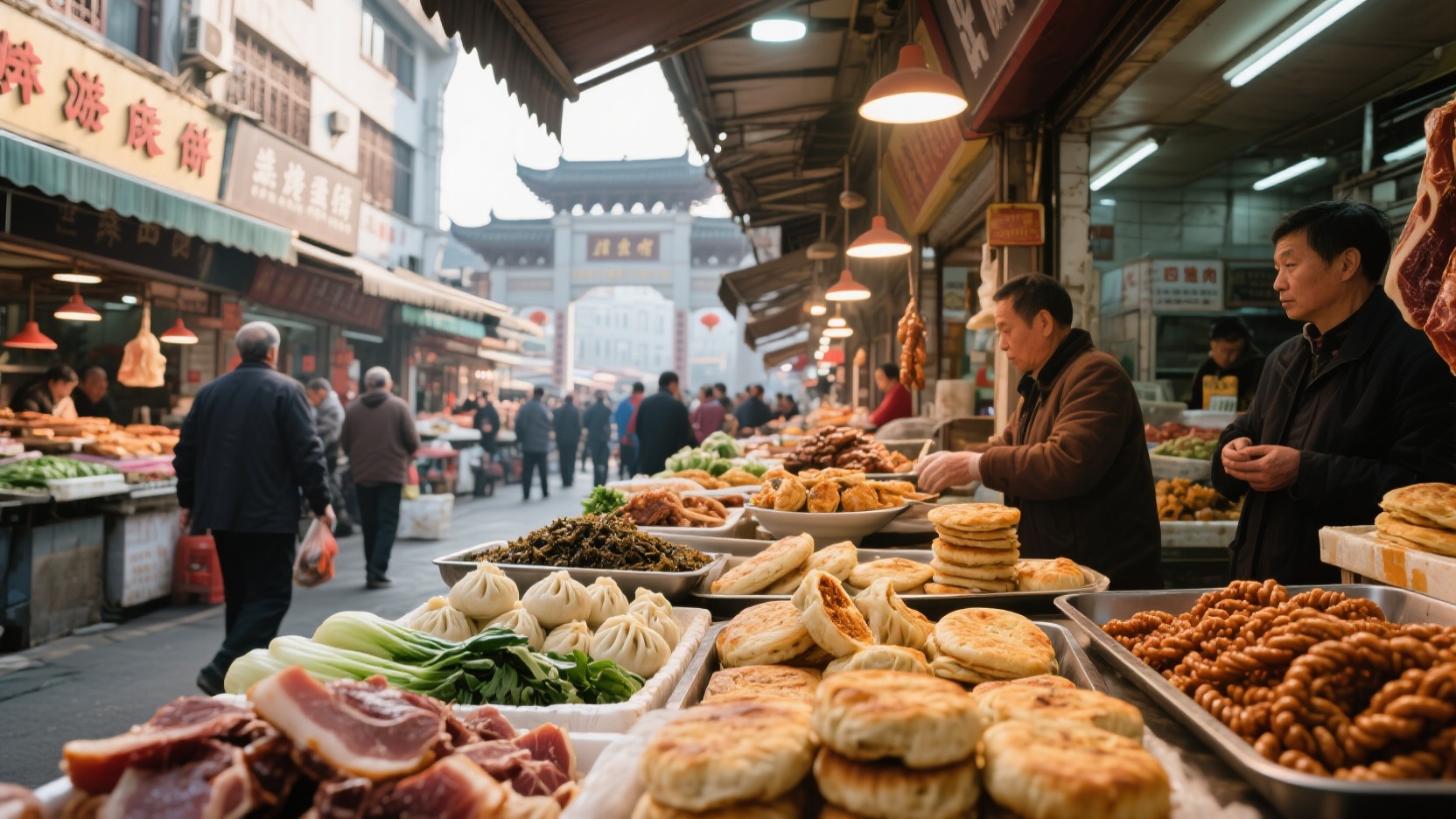
The mornings at Lanxi Gate Market begin with the aroma of lard wafting from a freshly baked Jinhua shortbread oven. Not far from Sipailou Market, these two markets are among the oldest and most historically significant in Jinhua's Jiangbei old town. Lanxi Gate leans more towards cooked food and meats, while Sipailou is more concentrated with fruits, vegetables, and bean products. Vendors don't often actively solicit tourists, but regulars will readily order "two spicy dishes" or "half a pork hock." To find the authentic flavors of Jinhua cuisine, you don't need to go to a restaurant; a stroll through these two markets first is enough.
Freshly baked shortbread and chicken egg cakes: the two carb powerhouses at the main food stall
Jinhua shortbread is usually baked fresh at the entrance of the market. Unlike the vacuum-packed pastries sold in tourist areas, freshly baked shortbread is smaller and has a crisper, layered crust. When choosing, look for dense, non-hollow sesame seeds, a puffed-up shape without cracks, and a filling of dried mustard greens and diced fatty pork that is dark brown and smells of dried vegetables and a slight aroma of lard. Eat it while it's hot; the crust will crumble easily. After cooling, it's best to break it open and enjoy it with green tea. Do not reheat it in the microwave, as it will soften easily.
Lanxi chicken egg cakes are commonly found at the same food stalls. The method involves spreading seasoned minced meat and chopped scallions on a dough sheet, then filling it with an egg when flipping it over, and frying it until golden brown on both sides. When choosing chicken egg cakes, select those with tightly sealed edges so that the egg filling doesn't leak out when pressed. They are eaten with local vinegar and a small amount of chili sauce. First, break a small opening in the cake to let it cool and avoid burning your mouth.
Soup dumplings and meat patties at the cooked food stall
Jinhua soup dumplings are known for their "paper-thin skin and abundant soup without breaking." Market stalls typically prepare two steamers in the morning, closing once sold out. When selecting dumplings, observe whether the pleats are even and whether the bottom is translucent but doesn't break when lifted. The correct way to eat them is to hold them on a plate, first taking a small bite from the edge to sip the soup, then dipping them in ginger and vinegar before finishing the skin and filling.
Yongkang meat pie is often found next to soup dumplings at cooked food stalls. It's thicker than a flaky pastry, and the filling is mainly made of lean and fatty pork and preserved mustard greens. To choose a meat pie, look for a slightly charred oil mark around the edge. If you gently press the surface, it should slowly spring back, indicating the filling has the right moisture content. If you buy a whole one, you can ask the vendor to cut it into four pieces to take home with porridge or as a main lunch.
Cured and preserved vegetable section: ham scraps and rotten cabbage
You don't need to buy whole Jinhua hams. The most useful parts at the market are ham scraps, ham hocks, and pork bones. When selecting them, first smell them; they should have a rich, fermented aroma, without any rancid or pungent sour smell. Then look at the cut surface; the lean meat should be rose-red, and the fat should be white or slightly yellow. These scraps are suitable for stewing bamboo shoots, boiling tofu, or making broth. Because the ham itself is salty enough, don't add salt after cooking.
Rotten cabbage is a local type of pickled vegetable that undergoes deep fermentation. It has a yellowish color, a soft and mushy texture, and a sour and fragrant aroma. When choosing rotten cabbage, select those with clear liquid at the bottom of the jar and vegetables that are not black or sticky. It is best cooked with soft tofu to make "Rotten Cabbage and Tofu Stew". Add a little rapeseed oil before serving, and there is no need to add MSG.
Dried mustard greens and dried bamboo shoots from the same region are also staples in Jinhua households. Choose dried mustard greens that are jet black with a natural sheen, don't clump together when loosened from a handful, and have a faint sweet aroma without any earthy smell. They can be used as filling for pastries, steamed meat, or braised ribs. Soaking them in warm water beforehand and squeezing out the excess water will reduce their saltiness.
Handmade bean products and seasonal delicacies
Pujiang tofu skin is often found stacked in piles at bean product stalls in the market. High-quality tofu skin is pale yellow, thin and translucent, and has a good elasticity when gently pulled by hand. It does not break when soaked in water. It can be used in cold dishes, soups, or steamed with meat filling. Avoid overcooking, as it will easily disintegrate.
Yiwu brown sugar twisted dough sticks are a must-have snack for those with a sweet tooth. When choosing them, check if the brown sugar frosting is evenly coated on the surface of the twisted dough stick, and if it can be slightly stringy when broken open, the core should still remain crisp. The loose twisted dough sticks sold in the market are closer to the daily taste of locals and contain fewer additives than the packaged ones sold in tourist areas.
Seasonal fruits are a matter of luck. In autumn and winter, Jinhua Buddha's Hand fruit has a refreshing aroma and can be placed indoors or sliced thinly, dried, and soaked in water. In summer, when Lanxi bayberries and Yuandong white peaches are on the market, the fruit farmers' stalls outside the market are often fresher than the fruit shops. When choosing bayberries, look for plump berries with a deep purple color. When choosing white peaches, smell their strong aroma and feel them slightly bouncy when gently pressed.
Walking through the entire local market will give you a deeper understanding of the authentic tastes of Jinhua residents than following a restaurant guide: the preserved mustard greens in pastries must be aged, the soup dumplings must have clear broth, ham scraps must be generously added to the soup, and rotten cabbage must be served with tofu. A city's breakfasts, everyday dishes, and seasonal delicacies all ultimately end up in your shopping basket. Visiting the market is the most genuine way to experience a city.