
Hidden Gems in the Alleys: 8 Arts and Culture Spots in Jinhua
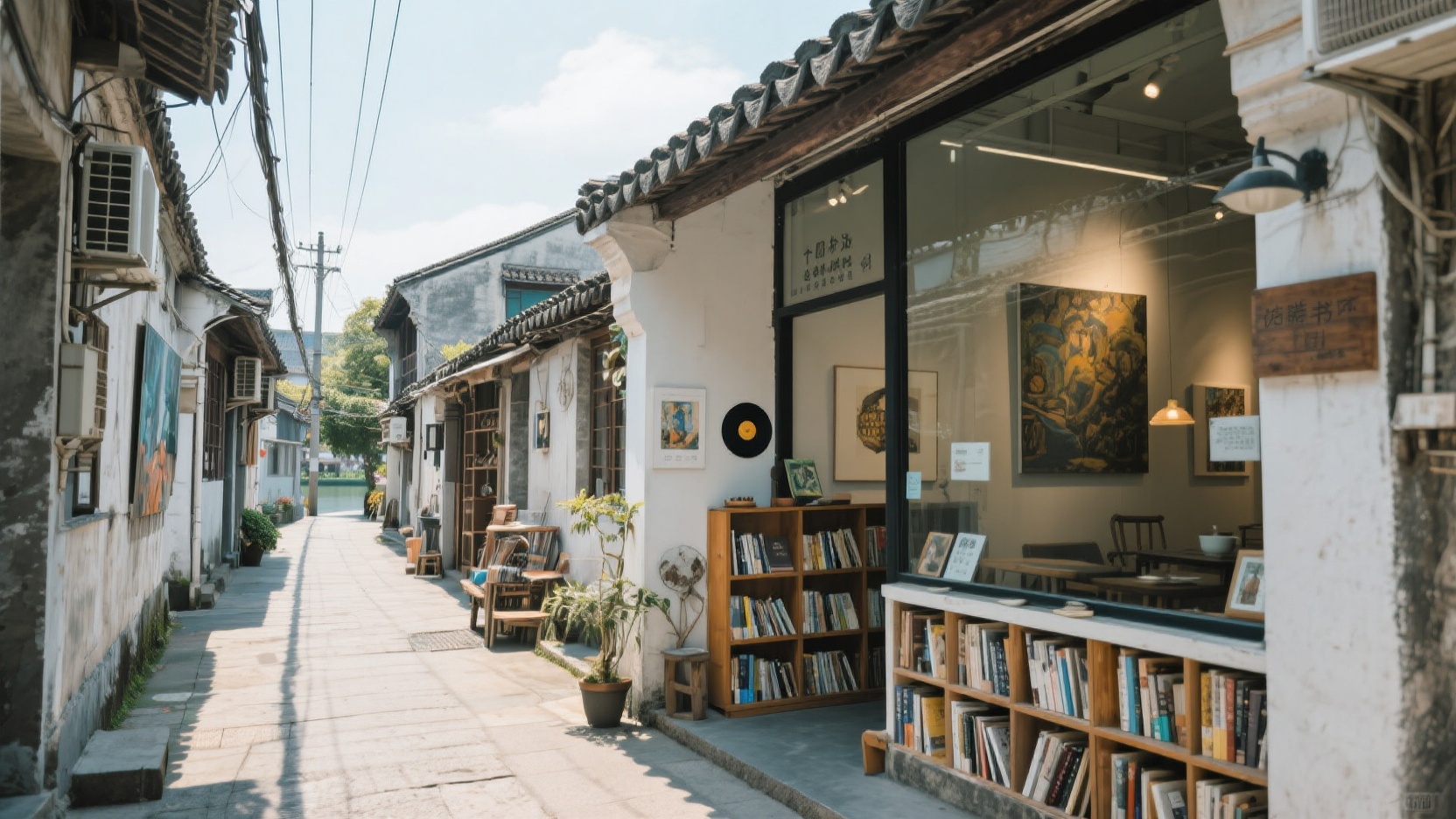
The hidden cultural map of Jinhua isn't on tourist attraction signs, but rather found in warehouses converted from the old train station, bookstores nestled in residential buildings, and galleries hidden deep within old factories. The following eight spaces begin near the old train station and extend naturally towards the old city north of the Yangtze River and the south bank of the Wujiang River. A walk-through experience won't feel rushed, making it ideal for exploring at a pace of "old objects—reading—coffee—art—vinyl records—creative products—galleries."
01 Independent Bookstore: Mailang Bookstore
Located on the ground floor of a former dormitory building in the old city of Jiangbei, the bookstore has an unassuming entrance, but behind it lies a wall dedicated to local chronicles and literary selections from Jinhua. The bookstore has a quiet, inviting atmosphere, retaining old-fashioned terrazzo floors and wooden windows. Seating is limited, and you'll often see the owner organizing handwritten recommendation cards. The highlight is the "Jinhua Local Culture Section," featuring rare local publications on Wuju opera, Wuzhou kiln, and the ancient city's streets and alleys. For photography, it's recommended to utilize the natural light from the wooden tables by the window, using open pages and the plane trees outside as a foreground; backlighting enhances the texture of the paper.
02 Private Art Museum: White House Art Space
Converted from an old warehouse, the exterior is painted a low-saturation white, while the interior retains its high ceilings and concrete beams. This space doesn't prioritize high-traffic exhibitions, focusing instead on contemporary ink painting, mixed media, and small installations, and hosts a permanent residency program for local artists. The highlight is the space's inherent "unfinished" feel: peeling paint on some walls and handwritten stickers on exhibit labels create a dialogue between the artworks and the architecture. For photography, it's recommended to take photos around 2 PM when the light streams obliquely into the main exhibition hall from the high side windows. Standing below the spiral staircase and shooting upwards allows you to simultaneously capture the white walls, steel frames, and a corner of the artwork.
03 Secondhand Warehouse: Wuzhou Secondhand Warehouse
This isn't a collection of antiques, but rather everyday memories of the people of Jinhua: old enamel basins, matchboxes, vintage radios, factory badges, and old-fashioned bicycles. The vintage warehouse is divided into three areas based on daily life: "Living Room," "Workshop," and "Classroom." Every item is touchable and can be browsed. Highlights include a wall display made up of hundreds of old-fashioned switch panels and a cabinet full of old Jinhua factory logos. For photography, it's recommended to choose a corner in the "Workshop" area where the warm yellow lighting is most concentrated, using a wide aperture to blur the background and create depth between the old tool benches and metal parts.
04 Old Factory Transformation into a Cultural and Creative Park: Old Train Station Cultural and Creative Park
Formerly a freight warehouse area of an old railway station, the red brick walls, water tower, and a section of abandoned tracks have been completely preserved. The park has transformed the storage space into a small exhibition hall, craft studios, and design shops. It's less crowded on weekdays, making it a quiet place to stroll around. The highlight is the renovated "waiting room" next to the old platform, which retains the long wooden benches and timetable blackboard, and hosts occasional exhibitions on architecture and urban memory. For photography, it's recommended to use the track extension line as the main composition axis, with people standing next to the old station sign, and using the side lighting in the evening to capture the grainy texture of the red bricks.
05 Community Coffee Shop: Everyday Coffee Cooperative
Hidden on the ground floor of an old residential area, with a large camphor tree at the entrance, this place offers a simple menu, specializing in hand-drip coffee and homemade roasted beans. The atmosphere is more like a neighbor's living room, with the bar and seats close together, perfect for taking a break and observing the community's daily life. Besides the daily changing single-origin coffee menu, a highlight is the "community bulletin board" maintained by residents at the entrance, which often displays handwritten event notices and plant exchange information. For photography, it's recommended to sit on a high stool by the window, using the greenery and coffee grinder as a foreground, with your coffee cup placed under the natural light of the window to capture a warm and airy, everyday feel.
06 Independent Gallery: Prism Gallery
The space is small, converted from the ground floor of an apartment building. Exhibitions change approximately monthly, focusing on young illustrators, printmakers, and photographers. There are no fixed exhibition hall partitions; the flow of movement revolves around the central display stand, allowing visitors to closely observe the texture of the paper and the brushstrokes. A highlight is the small art corner near the entrance, where visitors can browse independent publications and limited-edition art books. For photography, it's recommended to stand at the entrance and shoot towards the interior, using the doorway frame as a natural border to include the wall artworks and their reflections on the floor.
07 Vinyl Living Room: South Bank Vinyl Living Room
Located in the semi-basement of an old residential building south of the Wujiang River, the space features a wall covered in black vinyl records, primarily jazz, classic Chinese songs, and movie soundtracks. The space offers listening areas with no mandatory purchase, making it ideal for an afternoon or evening visit. Highlights include a daily updated "Listen List" and a vintage record player with touch controls. For photography, it's recommended to use the color scheme of the record covers as a background, take close-up shots of your profile while wearing headphones, and avoid shining the flash directly onto the record surface.
08 Community Art Shop: Alleyway Art Shop
Nestled between a breakfast shop and a car repair shop, this store mainly sells works by local illustrators, handmade ceramics, and city-themed postcards. Despite being less than 20 square meters, you can easily spend a long time browsing. The highlight is the "City Scenery Display Case," a repurposed old shelf, each showcasing a street or old place name in Jinhua. For photography, it's recommended to shoot from outside through the glass window, utilizing the reflections and layered shelves to create a striking contrast between the everyday life and art.
These eight spaces, though not far apart, connect to form another urban fabric of Jinhua—old railway tracks, old factories, community shops, and contemporary art breathing in the same neighborhood. They don't offer a standardized check-in process, but rather preserve cultural slices of the city in a quiet and concrete way.
If we consider Jinhua as an open local chronicle, these spaces are the footnotes between the pages. They remind travelers that the city's true character lies not only in popular tourist attractions, but also in the pauses we take when we step through a door. Measure the spiritual corners of this city with our footsteps.