
A Day in Jinan's Culinary Journey: 8 Home-Style Dishes Locals Enjoy From Morning to Night
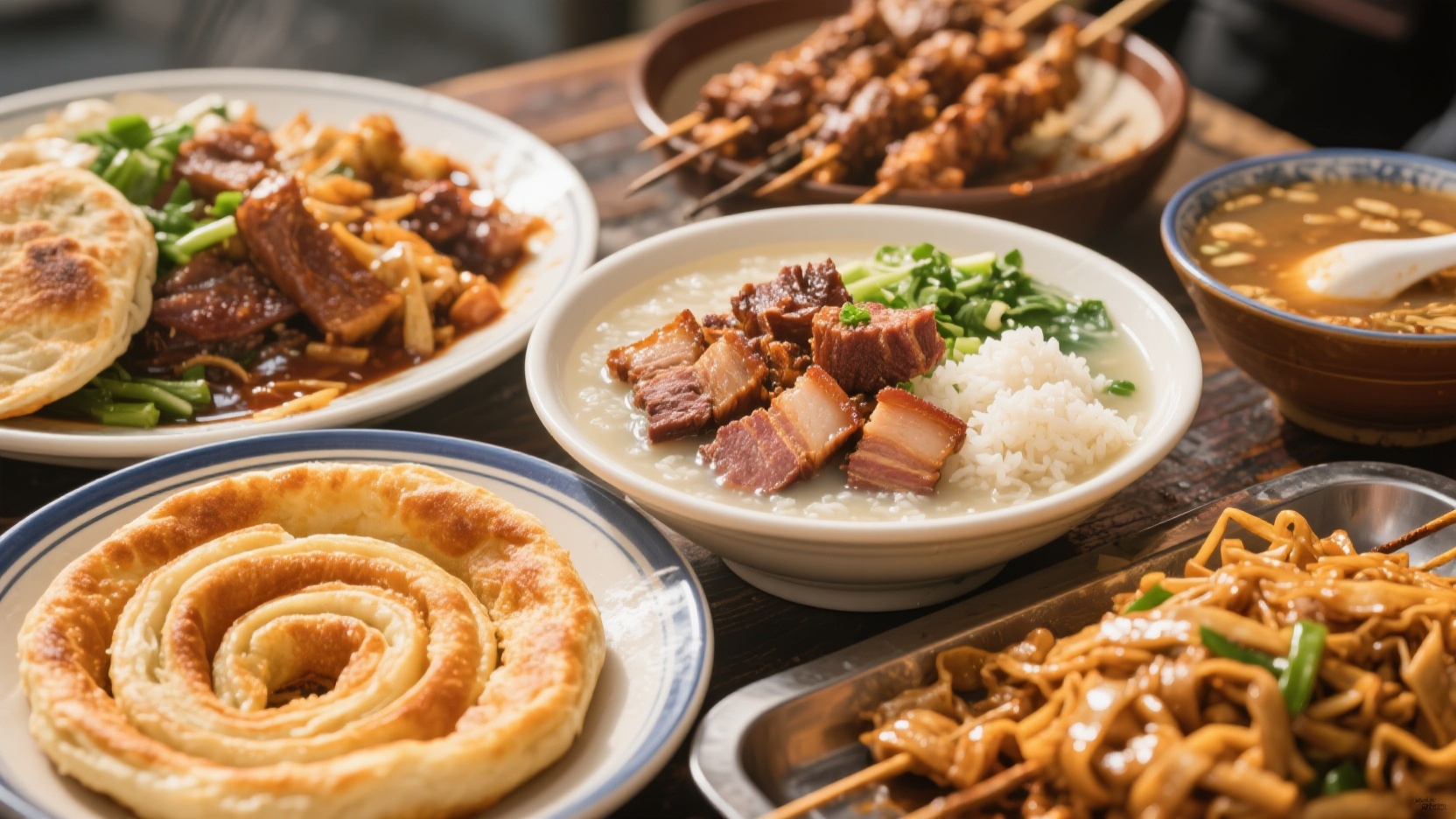
Jinan locals' culinary calendar doesn't rely on trending food lists; instead, it's driven by the daily hunger pangs. Breakfast stalls steam with millet noodles and scallion oil in the early morning; braised pork belly simmers in earthenware pots at local restaurants for lunch; crispy pancakes crackle at afternoon snack stalls; and late-night food stalls use charcoal fires and woks to soothe away the day's fatigue. Below, we've outlined eight everyday Jinan dishes, analyzing their preparation and textures to reveal the city's culinary logic.
Morning: The savory aroma of sweet rice porridge and fried dough twists sets the tone
Despite its sweet name, Tianmo is actually a savory porridge. In Jinan breakfast stalls, Tianmo is made with a base of millet flour or millet paste, topped with peanuts, cowpeas, tofu skin, spinach, minced ginger, and white pepper, simmered until it reaches a suitable thickness. The first taste is the smooth texture of the millet flour, followed by the creamy texture of the peanuts, the sandy texture of the beans, and the spiciness of the pepper, layered upon layer, with the spinach providing a slightly bitter yet sweet aftertaste. Old Jinan locals drink Tianmo without a spoon, sipping it by swirling it around the rim of the bowl, often accompanied by a freshly baked fried dough twist – a truly comforting way to wake up in the morning.
Making fried dough twists is a technical skill in Jinan's noodle dishes. The dough is rolled out, spread with scallion oil and lard, rolled into a spiral shape, flattened, and then pan-fried until both sides are set. Finally, it's baked until the outer layer is flaky. A good fried dough twist is light golden yellow, slightly concave in the center, with spirals spreading outwards, and crumbles easily when pinched. Biting into it releases the aroma of scallions and oil simultaneously; the outer shell is crispy, while the inside is slightly soft. Soaking it in sweet porridge to absorb the broth transforms it into a savory and moist dish.
Lunch: A hearty and satisfying meal of braised pork belly and crispy fried pork.
At lunchtime, Jinan locals often head to small restaurants in residential areas, ordering a piece of braised pork belly with a bowl of rice broth. The braised pork belly uses skin-on pork belly, cut into thick slices and tied with cattail reeds or cotton thread. It's then stewed for a long time in a rich broth made with soy sauce, rock sugar, cinnamon, star anise, and other seasonings. The fatty parts become translucent after stewing and melt in your mouth; the lean meat is tender and easily separated with chopsticks. The most authentic way to eat it is to pour the dark brown broth over rice, add a braised egg or a piece of tofu—simple yet incredibly satisfying.
Often served alongside braised pork belly is Jinan-style crispy stew. This dish involves layering cabbage, kelp, lotus root, tofu, and pork trotters or fish pieces in a pot, adding vinegar, soy sauce, sugar, and a small amount of water, and simmering over low heat for several hours. The cabbage releases water, forming a broth, and the ingredients permeate each other, resulting in a dish with a complex blend of sweet, sour, salty, and savory flavors. The flavor is even more pronounced when served cold. Originally a staple for Jinan families before and after the Spring Festival, crispy stew has now become a common side dish in local restaurants, reflecting the culinary wisdom of Jinan people: "slow cooking in one pot, making the most of every ingredient."
Afternoon: A brief respite with sugar-coated pancakes and oil tea
Around 3 PM, the sugar-coated crispy pancakes at street food stalls become the most popular. Made primarily from millet, the millet is ground into a paste, spread on a griddle, and sprinkled with white sugar and sesame seeds while still slightly damp. It's then folded into multiple long strips. Its texture is completely different from ordinary pancakes: paper-thin, so crispy it crumbles at the slightest touch, sweet but not cloying, with the aroma of sesame spreading as you chew. People in Jinan eat it as a snack and often take it home as a souvenir, but the crispness of freshly made pancakes is something packaged versions cannot replicate.
Oil tea is a common warm afternoon drink in the Hui Muslim community of Jinan. To make it, flour is first slowly stir-fried in butter or vegetable oil until slightly yellow, then crushed peanuts, sesame seeds, salt, and five-spice powder are added. After cooling, it is stored. When eating, a few spoonfuls are taken and mixed with boiling water to form a paste. Oil tea has a salty, savory, and smooth taste, with the crushed peanuts and sesame seeds providing a textured feel. It is warming and filling. For many Jinan residents, a bowl of oil tea is not only an afternoon snack but also a warm memory of the walk home from school or get off work in the old winter.
Late at night: Charcoal-grilled skewers and stir-fried pancakes to finish off the meal
As night falls, the aroma of charcoal grilling rises from the street food stalls of Jinan. Grilled skewers are the star of the late-night snack table; lamb skewers, heart tubes, beef tendon, and garlic-flavored pork skewers are turned over the charcoal fire, sprinkled with cumin, chili powder, and salt. Jinan-style grilled skewers emphasize direct cooking, achieving a crispy exterior while retaining their juices inside; lamb skewers with a perfect balance of lean and fat are especially popular. People sit around low tables, skewers in one hand and beer in the other, relaxing in the charcoal smoke after a day of tension.
Late-night staples often consist of stir-fried flatbread. Thinly baked flatbread is cut into strips and stir-fried with shredded cabbage, shredded meat, or eggs, seasoned with soy sauce and minced garlic. The flatbread strips soften in the oil and vegetable broth, becoming oily on the outside but still chewy in the center, creating a contrast between the crispness of the cabbage and the chewiness of the flatbread. A plate of stir-fried flatbread with a few skewers of grilled meat is the most common way for late-night diners in Jinan to finish their day with carbohydrates. It may lack elaborate presentation, but it's enough to soothe both hunger and lingering emotions.
From a bowl of savory-sweet porridge in the morning to a plate of oily stir-fried pancakes late at night, Jinan people's daily meals are not particularly elaborate, but they repeatedly confirm the city's culinary order at fixed times. From the streets to the alleys, understand this city through its food in a day.