
What do people in Jiaxing eat every day?
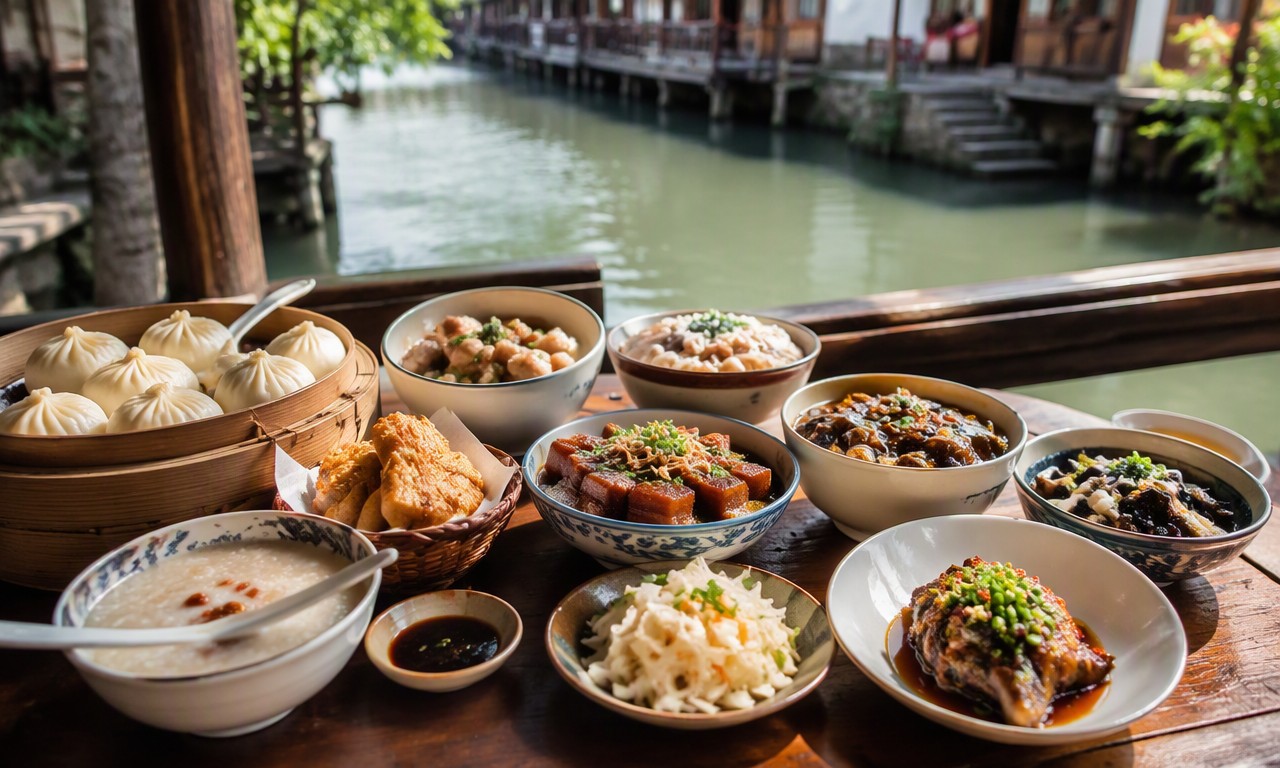
In Jiaxing, eating isn't something you can just pick anywhere and expect to find the right place. Many foods have a "golden hour"—after that time, the taste, texture, and even the atmosphere suffer. This article doesn't follow tourist routes or popular online lists; instead, it organizes the day by six time slots, explaining what to eat at each and why. By following this timeline, you're less likely to end up with a signature dish that's been served cold after a long trip.
6:00 AM First pot at the morning market: Jiaxing shumai, not zongzi (sticky rice dumplings)
Many readers from out of town ask if the first thing to do for breakfast in Jiaxing is to eat zongzi (sticky rice dumplings). I usually ask them in return: Do you want to buy souvenirs, or do you want to sit down and enjoy a freshly cooked meal? If the answer is the latter, then you should go to a shaomai (steamed dumpling) shop at 6:00 AM, not a zongzi shop. Jiaxing shaomai is open-faced with an extremely thin skin, filled with juicy meat filling. The most important part is the moment it comes out of the steamer—the skin is still taut, and when you bite into it, the meat juice bursts out. The first batch of shaomai is usually taken out of the steamer around 6:00 AM. If left for more than 20 minutes, the skin starts to collapse, and the broth shrinks. Therefore, in the old town, there are already people waiting outside some shaomai shops before 6:00 AM. The way to eat it is simple: dip it in a little local rose vinegar, not soy sauce, otherwise it will mask the freshness of the meat.
Zongzi (sticky rice dumplings) are certainly a symbol of Jiaxing, but locals rarely sit down with a hot zongzi for breakfast first thing in the morning. It's more like takeout food, suitable for buying and taking away, or as a seasonal food. So at 6:00 AM, I suggest putting the zongzi aside and having a basket of freshly steamed pork shumai first.
8:00 Local breakfast: Ah Neng noodles, the broth is the most authentic.
Around 8 AM, noodle shops in Jiaxing are at their busiest. For Jiaxing locals, eating noodles for breakfast is a daily routine, not a compromise. A-Neng noodles, introduced to Jiaxing from Tongxiang, are made with thin noodles and a rich broth, simmered for a long time with pork bones and chicken carcasses. Why is 8 AM the best time to eat? Because good noodle shops often start preparing the broth in the early morning, reaching its richest and most flavorful point by 8 AM. After that, the kitchen adds water, diluting the flavor. Many tourists are unaware of this and often eat noodles at noon, resulting in a different broth consistency.
Locals often eat Ah Neng noodles with a side dish of pickled mustard greens or a piece of vegetarian chicken. There are various toppings available, but if it's your first time, ordering a basic bowl of pickled mustard greens and shredded pork noodles or fried fish noodles will allow you to best appreciate the natural flavors of the broth and noodles. Don't order the most expensive seafood topping right away; that would just be asking for trouble.
11:00 Lunch: Wenhu braised duck and Nanhu water chestnuts, each with its own timing.
Lunchtime is the main meal time. Among Jiaxing local dishes, Wenhu braised duck is one of the most frequently mentioned names. The braised duck is braised the night before and cooled until noon the next day, allowing the savory aroma to fully develop. It's best to eat it around 11:00 AM, when the duck meat is firm yet firm, the skin is dark reddish-brown, and the meat is chewy but not dry. It goes well with white porridge or rice, and isn't too salty on its own.
If you happen to be there during the transition from summer to autumn, you should definitely order Nanhu water chestnuts for lunch. Unlike water chestnuts from other regions, Nanhu water chestnuts have no sharp thorns. They are crisp and sweet when eaten raw, and soft and powdery when cooked. They have a very specific limitation: they become astringent if left overnight after being picked. Therefore, they are best eaten at midday during the water chestnut season, when local markets or restaurants have just received them. After lunchtime, especially if the water chestnuts have been sitting for a day, the difference in taste is very noticeable. So, my advice for Nanhu water chestnuts is to "eat them as soon as you see them, don't wait until evening."
3:00 PM Afternoon Tea: Wuzhen Gusu Cakes (a type of pastry), best enjoyed cooled.
Three o'clock in the afternoon is perfect for a snack. Wuzhen Gusu Cake is a traditional pastry from Jiaxing that deserves a dedicated afternoon tea time. This pastry is made with sesame seeds and lard, with a sweet and slightly salty taste and a rich, oily texture. It's not actually at its best when it's fresh out of the oven, as it's too hot and oily. It's best enjoyed in the afternoon when the temperature drops, revealing its crispness at its peak, and paired with a cup of green tea to cut through the richness.
Many people only buy pre-packaged Gu Sao cakes in the Wuzhen scenic area to take home as gifts, but those are not the same as those made on-site. The cakes are still the same, but the crispness is much worse. If time permits, I suggest finding a time-honored pastry shop in Wuzhen or Jiaxing city to buy freshly made cakes for the afternoon. The price is not high, considered an affordable snack, but if you eat the right ones, the satisfaction is no less than that of a fancy meal.
18:00 Evening Market: Haining Braised Pork, it only gets its full flavor by evening.
For Jiaxing locals looking for a truly special meat dish for dinner, Haining clay pot pork is an indispensable choice. Clay pot pork involves placing a whole piece of pork belly in a clay pot and slowly roasting it over charcoal. This process takes an entire afternoon, allowing the skin to soften but not mushy, and the sauce to fully infuse the meat. Therefore, 6 PM is the ideal time to eat it, as the clay pot pork reaches its peak condition by evening. If you go at noon, many restaurants haven't roasted it properly, resulting in tough skin and a less intense sauce flavor.
Don't order a whole plate of braised pork by yourself, it will be too greasy. It's best to share a piece with two or three people, and serve it with white rice, pouring the sauce over the rice. Locals in Jiaxing don't pair braised pork with alcohol; they emphasize the combination of meat and rice. Upscale restaurants also serve braised pork, but this dish is more suitable for eating in lively local restaurants; the more home-style it is, the better it tastes.
22:00 Late-night snack: Reheated shumai with warm yellow wine
At 10 PM, Jiaxing's nightlife isn't particularly bustling, but some old-fashioned shumai shops will still be making their last batch of the day. This evening's batch differs from the morning's: the filling includes a little more minced ginger to remove any gamey taste from the meat, and the wrappers are still freshly rolled and filled. Enjoying a basket late at night is warming but not overwhelming. I recommend pairing it with a small cup of Jiaxing yellow wine, warmed up. Yellow wine is a traditional drink in Jiaxing, and its aroma becomes even more mellow when warmed, perfectly relieving the fatigue of the day.
Why is 10 PM the best time to eat? Because after that, these small shumai shops close, and Jiaxing's late-night dining scene isn't as vibrant as that of big cities. After 10:30 PM, many places only have a few barbecue stalls left. If you want something hot but don't plan on eating too much, 10 PM is the last window of opportunity. Sitting in a small shop at this time, a basket of shumai and a cup of warm Shaoxing wine is the most peaceful way for a Jiaxing local to end their day.