
Is it worth making a special trip to Jiaxing's cultural venues?
This is the most frequently asked question, and the one most worth answering first: Many people treat Jiaxing as just a stopover along the high-speed rail line, glancing at it while visiting Xitang and Wuzhen. However, Jiaxing has a solid foundation in prehistoric culture and modern art. If you only use it as a transportation hub, you will indeed miss some things that you can't see elsewhere. Below, I will clarify the eight most frequently asked questions before your trip.
Is it worth making a special trip from out of town to visit cultural venues in Jiaxing?
My assessment is this: if you have a clear interest in prehistoric civilization, modern ink painting, and urban archaeology in Jiangnan, a special trip here is definitely worthwhile; if you just want to "check off a list and join the crowd," then it's not as densely packed as Suzhou or Shanghai. Jiaxing's advantage lies in the proximity of its several museums and the slower pace, allowing you to see everything thoroughly in half a day to a full day without having to wait in long lines or be pushed around in front of exhibits.
The Majiabang Culture Museum, in particular, is one of the few museums in the Jiangnan region built around a prehistoric site. Many people are unaware that the Majiabang Culture, along with the Hemudu and Liangzhu Cultures, constitutes the early civilization sequence of the Taihu Lake basin, but its fame is far less than the latter two. Those who make a special trip to see it are often genuinely looking to learn more about this culture.
If you could only choose one attraction, which one would be the one you absolutely couldn't miss?
I would recommend the Majiabang Culture Museum. The reason is simple: the Jiaxing Museum's "Source of Harvest" basic exhibition is also very good, but some of the content overlaps with the Wu-Yue section of the Provincial Museum; while the Majiabang Culture Museum is built right next to the site, and the bone hoes, pottery pots, and carbonized rice on display are all from the local soil, giving it a very strong sense of being there.
Inside the museum is a reconstructed prehistoric scene, complete with low stilted houses, rice paddies by the wetlands, and unearthed animal bones, allowing you to easily transport yourself back to Jiaxing seven thousand years ago without much imagination. If you only have two hours, exploring this place thoroughly is more worthwhile than rushing through three different museums.
Will elementary school students not understand these exhibits?
The Majiabang Museum and the Zongzi Museum are both child-friendly. The exhibits at the Majiabang Museum are presented in an accessible style, with touchscreens and interactive panels next to many artifacts, allowing children to point out "how to use this pottery." The Zongzi Museum, located in the Yuehe Street area, focuses on local Jiaxing food and customs, featuring physical models and videos that are engaging for children.
However, the modern and contemporary Chinese painting and calligraphy exhibition at the Jiaxing Art Museum does require a certain amount of patience. If children don't visit exhibitions often, they might think, "It's all just dark, blurry landscapes." My approach is to first take the children to the Majiabang Museum and explain to them "why ancient people lived here," and then spend twenty minutes at the art museum, only looking at paintings with color and figures, without trying to see too many.
Should the entire cultural and artistic tour be planned for half a day or a full day?
It depends on where you're staying. If you're only visiting the three main museums—Majiabang Culture Museum, Jiaxing Museum, and Jiaxing Art Museum—half a day might be enough, including transportation, but the experience will be rushed. I suggest allocating a full day: Majiabang in the morning, Jiaxing Museum and Art Museum in the afternoon, and Zicheng Ruins Park in the evening.
The advantage of this arrangement is that you can visit the prehistoric period in the morning, the history and art section in the afternoon, and the city wall ruins in the evening, creating a progressive timeline. The museums in Jiaxing are not large, and one to two hours is enough for each one. However, the advantage is that you don't have to rush, and you can sit by Xiuhu Lake for a while after you've finished visiting the museums. This is something you can't do when switching between museums in Shanghai or Hangzhou.
Which days are they closed? Will I be turned away if I go there on short notice?
Most museums are closed on Mondays, which is the national standard. The Jiaxing Museum, Majiabang Culture Museum, and Jiaxing Art Museum are generally closed on Mondays and open from Tuesday to Sunday, with adjustments possible for public holidays. It's worth noting that the Majiabang Museum is located in a slightly out-of-the-way area, and its closing time is slightly earlier than museums in the city center; it's recommended to arrive no later than 3 PM.
I usually remind readers to check the official WeChat account for "Opening Hours" and "Temporary Closure Announcements" the day before their trip. These two museums don't require reservations, but some exhibition halls may be temporarily closed during setup/dismantling or equipment maintenance. It's better to take a couple of minutes to confirm than to arrive disappointed.
How do we connect the different venues? By walking or taking a taxi?
The Jiaxing Museum and Jiaxing Art Museum in the city center can be connected on foot, as they are not far apart and are connected by a greenway along Nanhu Lake, taking about 20 minutes to walk. The Majiabang Culture Museum is located in the southwest of the city, which is relatively far from the city center. It is recommended to take a taxi or bus, allowing 40 minutes for the journey one way.
If you want a smoother itinerary, you can arrange it like this: take a taxi directly to Majiabang in the morning, return to the city center for lunch, walk to museums and art galleries in the afternoon, and take a stroll in the Zicheng Ruins Park in the evening. This way, you only need to take a taxi once a day, and walk the rest of the time, which is both economical and comfortable.
Which spot is best for taking high-quality photos that aren't too trendy?
I would recommend the Zicheng Ruins Park. It's not a typical "photogenic spot," but the exposed rammed earth layers on the city walls and the overlapping archaeological sections, especially in the evening light, have a strong sense of history. Compared to the red lanterns of Yuehe River and the waterside pavilions of Wuzhen, it's less crowded, the background is cleaner, and the photos won't look the same.
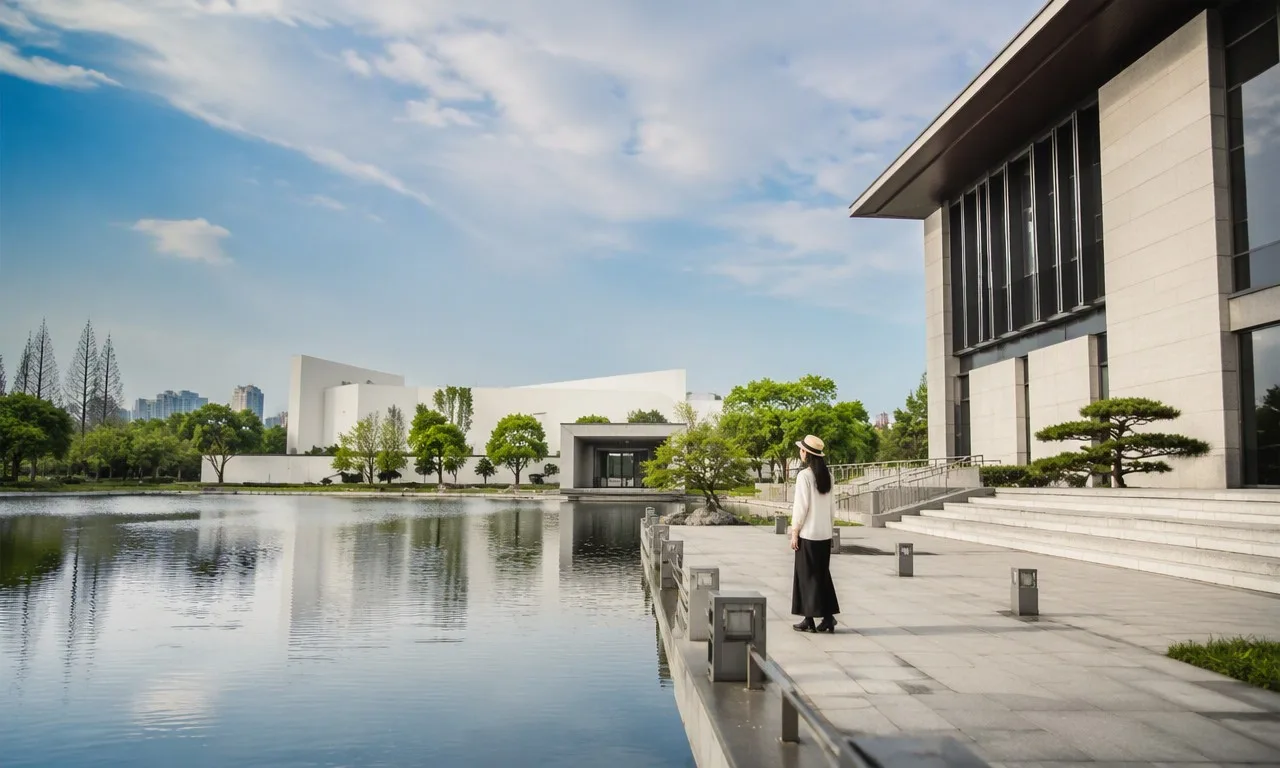
If you want to photograph the combination of architecture and water, you can go to the Jiaxing Cultural and Art Center by Xiuhu Lake. Its architecture is modern, but its reflection on the lake creates a sense of quiet order. Many people take photos that look like a "future city," but you need to find an angle that includes the architecture, the lakeside reeds, and the walkways in the frame; otherwise, it won't look like a real estate rendering.
What season is the most comfortable to visit the museum?
Spring and autumn are the most comfortable seasons, especially April and October. The temperature is pleasant, and the transition between indoor and outdoor areas is not uncomfortable. You can also stroll leisurely through the outdoor sections of Xiuhu Lake and the Zicheng Ruins. Summer is too stuffy, and winter is damp and cold. If you only visit the indoor exhibits, there is not much difference, but if you want to linger outside, the experience will be much worse.
Another tip: avoid the rainy season. Jiaxing often experiences continuous rain from June to July. While visiting the museums won't affect your visit, walking between different sections will become difficult, and taxis are prone to traffic jams. If you can only visit in the summer, try to choose mid-to-late July, enter the museums in the afternoon, and go outdoors in the evening after the rain stops.