
A Culinary Journey Through Qingcheng's Markets: Delving into Dongwayao and Bayi Markets to Discover 10 Local Delicacies
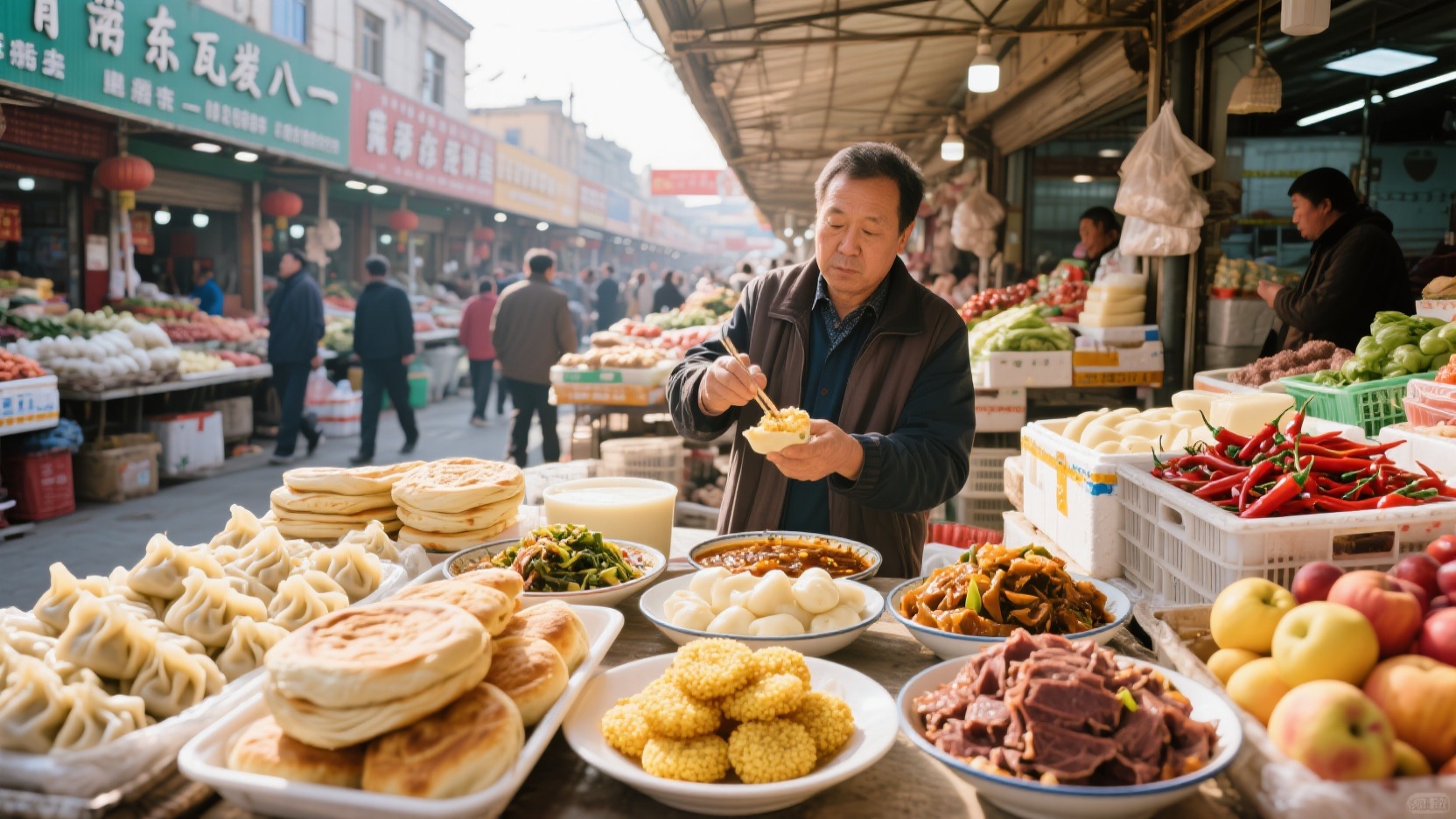
The most direct sensory entry point to understanding a city is often not in restaurants, but in its farmers' markets. In Hohhot's old-style farmers' markets, cooked food stalls, noodle stands, pickle jars, and seasonal fruit stalls form the foundation of the locals' daily meals. If you want to truly understand Hohhot's culinary scene, you might as well start by exploring the Dongwayao Farmers' Market and the Bayi Market, two old markets.
Dongwayao Farmers Market: A robust breakfast chain within a comprehensive market
Dongwayao is one of the earliest comprehensive farmers' markets in Hohhot, with densely packed stalls and a wide variety of goods. When the market opens in the early morning, locals often head straight for the pastry and cooked food sections with their bags in hand.
Freshly steamed shaomai wrappers. Shaomai is a representative breakfast in Hohhot. Stalls specializing in shaomai wrappers in the market usually roll them out on the spot. The edges of the wrappers are like lotus leaves, slightly thicker in the center, thin but not transparent. When choosing, gently shake the wrapper; it should be supple and not crack, with a moderate amount of flour. At home, fill it with mutton and scallion filling, steam it over high heat for eight minutes, and serve with vinegar and chili oil, followed by a bowl of brick tea to cut through the richness.
Fried millet cakes. Fermented millet flour is filled with red bean paste or vegetable filling and then deep-fried. It's a common staple food for local family festivals. Freshly fried cakes from the market have a bubbly, golden-brown exterior. To judge the doneness, check if the bubbles on the surface are fine and dense. Reheating in a lightly oiled pan with a frying pan will result in a crispier cake than microwaving. Sprinkle with a little sugar or serve with pickles to balance the richness.
Braised beef. The braised beef sold at cooked food stalls is mostly from the shank cut, with clearly visible gluten patterns and a deep, rich sauce flavor. When choosing, avoid overly bright red or shiny cuts; opt for a natural dark red color and a firm texture. Slice it thinly and serve it with baked buns or as a cold salad with scallions – common local ways to enjoy it.
Fruit syrup. This is a specialty cold drink found in Hohhot's summer markets, made by simmering dried persimmons, dried apricots, raisins, and other ingredients, then chilling it. A good fruit syrup has evenly distributed fruit pieces, and its sweet and sour taste comes naturally from the dried fruit, not from the cloying sweetness of syrup. It's best enjoyed chilled, especially with shaomai (steamed dumplings) or fried pastries to cut through the richness.
Bayi Market: The Old Flavors of the Hui Muslim Quarter
Located in the old city's Hui Muslim district, the Bayi Market has an unassuming storefront but retains more traditional noodle and pickle stalls. The goods here tend to be staple foods and side dishes, making them suitable for takeout.
Handmade baked buns. Baked buns are a staple food in Hohhot, and they come in three varieties: plain, oil-fried, and sugar-coated. Most stalls in the market make them fresh daily; the outer layer is dry, springs back when pressed, and breaks apart into layers without crumbling. Plain baked buns are perfect for stuffing with braised beef or pickled vegetables; oil-fried buns can be eaten plain or soaked in mutton offal soup, becoming even more flavorful after absorbing the broth.
Fried dough twists and fried dough sticks. Fried dough twists and fried dough sticks are often sold together at stalls in Hui Muslim areas. Fresh fried dough twists should be thin, evenly shaped, and pale yellow in color; they should make a crisp sound when broken. Fried dough sticks should have a thin outer layer, a soft texture, and should not be oily to the touch. Fried dough twists can be served with milk tea or thin fruit broth, while fried dough sticks are best enjoyed with pickles or torn into pieces and dipped in honey.
Pickled vegetable stalls. Pickled kohlrabi, pickled cucumbers, and mixed pickles are familiar faces at the market, and some stalls also offer pickled shallots. When choosing, first look at the sauce; those that are clear without white foam and whose vegetables are not mushy are safer. Buy them, dice them, and add a spoonful of the sauce to white porridge or oat noodles; the savory flavor will be significantly enhanced.
Dairy products. Milk skin, milk tofu, and butter are common items at dairy stalls in the market. Milk skin has a light buttery sheen on the surface. After being chilled, it can be cut into pieces and used as filling for baked goods or mixed into fried rice milk tea. Milk tofu comes in sweet and slightly sour varieties. It is best when it is firm to the touch and the edges are not sticky. Slice it and pan-fry it in a little oil until it turns slightly yellow to concentrate the aroma.
Tuoketuo County chili powder. Tuoketuo County chili powder is indispensable in Hohhot's local markets. The chili powder is dark red with clearly visible seeds, and has a pungent aroma rather than just a simple spiciness. At home, making chili oil by pouring hot oil over shaomai (steamed dumplings), oat noodles, or cold dishes is a local custom for warming up the meal.
Seasonal Fruits: Eat According to Market Seasonal Changes
The changing fruit stalls at the farmers' market are the most direct record of Hohhot's seasonal changes. Early summer brings Wusutu apricots; those with orange-yellow skin and a slight squishiness indicate higher sweetness. Around August, Tuoxian grapes appear; those with intact bloom and loosely packed bunches are often fresher. Later, crabapples and sea buckthorns come into season; it's best to buy them in small quantities multiple times, as they become crisper after refrigeration. When buying seasonal fruits, don't focus on uniform size; a rich aroma is the key.
Visiting the local markets is the best way to experience a city. In Dongwayao and Bayi markets, the shaomai (steamed wheat noodles) and baozi (baked flatbread) represent staple food habits, the pickles and dairy products embody local produce and storage wisdom, and seasonal fruits mark Hohhot's short growing season. No menus or guidebooks are needed; simply follow the locals carrying bags to truly appreciate the city's everyday flavors.