
Hohhot Night Tour Guide | Blogger's Personally Tested 6-Hour Route from Riverside Lights to Old Teahouses: Avoiding the Pitfalls (Summer & Autumn)
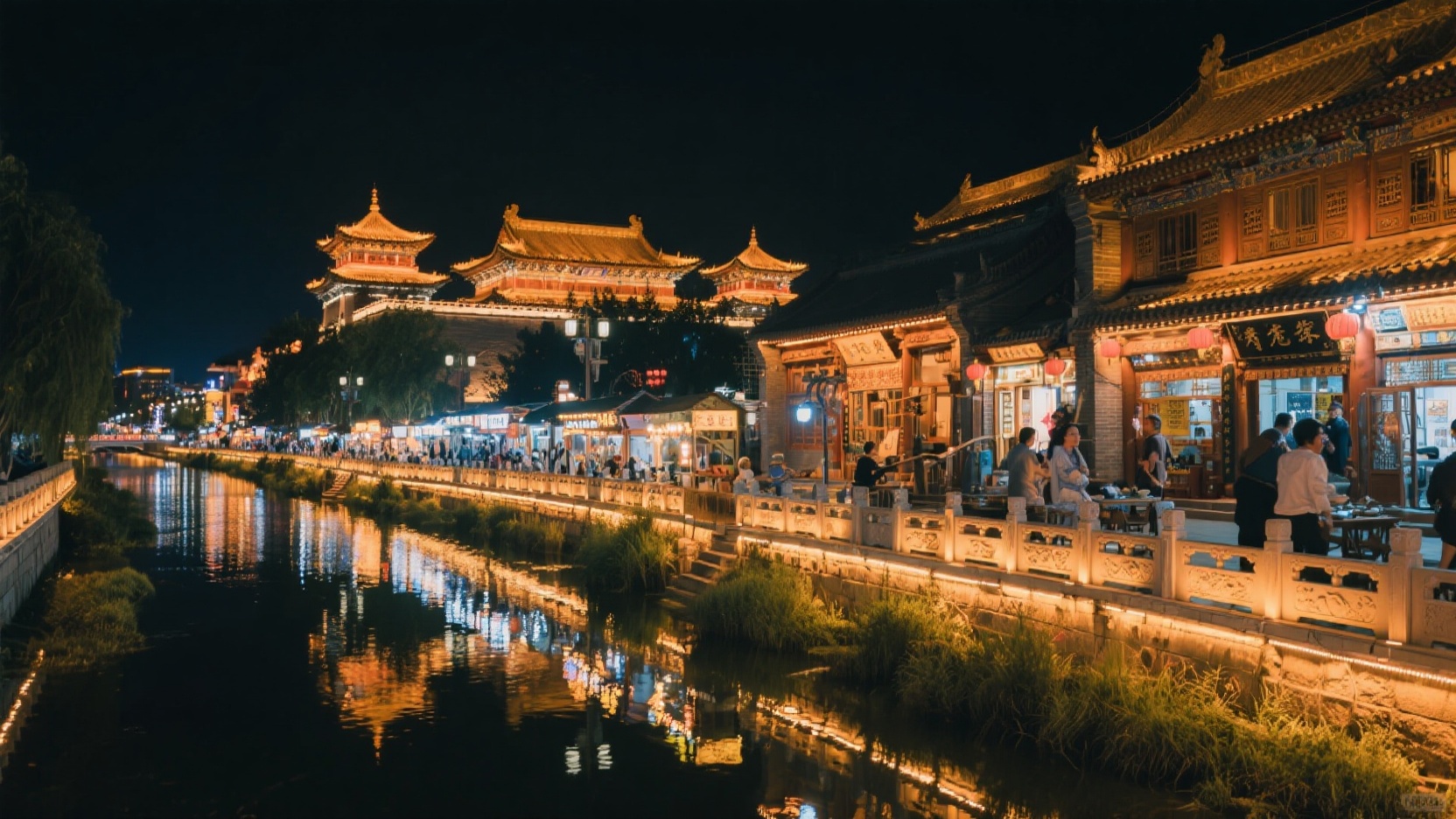
The first time I tried a nighttime stroll in Hohhot, I started at Sai Shang Old Street. However, by 6 PM, the street wasn't fully lit, and the vendors had just set up. I could only wait helplessly in front of the half-lit Dazhao Square. The second time, I changed the order: starting at the Xiaohei River riverside promenade, I followed local commuters along the river for a while, then rode shared bikes to Kuanzhai Alley. The timing was perfect. I walked this route from 6 PM to 11:30 PM for three consecutive nights, noting down the connection times, lighting times, and potential pitfalls.
Nighttime experiences in Hohhot cannot be replicated by simply copying the strategies of southern water towns or coastal cities. Its charm lies not in the density of neon lights, but in the openness of the riverbanks, the ruggedness of the old town, and the deep bass voices in the teahouses. The following route is ideal for summer and autumn, avoiding the daytime heat while still offering a glimpse into the less touristy side of Hohhot at night.
18:00-19:20 Xiaoheihe Riverside Promenade: First, watch a sunset over the northern riverbank, illuminated by lights.
The starting point was chosen at the Yuquan section of the Xiaohei River, rather than the Ruyi River, because it's closer to the old town, making walking and cycling less rushed. Arriving at the riverside promenade at 6 PM, we were just in time to catch the sun setting from the direction of Daqingshan Mountain, the river gradually darkening from a golden hue, and the landscape lights on both banks turning on around 7 PM. Hohhot's water features aren't particularly grand, but they offer expansive views, with newly built high-rise residential buildings in the distance and drooping willows and illuminated walkways nearby.
Walking east along the river for about 15 minutes, you'll cross a pedestrian bridge. When the water is calm, you can capture the reflection of the LED strip lights in the water. There are very few tourists here, mostly locals taking a stroll; it's not crowded at all. Leave around 7:20 PM, rent a shared bicycle, and ride north along Xilin South Road or an adjacent side street to Kuanzhai Alley. The ride takes about 20 minutes, passing through the edge of the old town. There aren't many traffic lights, but be aware that the bike lane narrows in some sections.
19:40-21:00 Kuan Alley and Tongshun Alley: First, eat some savory food, then stroll along the antique-style street.
Kuan Alley is a place where locals truly eat, unlike Sai Shang Old Street, which is more tourist-oriented. When you reach the vicinity of the north entrance of Kuan Alley, don't rush in. The baked bun shop and mutton offal soup shop at the alley entrance are bustling at this time. My mistake was: on my first night in Kuan Alley, I bought three kinds of snacks as soon as I entered, and later couldn't eat any of the freshly baked beef buns. The correct approach is to buy small amounts as you walk, starting with a hot baked bun or a small portion of shaomai (steamed dumplings) to tide you over.
Emerging from the middle of Kuan Alley, a walk of about 8 minutes will take you to Tongshun Alley. Tongshun Alley is an antique-style snack street with more concentrated lighting than Kuan Alley, making it suitable for taking photos, but the taste may not be as authentic as in Kuan Alley. Here you can buy a cup of fruit porridge or milk skin rolls to eat while walking. Don't queue at the entrance of Tongshun Alley; walk about 20 meters in, and the same snacks will be more reasonably priced, and there will be half the number of people.
Around 9:00 PM, exit from the west entrance of Tongshun Avenue and walk for 3 minutes to reach Dazhao Square. At this time, all the square lights are on, and the eight stupas of Sakyamuni and the statue of Altan Khan are illuminated, making it even more impressive than during the day.
21:00-22:30 Dazhao Square and Sai Shang Old Street: The old town's texture after the hustle and bustle has subsided is best photographed.
Dazhao Square is the visual highlight of the night tour, but I don't recommend going to the center of the square to take photos before 9 PM, as the crowds are at their densest then and it's hard to avoid them. You can first go to the red wall on the east side of the square to take a side view photo, then go around to the north side of the Sakyamuni Eight Pagodas, and wait for the crowds to thin out a bit before taking a front view photo. The square's paving stones reflect light at night, making for particularly good photos after a light rain.
The old street is located on the west side of the square. The stalls are still open after 10 PM, but there are far fewer tourists. You have to wander into the side alleys to get to the main street. The main street sells tourist souvenirs, while the side alleys still have old wooden doors, old doorplates, and unrenovated blue brick walls. I left around 10:30 PM, exiting from the west end of the old street. It's about a 5-minute walk to an old teahouse located in a dilapidated bungalow. The signboard isn't bright, and there's only a yellow lantern at the entrance; it's easy to miss if it's your first time there.
22:35—23:30 Listen to a piece of Errentai or Morin Khuur at the old teahouse: End with local soundscape.
This old teahouse was recommended by a local friend. It's not far from the old street in the desert, but it's almost deserted by tourists. The interior is small, with a few old wooden chairs. A pot of green brick tea is charged by the pot, costing a few dozen yuan per person. In the evenings, there are small performances of Errentai (a type of folk opera) or Morin Khuur (a type of bowed string instrument). The performers are not fixed; sometimes there's only an elderly man playing the Morin Khuur, and sometimes two or three amateur Errentai singers. Don't expect a professional theater experience; that unplugged, raw feel is the most precious ending to this route.
I sat by the window, overlooking the old town streets after the night had cooled down. Inside, the aroma of tea was strong, and the low notes of the morin khuur (horsehead fiddle) brought a sense of tranquility, finally calming me from the hustle and bustle of the night market. When I left at 11:30 PM, I could still see a few locals coming in after their night shifts for a cup of hot tea.
The blogger concludes: Timing is more important than visiting multiple locations.
A nighttime tour of Hohhot shouldn't be rushed like a typical first-tier city. The most valuable aspect of a six-hour walk isn't any single attraction, but rather the changing rhythm from the riverbank to the old town, from the night market to the teahouse. The entire route involves about 15 kilometers of walking and cycling, which isn't physically demanding, but you must arrive at Xiaohei River before 7 PM, reach Dazhao Square after 9 PM, and enter a teahouse after 10:30 PM. Missing these times will significantly diminish the experience. Below are the most practical nighttime photography spots and safety tips for this route.
Night shooting: 5 camera positions + 4 safety tips
Five camera positions for night photography: 1. The waterfront platform on the eastern section of the Xiaohei River, using a low angle to capture the reflection of the river lights; 2. Under the archway at the north entrance of Kuanxiangzi, using a telephoto lens to compress the crowd and neon signs; 3. In front of the Sakyamuni Eight Pagodas in Dazhao Square, using the reflection of the stone slabs to capture the reflection; 4. Inside the archway of Sai Shang Old Street, looking back to capture the red walls and lanterns of Dazhao Temple; 5. A seat by the window in an old teahouse, capturing the contrast between warm and cool colors through the wooden lattice window.
Four safety tips: 1. Temperatures drop significantly at night in summer and autumn, so a light jacket is essential; 2. There are few shared bike parking spots around Kuanxiangzi and Tongshun Avenue, so it is recommended to return the bike at the north entrance of Kuanxiangzi in advance, and walk rather than ride; 3. When taking photos in the side alleys of the old city, don't just stare at the screen, pay attention to the steps and unpaved roads; 4. Most old teahouses are wooden structures, smoking is not allowed indoors, and make sure you have all your belongings when you leave.