
Following the Incense of Hong Kong: A Hands-on Tour of Intangible Cultural Heritage – Cheung Chau Buns, Tai Hang Fire Dragon, and Flower Pagoda Making
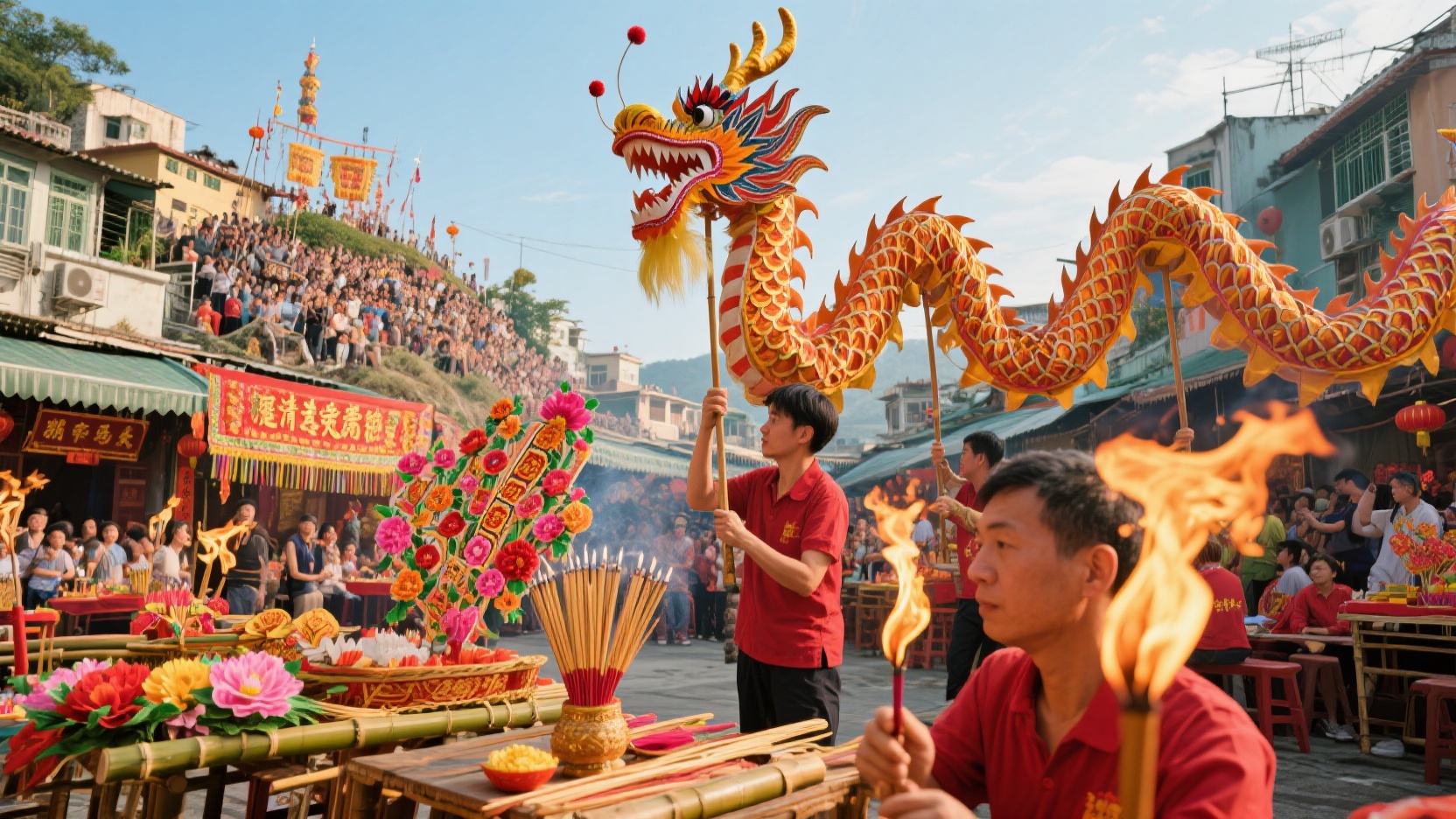
Hong Kong's festivals are not static displays, but rather intangible cultural heritage workshops where you can sit down and learn. The Cheung Chau Bun Festival, the Tai Hang Fire Dragon Dance, and the Chiu Chow Hungry Ghost Festival, though seemingly scattered across outlying islands, Causeway Bay, and older districts, share the same underlying logic: community division of labor, handicraft making, and rituals to honor the gods. To truly participate, you must first put down your camera and follow the bamboo frames, incense, and theatrical performances with your eyes. The following three festivals, plus a traditional craft, arranged according to the lunar calendar, will allow you to avoid the usual tourist routes.
Cheung Chau Bun Festival: Bamboo tents, Floating Colors and Midnight Bun Scrambling
The Taiping Qingjiao Festival is held annually in Cheung Chau from the fifth to the ninth day of the fourth lunar month. The core events are the Piu Sik parade on the eighth day and the midnight bun scramble. Centered around the Pak Tai Temple, the island observes a three-day fast, during which many restaurants refrain from selling meat. Visitors can first observe the Taoist rituals and bamboo scaffolding in front of the temple, then follow the parade route to observe the Piu Sik: children stand on hidden steel frames, portraying historical figures or characters from current events, their costumes concealing the supporting structure, making them appear to be walking in mid-air. In the evening, the large bun mountain in front of the Pak Tai Temple is adorned with auspicious buns, and at dawn, athletes climb the bamboo scaffolding. This custom originates from the Qing Dynasty's exorcism of plagues and the salvation of wandering souls; the Pak Tai parade symbolizes a cleansed neighborhood, and grabbing an auspicious bun carries the meaning of bringing peace home. It is recommended not only to photograph the bun mountain but also to spend half an hour viewing the paper deities and floral decorations in front of the Pak Tai Temple. The bamboo frames, paper clothing, and light bulbs are intricately interlocked, each piece being a ritual object crafted by the community over several weeks, not a temporary set.
Tai Hang Fire Dragon Dance: Following the incense smoke through the old street
The Tai Hang Fire Dragon Dance is held on the evenings of the 14th to 16th of the eighth lunar month. The fire dragon departs from the Lotus Palace and parades through the Tai Hang streets. The dragon, approximately 67 meters long, is made of hemp rope and pearl grass, with incense sticks inserted throughout its body. The dragon's pearls are made of pomelo incense sticks, and a drum band and a cart drum control the rhythm. Visitors can watch villagers adorn the dragon with flowers and red ribbons at the starting point before following the dragon through the old streets of Tai Hang. The incense heat and ash are very direct as the dragon passes, so it is not advisable to wear synthetic clothing or get too close. Legend has it that a plague struck Tai Hang at the end of the 19th century, and the villagers' fire dragon parade helped the plague subside. Since then, the Mid-Autumn Festival fire dragon dance has become a ritual for warding off plagues and fulfilling vows. When watching, please give way to the parade, do not shine flash directly on the dragon's body, and especially do not touch the burning incense sticks. For a more immersive experience, you can go to the Lotus Palace area beforehand to watch the dragon's construction and incense preparation. The master will continuously replenish the burning incense sticks to maintain the dragon's fiery energy.
Chaozhou people's Hungry Ghost Festival: Sitting under the stage of the divine performance, burning an incense stick
Around the 15th day of the seventh lunar month, Chaozhou communities in Kowloon City, Aberdeen, and Causeway Bay erect bamboo sheds to hold the Hungry Ghost Festival. The venue typically consists of a scripture platform, a stage, an offering platform, and a paper effigy of the deity. Visitors can enter the shed in the evening, find a plastic stool, and watch a short Chaozhou opera performance. The singing, recitation, and acrobatics on stage are not merely entertainment, but rather a ritual to appease wandering spirits and appease the gods. The audience is primarily elderly, retaining the distinctive accent and speech of Chaozhou dialect. Opposite the stage, the offering platform is densely packed with paper tablets and offerings, with elders in long gowns chanting scriptures in hushed tones, while the deity glares and oversees the altar. This festival preserves Chaozhou opera, dough figurines, paper offerings, and community memories, representing one of the few remaining sacrificial spaces in Hong Kong that still operates using dialect and technical division of labor. Visitors are advised not to stand on the scripture platform or take close-up photos of the offerings; sitting and watching the performance and listening to the drums is more conducive to immersing oneself in the atmosphere than walking around.
Floral Sign Making: Create a Festive Sign
Floral plaques, commonly seen at Tin Hau Festival, Hungry Ghost Festival, Taiping Qingjiao Festival, and shop celebrations, are large festive plaques made of bamboo frames, handmade paper, velvet, and light bulbs. The craftsmen cut bamboo to size, build frames, stretch cloth, fold paper flowers, and then write large characters. Visitors attending workshops typically learn basic bamboo knotting and paper flower folding before collaborating to complete a small floral plaque component; it takes about half a day to master. This craft is listed as a Hong Kong intangible cultural heritage. Its core lies not in "decoration," but in the craftsman's long-term experience with the elasticity of bamboo, the tension of paper, and the arrangement of characters. While working, one discovers that binding the bamboo is not done with brute force, but rather with knots and bamboo joints interlocking; the paper flowers must be layered to create curves, requiring patience. After the experience, small paper flowers can be taken home, but they cannot replace the complete process of making a large floral plaque. Even outside of festivals, floral plaques can be found in walled villages and markets in the New Territories; observing the temple decorations before and after Tin Hau Festival will illustrate their purpose.
All three types of activities rely on the lunar calendar date. Before traveling, check the lunar calendar conversion for the current year and refer to community announcements regarding road closures, fasting, and quiet zones. Hong Kong festivals are not closed tourist attractions, but living rituals with boundaries and taboos. Wear durable clothing, bring a bottle of water, and slow down to match the rhythm of the drums and gongs to truly experience being a local for half a day.