
Luzhou Art Realm | Exploring the Cultural Fabric and Artistic Pulse of Hefei
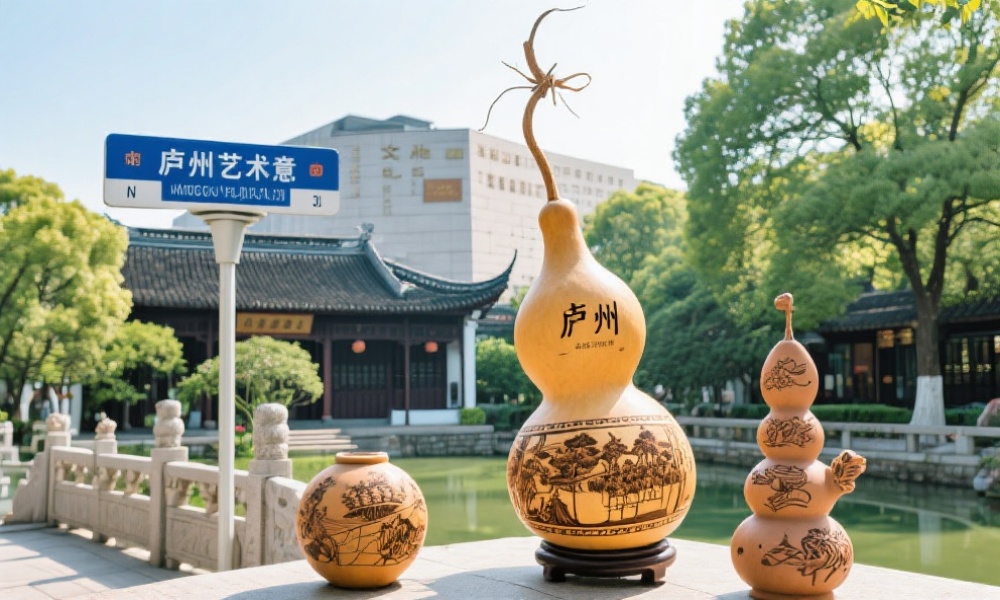
Hefei, an ancient city known as "Luzhou," has not had its profound historical and cultural heritage and unique artistic charm obscured by modernization; instead, like a fine wine, it has only grown richer and more mellow. For travelers seeking a deep cultural experience, Hefei offers a cultural panorama painted by historical sites, museum collections, and intangible cultural heritage. This article will plan a slow-paced travel route centered on culture and art, aiming to guide you deep into the heart of Luzhou and feel the pulse of its millennia-old cultural lineage.
First stop: Anhui Provincial Museum – Tracing the Origins of Huizhou Culture
Embarking on a cultural journey through Hefei, the Anhui Provincial Museum is undoubtedly the best starting point. As the only provincial-level comprehensive museum in Anhui Province, it is not only a window into understanding Anhui's history and culture but also a key to exploring the past and present of Luzhou (Hefei). Its rich collection ranges from the dawn of Neolithic civilization to the solemn grandeur of Shang and Zhou bronzes, and the exquisite beauty of Han Dynasty lacquerware; each exhibit bears the imprint of time. Particularly noteworthy are the "Anhui Civilization History Exhibition" and the "Ancient Huizhou Architectural Components Exhibition." The former systematically traces the evolution of Anhui's regional civilization along a chronological axis, while the latter showcases the unique aesthetics and superb craftsmanship of Huizhou architecture through exquisite wood carvings, brick carvings, and stone carvings, allowing visitors to appreciate the profound depth of Huizhou culture within a small space. Here, you can slow down, savor the stories behind each artifact, and feel the cultural accumulation and artistic heritage of Anhui over thousands of years.
Second stop: Bao Park – a place where integrity and uprightness are admired for generations.
Leaving the museum, head to Bao Park in downtown Hefei, a themed garden commemorating Bao Zheng, a famous upright official of the Northern Song Dynasty. Bao Zheng, courtesy name Xiren, known as "Bao Qingtian," is deeply ingrained in the public consciousness as a symbol of traditional Chinese virtues, characterized by his incorruptibility and unwavering enforcement of the law. Bao Park includes several attractions such as the Bao Gong Temple, Bao Gong Tomb, Qingfeng Pavilion, and Fuzhuang. The Bao Gong Temple houses a statue of Bao Zheng and displays historical materials and artifacts related to his life, presenting a realistic and multifaceted portrait of him through detailed historical records and exhibits. Qingfeng Pavilion, with its towering structure, symbolizes Bao Zheng's noble character, and from its summit, one can enjoy panoramic views of Hefei. Strolling through the park, one can not only learn about Bao Zheng's legendary life but also feel the moral strength of his motto, "The honest are the model for the people," and experience the eternal pursuit of justice and integrity in traditional culture.
Third stop: Li Hongzhang's former residence – the turbulent late Qing Dynasty and the rise and fall of a family.
Adjacent to Bao Park, the former residence of Li Hongzhang, a prominent official in the late Qing Dynasty, is the largest and best-preserved former residence of a prominent figure from the late Qing Dynasty in Hefei. As a key leader of the Self-Strengthening Movement, Li Hongzhang's life was closely intertwined with many significant events in modern Chinese history. The magnificent architectural complex, with its carved beams and painted rafters, showcases the typical residential style of the Jianghuai region in the late Qing Dynasty. The interior exhibits, through rich historical photographs, artifacts, and scene reconstructions, detail Li Hongzhang's life, achievements, family fortunes, and the historical background and far-reaching impact of the Self-Strengthening Movement. Here, visitors can not only appreciate exquisite architectural art but also travel through time to experience the arduous journey of late Qing China seeking change amidst internal and external troubles, gaining a more intuitive and profound understanding of modern Chinese history.
Fourth stop: Xiaoyaojin Park – an ancient battlefield of the Three Kingdoms period, a place of heroic legends.
Xiaoyaojin Park, named after the famous Battle of Xiaoyaojin during the Three Kingdoms period, is an important part of Hefei's history and culture. Although now a tree-lined city park, it still retains many relics and commemorative buildings from the Three Kingdoms era, such as the statue of Zhang Liao and the Cao Wei command platform, silently telling the story of that era of war and conquest. In 215 AD, Wei general Zhang Liao achieved a decisive victory against Sun Quan here, despite being outnumbered, giving rise to the famous story of "Zhang Liao stopping the crying." Strolling through the park, one can not only feel the weight of history and imagine the grandeur of the battlefield, but also relax in the lush green environment and experience the daily leisure life of Hefei residents. Xiaoyaojin is not only a witness to history but also a model of harmonious coexistence between urban culture and natural landscape.
Fifth stop: Intangible Cultural Heritage Experience – Luzhou Craftsmanship, Passing Down Through Fingertips
A deep cultural journey wouldn't be complete without the opportunity to experience intangible cultural heritage firsthand. Hefei boasts numerous national and provincial-level intangible cultural heritage projects, serving as living carriers of Luzhou culture. Among them, "Luzhou Gourd Pyrography" and "Luzhou Clay Sculpture" are two particularly representative examples. Gourd pyrography uses gourds as its medium, employing special pyrography pens to create landscapes, flowers, birds, and figures on the gourd's surface, combining the beauty of painting and sculpture. Luzhou clay sculpture, based on traditional clay, uses techniques such as pinching, shaping, carving, and coloring to create lifelike figures of people and animals. These intangible cultural heritage projects not only showcase the exquisite skills of artisans but also embody rich folk wisdom and aesthetic taste. Visitors are encouraged to visit cultural and creative parks or intangible cultural heritage transmission bases in Hefei to participate in workshops, create their own Luzhou artwork, and take this unique cultural memory home.
A cultural and artistic journey through Hefei is a dialogue across time, an encounter with historical figures, and a tribute to traditional craftsmanship. It transcends simple sightseeing, guiding you to immerse yourself in the profound cultural heritage of Hefei and experience the unique charm and artistic brilliance that this city has cultivated throughout history. Slow down, feel with your heart, and Hefei will offer you an unforgettable and profound cultural experience with its unique cultural foundation.