
Guiyang's Art and Culture: A Deep Dive into the World of Culture and Art
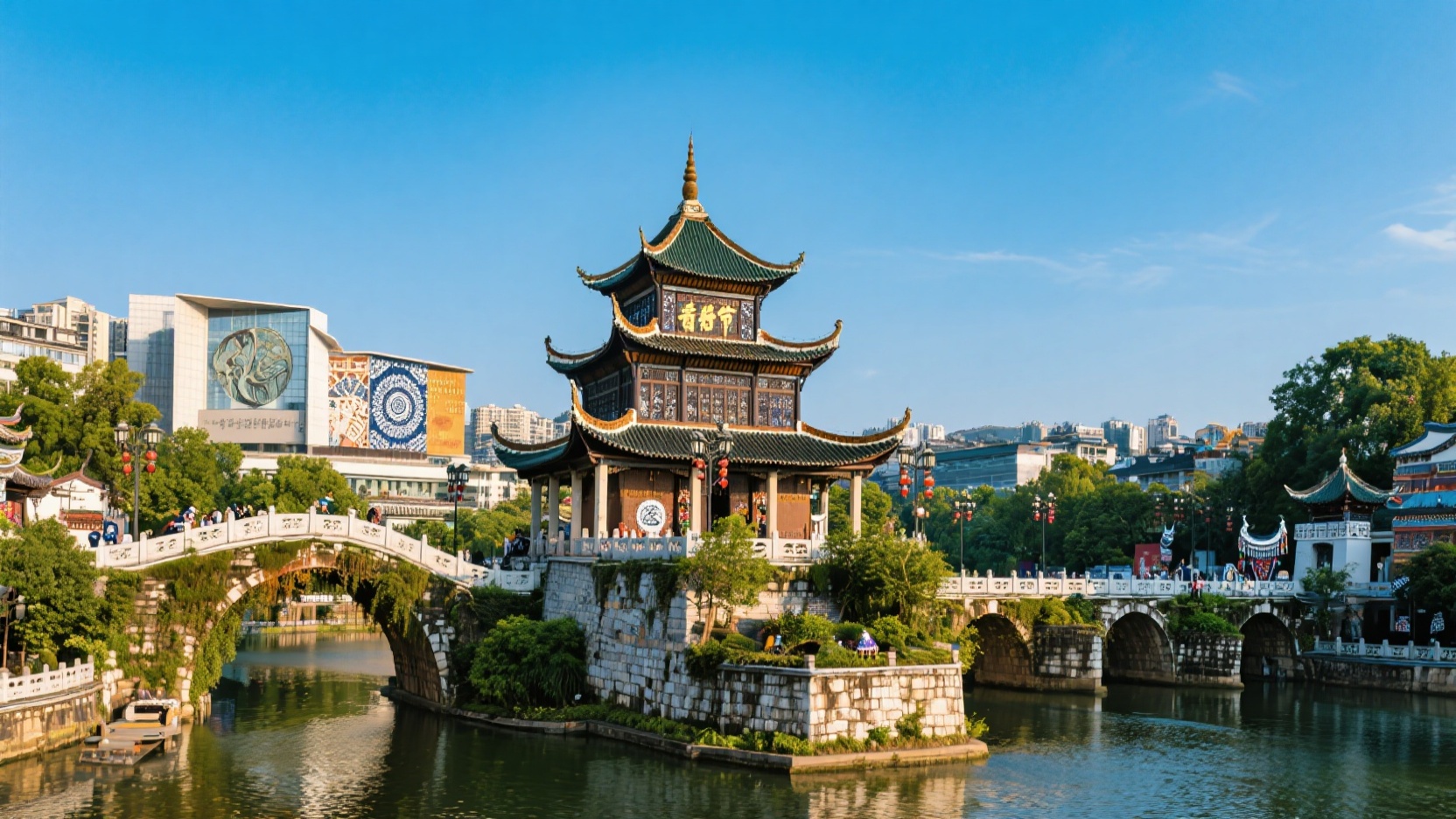
Guiyang, a southwestern metropolis known as the "City of Forests," possesses charm far beyond its cool climate and beautiful landscapes. Hidden beneath its karst topography lies a unique artistic panorama woven from diverse ethnic cultures and rich historical heritage. For travelers seeking a profound cultural experience, Guiyang offers a multi-layered cultural tapestry, worthy of leisurely contemplation rather than a fleeting glance.
Tracing the Historical Context: Cultural Narratives of City Landmarks
A cultural and artistic journey through Guiyang should begin with its core historical landmarks. These buildings not only bear witness to the city's development but also serve as carriers of the sentiments of literati and the local educational traditions.
Jiaxiu Tower , standing on the banks of the Nanming River, was first built during the Wanli period of the Ming Dynasty and is one of the most representative ancient buildings in Guiyang. Its three-story, three-eaved, four-cornered pyramidal roof, along with Fuyu Bridge and Cuiwei Garden, forms a classic architectural ensemble. The name "Jiaxiu" signifies academic excellence and was once a place where Guiyang scholars would climb to enjoy the view, compose poems, and write essays. The tower houses permanent exhibitions showcasing the historical evolution of Guiyang and anecdotes of famous figures. Strolling across the bridge, one can experience the refined pleasure of the ancients "leaning on the railing to gaze at the moon, drinking wine in the breeze," and appreciate its profound significance as a symbol of Guizhou culture.
Located next to Jiaxiu Tower, Wenchang Pavilion was built in 1609 (the 37th year of the Wanli reign of the Ming Dynasty). It is the only existing double-eaved, nine-cornered wooden pavilion in Guiyang, with a unique architectural style that blends Taoist and Confucian cultural elements. Wenchang Pavilion was once a place for Guiyang literati to gather and worship Wenchang Dijun (the God of Literature), embodying their aspirations for academic prosperity and a flourishing literary culture. Here, one can closely observe its exquisite bracket structure and upturned eaves, experiencing the rise and fall of Guiyang's ancient cultural heritage.
If you wish to explore the roots of Guiyang's traditional education, the Guiyang Confucius Academy is an unmissable destination. As a cultural institution integrating Confucian culture research, dissemination, and experience, the Confucius Academy was rebuilt on its original site, interpreting the essence of traditional architecture with modern techniques. Its facilities, including a classical Chinese studies lecture hall, a Confucianism museum, and etiquette workshops, offer visitors the opportunity to systematically understand Confucian thought and experience traditional etiquette. Here, you can participate in a refined gathering or listen to a lecture on classical Chinese studies, immersing yourself in the profound and extensive nature of excellent traditional Chinese culture.
Exploring National Treasures: A Palace of Art Through Diverse Cultures
As a province inhabited by multiple ethnic groups, Guizhou's magnificent cultural and artistic achievements are largely shaped by the unique customs, beliefs, and skills of its various ethnic groups. The Guizhou Provincial Museum is undoubtedly the best window to gain a deeper understanding of this.
The Guizhou Provincial Museum boasts a rich collection, particularly renowned for its ethnic artifacts and paleontological fossils. In the ethnic artifacts exhibition area, the clothing, silver ornaments, batik, embroidery, and musical instruments of several long-established ethnic groups, including the Miao, Buyi, and Dong, are vividly displayed through exquisite artifacts and detailed textual and pictorial materials, showcasing the customs, aesthetic tastes, and spiritual world of each ethnic group. Through these exhibits, visitors can trace the threads of the Miao people's "migration epic," experience the rhythm of the Buyi people's "eight-tone sitting song," and understand the harmonious beauty of the Dong people's grand songs. Behind each exhibit lies a story of collective memory and cultural heritage, worthy of careful appreciation.
In addition to static displays, the Guizhou Provincial Museum also regularly hosts ethnic cultural and artistic performances and handicraft experience activities, providing visitors with opportunities to get up close to intangible cultural heritage. For example, the Miao people's silver forging techniques, batik techniques, and embroidery techniques—these exquisite crafts passed down through generations—are not only material creations but also concrete expressions of the national spirit. They carry the wisdom and aesthetics of our ancestors, telling ancient yet vibrant stories through patterns, colors, and textures.
Intangible Cultural Heritage Experience and Slow Living: Art in Everyday Life in Guiyang
A deep immersion in Guiyang's culture and art goes beyond simply visiting museums and historical sites; it's about integrating into the daily lives of its intangible cultural heritage. While specific intangible cultural heritage experience points may require advance reservations or chance encounters, understanding their essence allows for a better discovery of art throughout Guiyang's streets and alleys.
Miao batik and embroidery are among the most representative intangible cultural heritages of Guizhou. Batik uses beeswax as a canvas and indigo dye, creating a unique artistic effect with naturally occurring crackles. Embroidery, on the other hand, uses needle and thread as a brush to depict myths, natural totems, and scenes of daily life on fabric, resulting in vibrant colors and profound meanings. These exquisite works can be found in some cultural and creative shops or ethnic handicraft markets in Guiyang, and there are even opportunities to participate in small workshops, experiencing the joy of batik or embroidery firsthand and feeling the artistic heritage passed down through generations.
Furthermore, Guizhou's ancient theatrical forms, such as Dixi and Nuoxi , though not frequently performed in city centers, are important living fossils for studying Guizhou's primitive religions and folk beliefs due to their unique masks, costumes, and performance styles. Understanding the stories behind these theatrical forms can help tourists gain a more comprehensive understanding of the diversity and mystery of Guizhou culture.
A cultural and artistic journey through Guiyang is a gradual exploration. It encourages travelers to slow down, listen to the echoes of history in ancient architecture, feel the pulse of the nation before museum exhibits, and touch the warmth of culture in intangible cultural heritage techniques. Every pause, every glance, is a discovery of the city's deeper charm. Guiyang's art is neither noisy nor ostentatious, yet it reveals its unique and enduring vitality in the subtle details.