
The Flavors of Guangzhou in the Markets | Stepping into the mornings of Shayuan and Longjin, discovering 9 hidden gems cherished by locals.
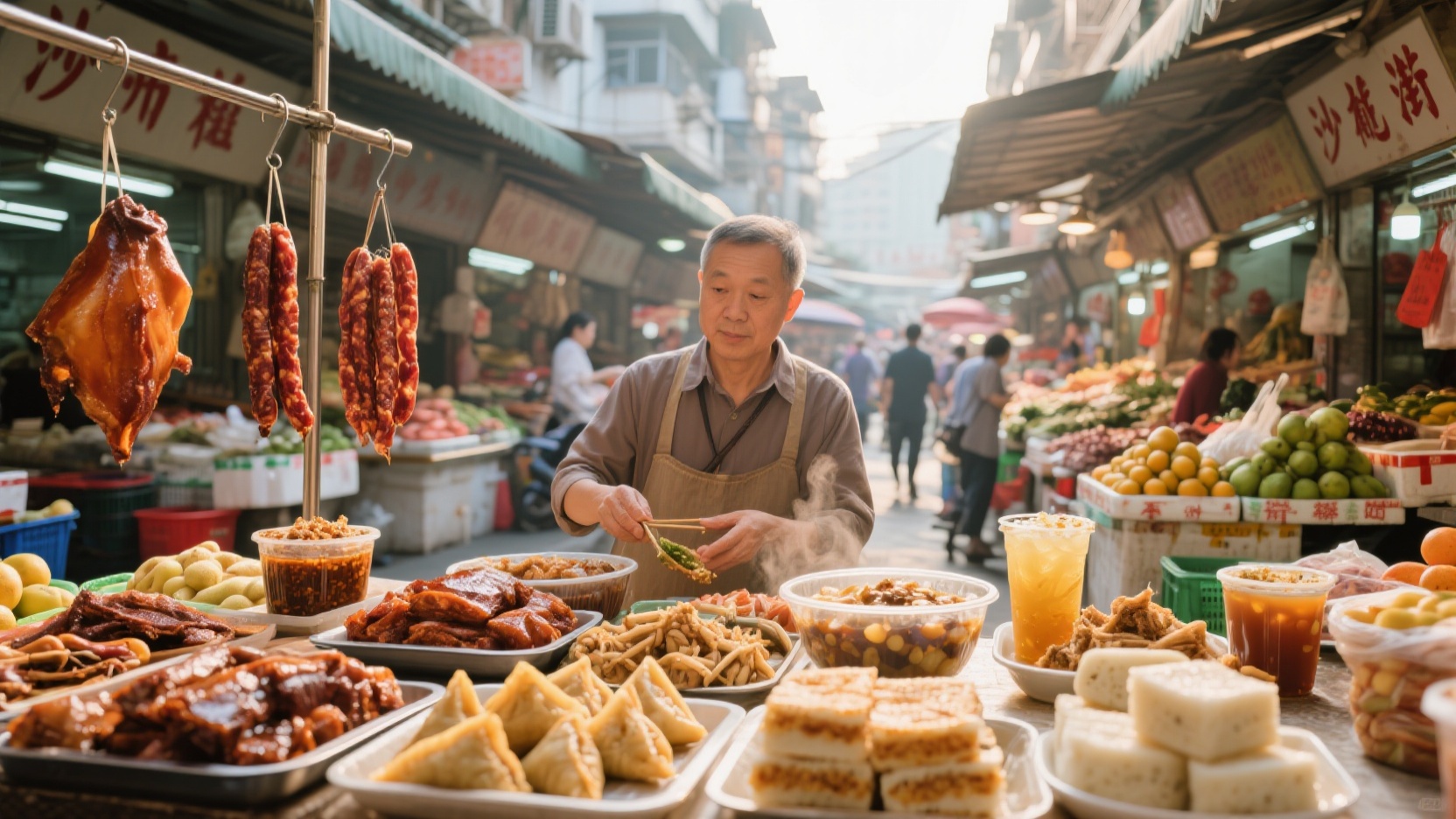
At 5:30 a.m. at Shayuan Farmers Market, the lights at the roast meat stalls are the first to come on. There are no tourists queuing, only elderly women pulling carts waiting for the first batch of char siu. Not far away at Longjin Market, the steam from the rice noodle roll stalls simultaneously rises over the arcades of Xiguan. These two old markets are the most unguarded culinary scenes in Guangzhou. This article only selects the favorite items that longtime residents repeatedly buy, from cooked food to dried goods, explaining the selection criteria and how to eat them in the order you visit the stalls.
Roasted meats and cooked food: Buy half-fat and half-lean meat first, then talk about life.
Almost every roast meat stall in Shayuan Market has its own loyal customers. When choosing char siu, look for "half-fat, half-lean," with caramelized edges, and the best cuts are those where juices slowly seep out when cut. "Plum char siu," the neck cut, has a more springy texture. For poached chicken, look for golden-brown skin with a layer of translucent jelly between the skin and meat—this is a sign of perfect doneness. For roast goose, choose freshly roasted; the crispy skin makes the most distinct sound when it's being chopped. Suggested serving method: chop it up without sauce, or simply drizzle with a little soy sauce, and enjoy it with a bowl of hot white rice. When buying roast goose, ask the vendor to pack a packet of plum sauce for dipping at home.
The cooked food stalls also sell "fish skin dumplings" and "dace fish balls." The outer skin of the fish skin dumplings is made from minced fish meat; it becomes translucent after cooking and doesn't fall apart even after prolonged boiling. When choosing, look for thin, intact skin and a generous filling. Bring them home, boil a pot of clear soup, add a few fish skin dumplings and some lettuce, and enjoy them with the soup—they have an extra layer of chewiness compared to frozen ones. The dace fish balls can be freshly squeezed into balls by the stall owner and can be used in soups or pan-fried with stuffed green peppers.
Handmade snacks and noodles: A Xiguan resident's morning begins with a bowl of rice noodle rolls.
The handmade rice noodle stalls at Lung Jin Market are most well-stocked before 10 AM. Fresh rice noodle rolls are oily, springy to the touch, and smell of rice flour. After buying them, cut them into sections, steam them for three minutes, and drizzle with sesame sauce, sweet sauce, and a little chili sauce—the same as those at street food stalls. If you buy handmade rice noodles, look for thin, even noodles with no cracked edges; these are less likely to break when used for stir-fried beef noodles.
The radish cake and water chestnut cake at dim sum stalls are all about generous portions. The radish cake should have coarse radish shreds visible on the cut surface, with evenly distributed pieces of preserved meat; the water chestnut cake should have visible water chestnut pieces, and be a pale yellow color without any grayish tinge. Cut into thick slices, pan-fry in a little oil until both sides are crispy, while the inside remains soft and smooth – a home-style replica of the dim sum restaurant's flavor. If you see freshly steamed "white sugar Lunjiao cake," with its tiny honeycomb-like surface and slightly sour fermented aroma, it can be eaten cold, not heated.
Sauce and Cured Meats: The Hidden Flavors of Old Guangzhou Kitchens
Deep within the market, a sauce shop displays rows of glass jars. For chu hou sauce, choose a deep brown color that resists stirring but doesn't separate; it's perfect for braising beef brisket or duck. For fermented soybean paste, opt for a lighter color and a strong bean aroma; it's excellent for steaming pork belly or fish head. Seafood sauce should have a fine texture and a balanced sweet and salty flavor; it's great for dipping suckling pig or mixing with rice noodle rolls.
The Cantonese preserved meat stalls are busiest in autumn and winter, but the old market offers them almost year-round. Choose sausages that are dry and firm, with casings that aren't sticky, and that smell of rose liqueur; the slices should have a clear separation of fat and lean meat. For cured pork belly, choose pork belly or brisket strips, with a golden-yellow skin and translucent fat. The easiest way to eat them is in a clay pot rice: cook the rice until the water has evaporated, then add slices of sausage and a few slices of ginger, turn off the heat and let it sit for ten minutes, then drizzle with soy sauce and mix well. The "salty and sour" pickled vegetables at the stalls are often overlooked, but they're excellent with porridge. When choosing pickled radishes, pickled mustard greens, pickled shallots, and pickled ginger, check if the brine is clear and if the vegetables are not mushy. Buy a small bag to take home and enjoy with plain congee or roasted meats for a refreshing and palate-cleansing effect.
Seasonal fruits and sweet soups: Bringing Guangzhou's summer and autumn into your shopping basket
When wampee is in season, the market is filled with piles of wampee fruit with branches and leaves. Choose those with slightly wrinkled skin, green stems, and a springy feel when squeezed; these will have a stronger sweet and sour flavor. People in Guangdong usually eat wampee with the skin on, letting the flesh slide into their mouths and spitting out the pit. For longan, look for a thin, brittle shell that doesn't rattle when shaken; the flesh should be thick and translucent. If you buy a lot, you can peel and freeze the flesh, adding a few to sweet soup. For star fruit, choose plump ones with five ridges and a yellow color with green edges. When eating, remove the ridges and core, sprinkle with a little salt, and marinate briefly for a more pronounced sweetness.
Sugarcane and Imperata cylindrica soup mixes from soup stalls are a staple in Guangzhou households. Green, thin-stemmed sugarcane is sweeter, and the Imperata cylindrica should be white, dry, and free of mold. Cook it with water chestnuts and carrots, bringing the water to a boil before simmering for forty minutes. Let it cool before drinking. If the market sells freshly ground sesame paste or almond paste, choose a thick, creamy consistency that clings to a spoon without noticeable lumps; eating it hot best reveals the purity of the aroma.
Visiting the local market is the best way to experience a city.
Tourist attractions may close, and arcade buildings may be renovated, but the wet markets are always punctual in the morning. In Shayuan and Longjin, there's no need to look at recommendation lists; just follow the old ladies pulling their carts. Whichever stall she stops at to ask, "Is today's char siu good?" that stall is sure to be good. The true flavor of a city isn't found in the center of an elegantly plated table, but in the damp alleyways, the rising and falling cries of vendors, and the red marks left by plastic bags. Only by truly understanding the wet markets can you say you've truly eaten from the same pot as Guangzhou.