
Guangzhou's Artistic Undercurrents: Delving into the Spiritual Corners of Independent Bookstores, Vintage Warehouses, and Community Cafes
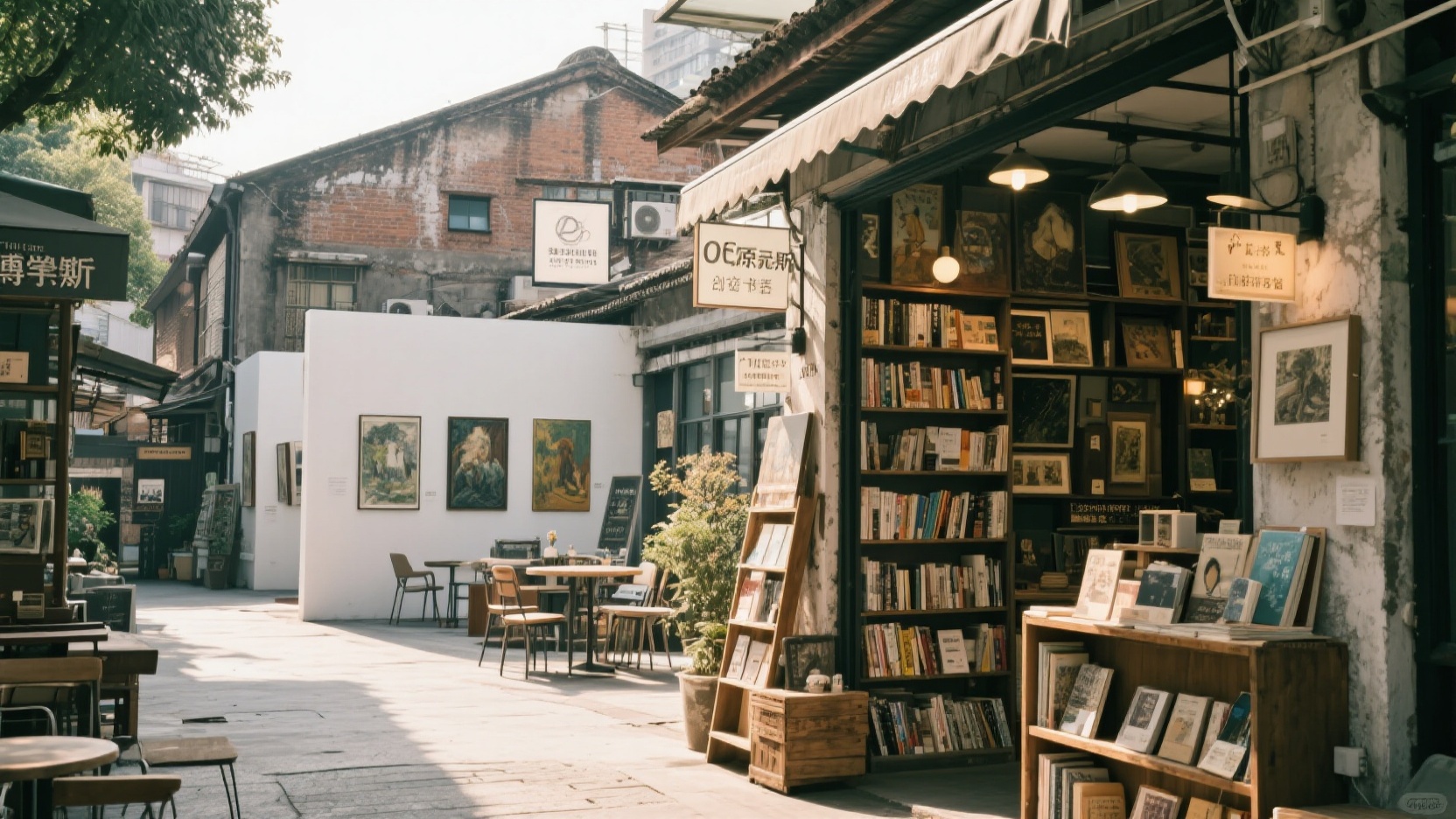
Avoiding the glitz and glamour of Zhujiang New Town and the hustle and bustle of Beijing Road, Guangzhou's artistic charm is often hidden in the corners of arcade buildings, old factories, and the depths of communities. This niche cultural map doesn't chase after tourist hotspots, but instead takes a day or a weekend to explore independent bookstores, private art galleries, vintage warehouses, creative parks converted from old factories, and community cafes, revealing a more relaxed spiritual facet of the city.
Independent bookstores: The secret reading code under the arcades of the old city
The Borges Bookstore is tucked away on the ground floor of an old building in Yuexiu District. Its unassuming facade belies its interior, which is dominated by black, white, and gray tones and a steel frame structure. The selection focuses on literature, philosophy, and the French New Novel. There are no bestseller displays; books are arranged by author's surname, creating a quiet atmosphere reminiscent of a private study. The highlight is the spatial order created by the old wooden tables and steel staircase, with the French New Novel and Latin American literature sections particularly well-organized. For photography, it's recommended to use black and white mode to capture the lines of the staircase and the depth of the bookshelves, utilizing the sidelight filtering through the windows to create a cool ambiance.
Liudeng Bookstore, on the other hand, brings warmth to the old town's arcade buildings. The space is small, but the selection leans towards humanities, social sciences, and poetry, often featuring independent publications and small exhibitions. By day, it resembles a community reading room; at night, with the lights on, the poetry section takes center stage, and the extended-opening lightbox acts like a comma in the streetscape. The atmosphere is more everyday and approachable. For photography, it's recommended to shoot from outside the arcades looking inwards, capturing the warm light and old town streetlights in the same frame, or to use the window seats and handwritten recommendation cards to create depth in the photos.
Private Art Museums and Independent Galleries: Avant-garde Expression in Small Scale
Kuiyuan Art Museum is located in a century-old red-brick building in Dongshankou. Built in 1922, the teak doors and windows, patterned tile floors, and curved terraces are more captivating than many of the exhibits. The museum regularly updates its contemporary art exhibitions, often featuring projects by local and international young artists, exuding an elegant yet sharp atmosphere. The three-story space has a clear layout, offering highlights that balance architectural details with curated content. It's recommended to photograph the red-brick exterior and patterned tile staircase in the afternoon, when sunlight filters through the blinds, creating particularly beautiful shots.
Shangrong Art Museum is nestled in the shade of trees along the Pearl River. White walls, courtyards, and exhibition halls intertwine, creating a cohesive whole. While the exhibitions are small in scale, the curatorial focus leans towards niche and experimental themes. The gardens and white walls borrow scenery from each other, and the artworks often engage in a dialogue with the space. Quiet and uncrowded, it's perfect for leisurely viewing. For photography, it's recommended to use the shadows of the trees or the water's surface as a foreground, capturing the artworks on the white walls and the interplay of light and shadow.
This Guangzhou gallery is nestled within a creative park. The space is a standard white cube, but the exhibitions often revolve around urban memories and young artists, focusing on experimental and conceptual art, with a high turnover rate. The exhibition density is low, with ample white space, and each exhibition has a clear theme. It's more suitable for viewing than taking photos; when taking pictures, maintain a distance from the exhibits and utilize geometric lines and floor reflections for composition.
Old warehouses and old factories: spaces re-encoded by time
Xiyangji Vintage Warehouse, converted from an old warehouse in Liwan District, houses a large collection of vintage European furniture, clocks, vinyl records, and industrial lighting fixtures, creating a retro maze-like atmosphere. The space features high ceilings, with the items organized by category. The clock wall and vinyl record listening area are particularly distinctive, while a giant chandelier gives the items a theatrical feel. Under the warm yellow overhead lighting, wearing solid-colored clothing makes it easier to blend into the background. For photography, it's recommended to use the arrangement of vintage furniture as a guiding line or to create symmetrical compositions using mirrors.
The OE Original Elements Creative Park was originally located on the site of an old brewery in the Xicun area. The red brick chimneys, old factory buildings, and railway tracks still retain traces of industrial history, with the original fermentation tanks and chimneys serving as a natural backdrop. Scattered throughout the park are design studios, craft workshops, and coffee corners. It's not crowded with tourists, but often hosts a market on weekends, making it a perfect place for a quiet stroll. Shooting from below against the blue sky is a signature spot, and the old iron gates and weathered walls also create excellent framed views.
Community Cafes: Corner Stations for Mental Well-being
Sigma Coffee is located on a street corner in the Dongshankou area. Its storefront is simple, primarily featuring a takeout window and a few outdoor seating areas, without any strong photogenic appeal. A handwritten menu is displayed in the window. Coffee beans are available in light and medium-dark roasts, all roasted in-house, ensuring consistent quality. The clientele is mostly local residents. The main attraction is observing the everyday life of the community: dog walkers, children leaving school, and cyclists stopping for a short while. For photography, it's recommended to sit at one of the outdoor seating areas; the afternoon sunlight can frame the street scene through the window, creating a slice-of-life feel.
This route doesn't involve a grand narrative or a strict itinerary. Connecting bookstores, art galleries, antique warehouses, old factories, and community cafes is essentially about exploring another facet of Guangzhou's fabric. It's about measuring the city's spiritual corners with your own footsteps.