
Foshan Festival Craft Map | Explore Tongji Park, enjoy the autumn colors, try pottery making and wheel throwing – experience half a day as a local.
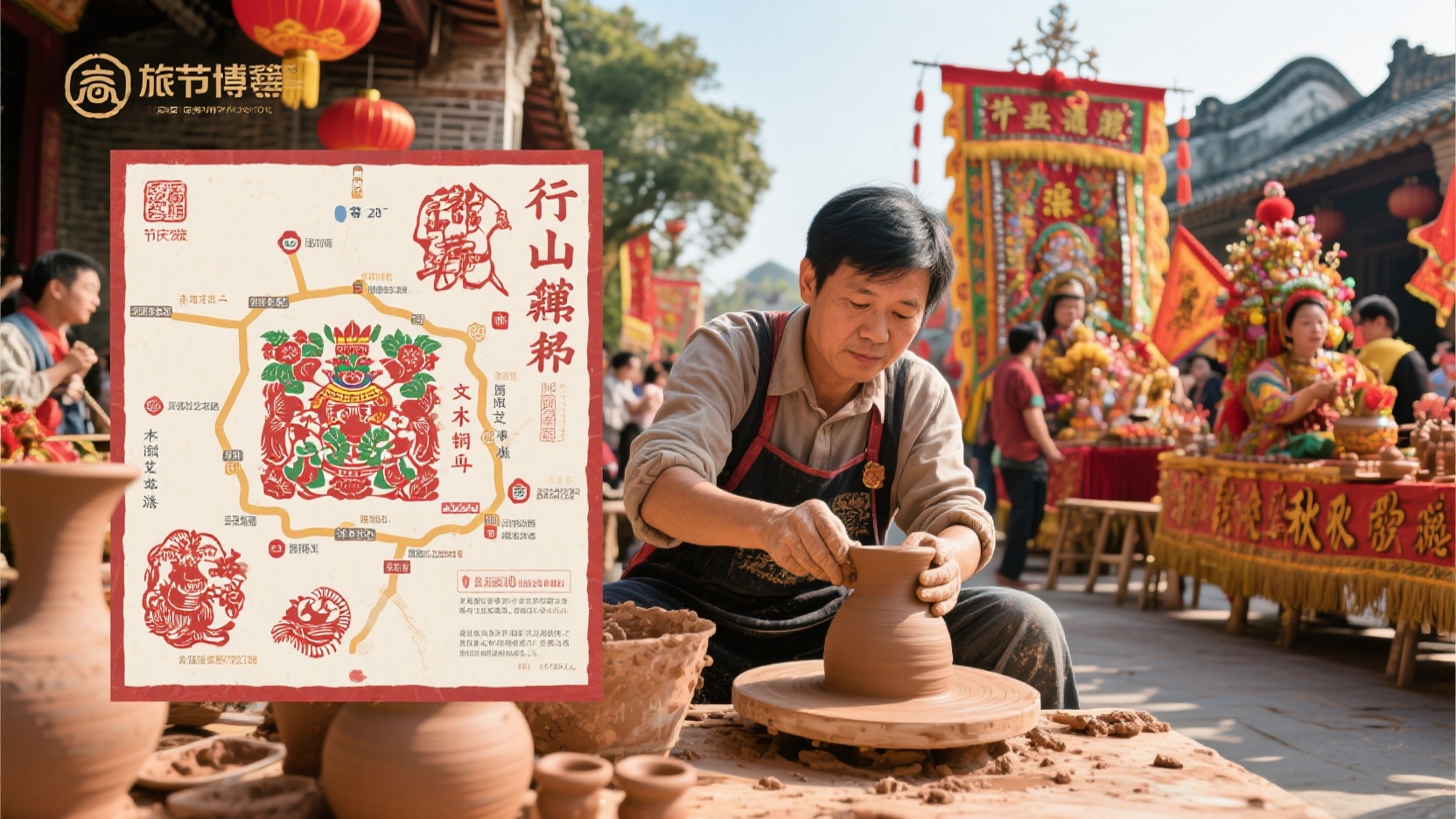
In Foshan, culture and art are rarely locked away in display cases; rather, they are present in a vibrant, seasonal way: on the sixteenth day of the first lunar month, one walks through Tongji; in autumn, there's a parade showcasing autumn colors; and on ordinary days, one can make pottery by the dragon kiln or color door god paintings under the arcades. This article doesn't list attractions by location, but rather selects four folk customs and intangible cultural heritage experiences that allow you to "sit down and feel like a local for half a day" based on the festivals.
Walking across Tongji Bridge on the 16th day of the first lunar month: A city-level blessing ceremony
Around the Lantern Festival each year, the Tongji Bridge area in Chancheng District transforms into its most crowded yet orderly area, brimming with a sense of ritual. The climax occurs from the early morning to late at night on the sixteenth day of the first lunar month, when locals, young and old, carry windmills and lettuce, walking from north to south across the Nine-Bend Bridge. The windmills must turn, and the lettuce must be thrown into a lettuce pool after crossing the bridge, symbolizing "bringing wealth home." The windmills are then placed on the lintel to complete a full year of rotation. Tourists don't need to rush at dawn; they can complete the entire journey from afternoon to evening. The key is to walk slowly with the flow of people, avoid going against the flow, and hold the windmills overhead.
The Tongji Bridge isn't large, but it carries a strong sense of history. Originally built in the Ming Dynasty, it was a vital thoroughfare for commerce and travel in Foshan. The Cantonese phrase "Walking across Tongji, without obstruction" means that crossing this bridge will bring freedom from worries and obstacles. The surrounding old streets are lined with stalls selling braised pork trotters with ginger and sesame paste, which stay lit up all night. Buying a bowl and eating it under the arcades is a more authentic way to experience local life than just taking photos. For a more complete experience, buy a bunch of lettuce and a paper windmill beforehand. Don't just carry them in a plastic bag; hold them close to your chest to truly feel the sense of participation in the journey.
Autumn Parade and Lights: The Annual Competition of Craft Cities
Autumn Colors is the most significant folk parade in Foshan, usually held between August and October of the lunar calendar, with the exact dates varying slightly each year. It's not just a simple lantern festival, but a "seven-color" competition: lantern colors, cart colors, horse colors, floating colors, ground colors, water colors, and scenery. The parade includes bamboo-made paper fish lanterns, copper-carved paper-cut lantern screens, live actors playing the floating colors, as well as gong and drum troupes and lion dances.
Even more worthwhile is the preparation before the parade. Many workshops in the old town prepare lantern frames, cover them with gauze, and paint them before the autumn colors arrive, with the craftsmen allowing visitors to observe or lend a hand. Visitors can learn to make a simple fish lantern: first, bend bamboo strips to create the fish's skeleton, then cover it with gauze, and finally attach fins with paper-cut patterns. Standing by the parade route in the evening, carrying your fish lantern, and seeing the professional lantern trucks pass by, you'll immediately understand why Foshan's autumn colors have endured for centuries—the city's iron smelting, pottery making, paper-cutting, and other crafts are all crammed into a mobile exhibition. During the Ming Dynasty, Foshan's handicrafts flourished, and the autumn colors festival initially began as a folk activity celebrating the harvest and showcasing skills, gradually evolving into a city-wide event. After watching the parade, you can browse the autumn colors market; many stalls only display items and don't sell, and the vendors are more willing to explain the production process.
Playing with pottery at Nanfeng Ancient Kiln: Throwing pottery next to a 500-year-old dragon kiln
The Nanfeng Ancient Kiln area in Shiwan is a hub of Foshan's ceramic culture, open year-round, but the best time to visit is on weekday mornings, avoiding tour groups. Before you start, take a walk around the kiln, observing the kiln opening, the firewood feeding holes, and the kiln body climbing the mountain. This will help you understand that the "dragon kiln" is not just a scenic spot, but a still-functioning firing facility. The Nanfeng Ancient Kiln was first built during the Zhengde period of the Ming Dynasty, and its kiln fire has burned continuously for over 500 years, making it a living testament to the history of Lingnan ceramics.
Before experiencing pottery throwing, the master will demonstrate three movements: centering, opening the pot, and lifting the pot. The most common mistake for beginners is having their arms suspended in the air, causing the clay to become off-center. The correct method is to rest your elbows against your knees, cup the clay in your palms, and coordinate the speed of the potter's wheel with your breathing. Making a small cup or bowl isn't difficult; the challenge lies in resisting the urge to "add another cut" when trimming and glazing. Shiwan pottery is famous for its "Shiwan figurines," characterized by their thick bodies, deep glazes, and particularly lifelike figures. After finishing your pottery, you can leave it for firing, or visit the nearby figurine street to see the master's original works and compare your own skill level with the artisan's. Allocate two to three hours; don't just take photos.
Woodblock New Year Pictures and Paper Cutting: Red Door Gods Under the Arcade
The best time to experience Foshan woodblock New Year paintings is from the winter solstice to before the Spring Festival, but you can also find them in the arcade workshops of the old town of Chancheng on weekdays. Choose a "everlasting red" base, and watch the craftsman apply ink, cover it with paper, and then use a trowel to evenly press along the woodblock. The moment the paper is lifted, the lines of the door gods will show a slightly grainy texture. Next is the unique "filling with red pigment" of Foshan New Year paintings: using pigments made from red lead to fill in the base color, giving the picture a thick vermilion color that is moisture-proof and will not fade over time.
Foshan woodblock New Year pictures, along with Tianjin Yangliuqing, Suzhou Taohuawu, and Weifang Yangjiabu, are known as the four major New Year picture styles in China. However, due to the humid climate in the south, both the paper and pigments used in Foshan are more weather-resistant. The pictures feature bold lines and full compositions, with door gods, the gods of fortune, prosperity, and longevity, and the two immortals of harmony and union being common themes. In addition to New Year pictures, Foshan paper-cutting, particularly copper-chisel paper-cutting, is also highly distinctive: patterns are painstakingly carved into copper foil with a beadwork knife, then covered with colored paper. Copper-chisel paper-cutting requires careful observation and is best done by sitting quietly for an hour. Whether choosing New Year pictures or paper-cutting, it's best to print two copies—one to take home and one to leave on the wall in the workshop to dry, displayed alongside the works of local artisans.
String these four experiences together chronologically: walk along Tongji Mountain on the sixteenth day of the first lunar month, admire the autumn colors and make fish lanterns in advance, throw clay at the Nanfeng Ancient Kiln on weekdays, and print door gods from the winter solstice to before the Spring Festival. If you only have one day, spend the morning working with pottery, the afternoon printing New Year pictures or cutting paper in the old town, and the evening watching excerpts of Cantonese opera near the Ancestral Temple. A cultural and artistic journey in Foshan isn't about stopping at exhibition booths, but about completing the experience amidst clay, paste, and cinnabar.