
These 7 Chengdu Restaurants: A Local Must-Visit List I Only Boldly Composed After Three Trips (Not Popular Brands)
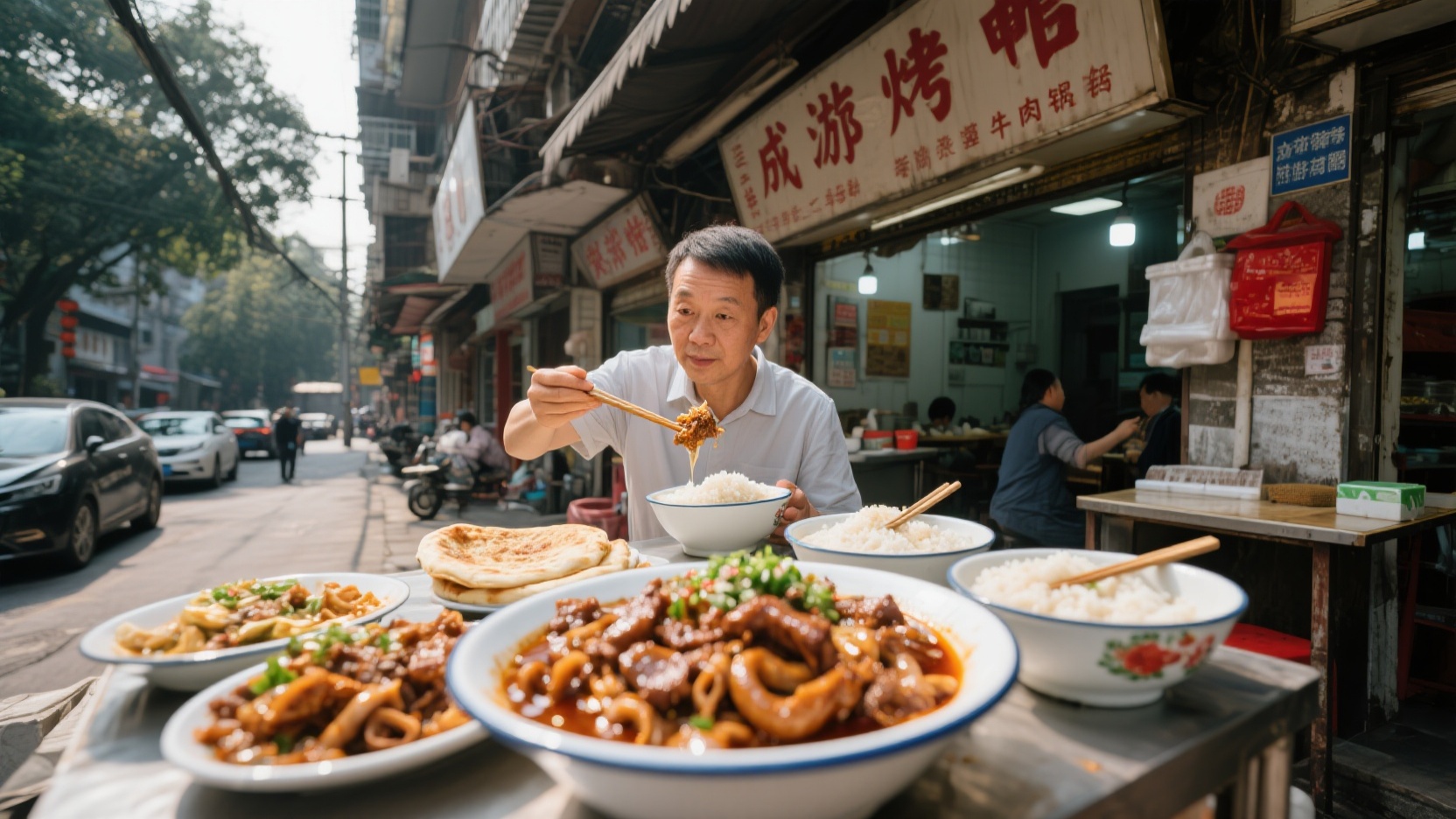
On my third trip to Chengdu, I didn't go to Chunxi Road after getting off the plane. Instead, I went straight into an old neighborhood near Simaqiao, just to see if a bowl of tofu rice was still a secret lunch code among local gourmets. My previous two experiences of being disappointed taught me that the "local flavors" on the must-eat list usually have the numbing and spicy flavors turned up to the maximum, which means they've lost the essential flavors that old Chengdu locals value most.
This time, I changed my approach. Every day at noon and in the evening, I only went to the entrance of the old neighborhood market, following the elderly people carrying stainless steel lunchboxes. None of the following seven restaurants are on the must-eat list, and there are no short video teams outside. Some of them even close down at 2 pm. They are the only ones on my list that I am willing to repeatedly visit after three trips.
1. Behind Yulin at the South Gate: Douhua Rice and Braised Pork Intestines are only available at lunchtime.
The first shop, "Li Douhua," is hidden in a back alley of Yulin Market. Its storefront is so small I missed it three times. The reason it's worth going is straightforward: the douhua isn't the watery, mushy kind; it's aged douhua made with bile, giving it a distinct soybean aroma and a slightly sweet aftertaste. How to order the signature dishes: a bowl of douhua, a dish of dipping sauce, and a serving of steamed beef with rice flour. The owner will ask, "Do you want it firmer or softer?" Always answer "firmer." What else can you buy nearby? Turn left after exiting the alley, and you'll find a shop making fresh brown sugar jelly, only available in plastic cups, which is perfect for cooling down the spiciness of the douhua.
The second stall, "Zhou Ji Braised Pork Intestines," is on the same corner of the market and only opens until 1 PM. Their braising broth is 20-30 years old, and the intestines are cleaned thoroughly while retaining a little bit of fat. How to order: Half a portion of braised pork intestines and half a portion of braised tofu, ask the vendor to pour a spoonful of the original broth over them, and don't cut them too small. If you're passing by, you can buy half a braised duck wing from the "Yang Duck" stall next door, but avoid buying the "Husband and Wife Lung Slices" from the same stall.
II. The Secret of Two Bowls of Noodles and a "Greasy Rice" in the Dongmen Steel Pipe Factory Living Area
The third shop, "Wang Jie's Zha Jiang Mian" (Sister Wang's Minced Meat Noodles), is located in the old residential area of the steel pipe factory. It doesn't have a formal sign, just a white board. The reason it's worth going is simple: the minced meat is stir-fried fresh daily, and the noodles are topped with a spoonful of lard and half a spoonful of sesame paste—the old Dongmen style. How to order the signature dish: Just order two liang (100g) of Zha Jiang Mian, requesting "dry-cooked with green onions." Don't order beef noodles; those are for out-of-towners. What else can you buy nearby: In the evenings, there's a cart selling boiled peanuts near the entrance of the residential area; buy a bag to go with your drinks.
The fourth shop, "Zhang Youyou Rice," isn't far from here. It's actually an upgraded version of soy sauce rice, topped with a dollop of lard, fried shallots, and chopped pickled mustard greens. Many out-of-towners don't know that this was the "top-tier" lunch for the old steel pipe factory workers. How to order: a small portion of oily rice with a side dish of pickled vegetables is fine; don't order any toppings. Something to buy along the way: there's an auntie selling handmade glutinous rice cakes next to the tailor shop; you have to go in the afternoon.
3. Ximen Tea Shop Market: Reverse ordering for roast duck and tempura.
The fifth stall, "Lao Cui's Braised Roast Duck," is located behind the fruit stall at Caishikou. It opens at 5 PM, and the broth is made with roast duck bones and beef bones, not just a pot of chili oil. Worth a visit: the duck skin has a fruity aroma and isn't dry after braising. What to order: half a roast duck with green bamboo shoots, wood ear mushrooms, and wide rice noodles—that's all. Don't listen to the owner's suggestion to add luncheon meat. What else can you buy nearby: the pickled scallions and houttuynia cordata salad at the cold dish stall is very refreshing, but remember to ask for "less chili oil."
The sixth shop, "Liu Tianbula," is actually a homemade sweet sauce served with fried skewers. Old Chengdu locals call it "Tianbula," but they rarely order the all-sweet version. How to order: Only order potatoes, oyster mushrooms, lotus root slices, and rice noodles. The sauce should be "half sweet, half spicy," and sprinkled with dried chili powder. If you're passing by: There's a stall selling sugar-coated fritters at the intersection; they become even more chewy when cold and can be eaten for breakfast the next day.
IV. Zhangjia Lane Muslim Street, North Gate: The Twilight Scene of Beef Potstickers and Steamed Beef
The seventh shop, "Ma Niang Guokui," is only open from 4 PM to 7 PM. Their beef guokui is a plain white dough guokui filled with steamed beef, not the flaky crust of the Juntun guokui. Worth a visit: the beef is freshly steamed, and after being placed inside, a spoonful of garlic water is poured over it—that garlicky flavor is the soul of the dish. How to order their signature dish: Guokui filled with steamed beef and a spoonful of garlic water, without cilantro, let the meat juices soak into the dough before eating. What else can you buy nearby: Across the street, "Yang Steamed Beef" sells small bowls of steamed beef, which can be bought separately. A few steps further on, there's a small shop selling only glass-bottled yogurt, a perfect Chengdu pairing with guokui.
V. Blogger's Summary: The true taste of Chengdu is found in the lunch and dinner sessions where there are no queues.
My biggest takeaway from three trips to Chengdu is that Chengdu's food scene isn't a map to follow, but rather a community code that appears according to time of day and street corner location. Of the seven shops mentioned above, half don't have menus, and half only operate for half a day, but they all share the common characteristics of clean base flavors, not relying on spiciness to cover up unpleasantness, and being chosen by locals with their feet.
Practical Tips: First, "Don't go during peak meal times." These small shops have limited stock, and going during peak hours can easily lead to them selling out or having long waits. It's best to arrive ten minutes before or after they open. Second, "Don't just order the signature dishes." Many signature dishes are deliberately highlighted for out-of-towners. Local ways of eating are often hidden in extra toppings, less soup, or half-portion combinations. Just order what I've listed. Third, "Remember to bring cash." Some stalls and small shops near the market only accept cash or only accept familiar faces; QR code signs are practically useless.