
Chengdu in the Markets | Delve into the two old markets of Qingyang and Yulin, and take away 8 local specialties that only locals understand.
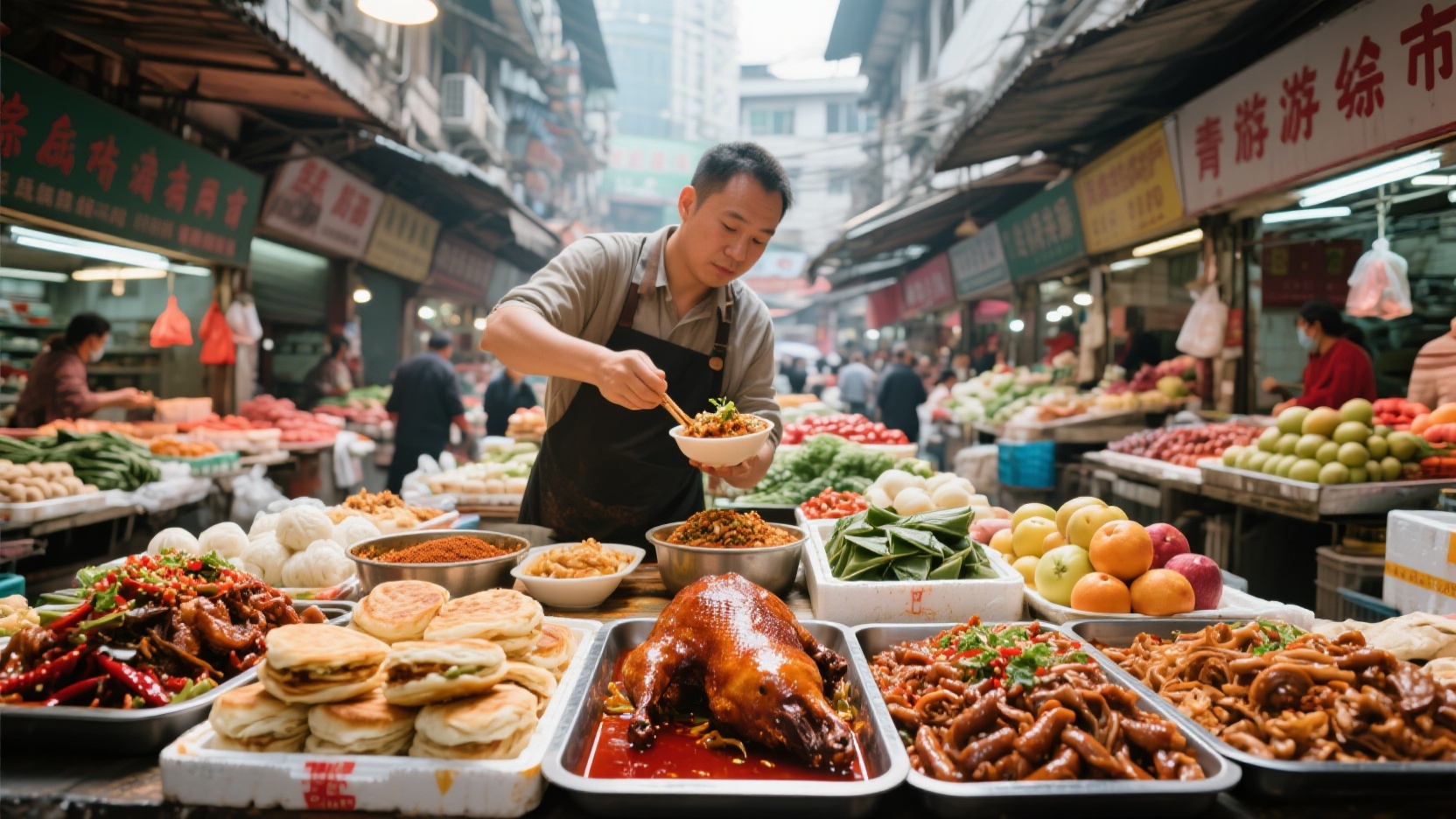
To judge whether a city has good food, you don't need to look at restaurant lists first; just take a stroll through its oldest wet market, and the answer will be pretty much clear. Chengdu's Qingyang Community Market and Yulin Community Market are two complementary examples: the former has a high density of cooked food and cured meats, representing the essence of old Chengdu life in the western part of the city; the latter has a fast turnover of fruits and handmade pastries, reflecting the local rhythm of the Yulin area.
The goal of visiting these two markets wasn't to buy vegetables, but to discover hidden gems among the stalls—items that locals have sifted through repeat purchases. The following is organized by category, along with identification tips and how to eat them.
Qingyang Community Comprehensive Market: Cooked food, handmade snacks and pickled vegetables
Spicy cold dishes are among the most worthwhile cooked foods to take home, especially diced rabbit, sliced lung, and sliced ear. When choosing, check if the chili oil is clear, whether the sesame seeds and crushed peanuts are freshly roasted that day, and whether there is any blood on the cut surface of the rabbit bones. For best flavor, serve within half an hour of mixing. You can ask the vendor for extra scallions and celery, but don't leave it overnight, as the meat will become tough if soaked in the chili oil for too long.
Sweet-skinned duck and camphor-smoked duck are often found in the same area. To judge the quality of sweet-skinned duck, look for an even and glossy syrup on the skin, and the duck meat should be firm and springy when pressed. Camphor-smoked duck, on the other hand, should have a smoky aroma of tea leaves and cypress branches, rather than just a simple braised fragrance. Sweet-skinned duck is best enjoyed cold for its crispy skin, while camphor-smoked duck is recommended to be steamed before slicing and is suitable to be served with congee or sandwiched in a flatbread.
Braised pork intestines and braised pig tails are popular choices for those who enjoy strong flavors. For pork intestines, choose sections with evenly thick walls, thoroughly cleaned, and free of any offal odor. For pig tails, opt for those with tender skin and plenty of collagen. After bringing them home, cut them into sections and toss them dry with freshly ground chili powder and Sichuan peppercorn powder. This adds more flavor than eating them plain, or you can stir-fry them with green peppers.
Handmade pastry stalls usually have steamers continuously emitting white steam for their scallion pancakes and corn cakes. The outer skin of the scallion pancake should be soft and chewy without sticking to your teeth, and the filling is typically bean sprouts and minced meat or sesame and peanuts. Corn cakes should be made with freshly ground cornmeal, wrapped in husks, and have a yellowish color that isn't overly bright. Both are suitable for reheating. The scallion pancakes should be eaten hot after steaming thoroughly, while the corn cakes can be toasted in a pan over low heat until the edges are slightly browned.
In the pickled and preserved vegetable section, the pickled peppers, dried radish, and fermented bean curd are particularly noteworthy. For pickled peppers, choose those with clear brine, plump peppers, and no white foam on the surface; naturally sun-dried dried radish with a light salt frost is best, as overly moist radish tends to have a sour taste; for fermented bean curd, check if the moldy coating is even and if the pieces are intact and not falling apart. Chopped pickled peppers are perfect for making a fish-fragrant sauce, and dried radish tossed with chili oil and a little sugar makes for a simple yet delicious side dish.
Yulin Comprehensive Market: Supplementary menu of snacks, spices and seasonal fruits
The handmade pastries at Yulin Market have a more street-style feel. Egg pancakes should be made and eaten immediately; the outer layer should have evenly distributed honeycomb-like air pockets and slightly crispy edges. Fillings can include sesame seeds and white sugar, pickled mustard greens and minced meat, or cream. To judge whether the vendor has achieved the right baking temperature, check if the outer layer doesn't crack when folded. The flavor will be greatly diminished after cooling, so it's not recommended to buy too many.
Both square fried glutinous rice cakes and small fried glutinous rice cakes are deep-fried glutinous rice treats; the former is seasoned with salt and pepper, while the latter is filled with red bean paste. When choosing, check if the frying oil is clear, and the surface of the cake should be crispy but not burnt, while the glutinous rice inside remains moist. Square fried glutinous rice cakes are best enjoyed with soy milk, while small fried glutinous rice cakes can be paired with tea to cut through the richness. It is best to eat them within one hour of them being taken out of the fryer.
Freshly ground chili powder and Sichuan peppercorn powder are hidden strengths of the Yulin market. Erjingtiao chilies contribute to the aroma, Chaotian chilies to the spiciness, and Hanyuan Sichuan peppercorns for their numbing and aromatic properties. Many vendors can mix them on-site according to the specified ratios. When selecting chilies, they should have a fresh, spicy aroma, without any rancid or dusty smell, and the color should not be too bright red. Take them home to make chili oil, or sprinkle them on braised dishes or cold dishes for a significant enhancement.
Seasonal fruits are updated very quickly at the Yulin market, with Longquanyi peaches, Pujiang ugly tangerines, Shuangliu strawberries, and Jintang navel oranges rotating seasonally. For peaches, smell their aroma; those with a strong fragrance are usually riper. For ugly tangerines, choose those with elastic peels and a heavy feel. Most fruits best enjoyed chilled to appreciate their local flavor; excessive processing is unnecessary.
Bile-water tofu and handmade konjac are often overlooked basic ingredients. Bile-water tofu should not fall apart easily when cut into cubes, and the cross-section should have fine pores with a distinct bean aroma. Konjac should be chosen for its elasticity and dark gray color, rather than being overly white. Tofu is suitable for making Mapo Tofu, and konjac, when cooked with duck, can absorb the richness of oil and seasonings.
In Chengdu, the aroma of braised food stalls, the pungent spiciness of freshly pounded chili powder, and the steam rising from the bamboo steamers of scallion pancakes are more honest than any travel brochure. These stalls don't rely on foot traffic, but on the daily repeat purchases of locals. Visiting the market means experiencing the city's four seasons at the rhythm and taste of the locals: buying toon sprouts in spring, peaches in summer, fresh Sichuan peppercorns in autumn, and sausages in winter. Before leaving, consider taking home a bag of freshly pounded Erjingtiao peppers, half a sweet-skinned duck, and a bag of tofu made with cod liver oil—these unassuming delicacies are the true essence of Chengdu's flavor.