
A leisurely trip to Beijing with parents | 5 days and 4 nights, a testament to our experience – no rushing, elevators, restrooms, hospitals all marked (with a 20-item checklist)
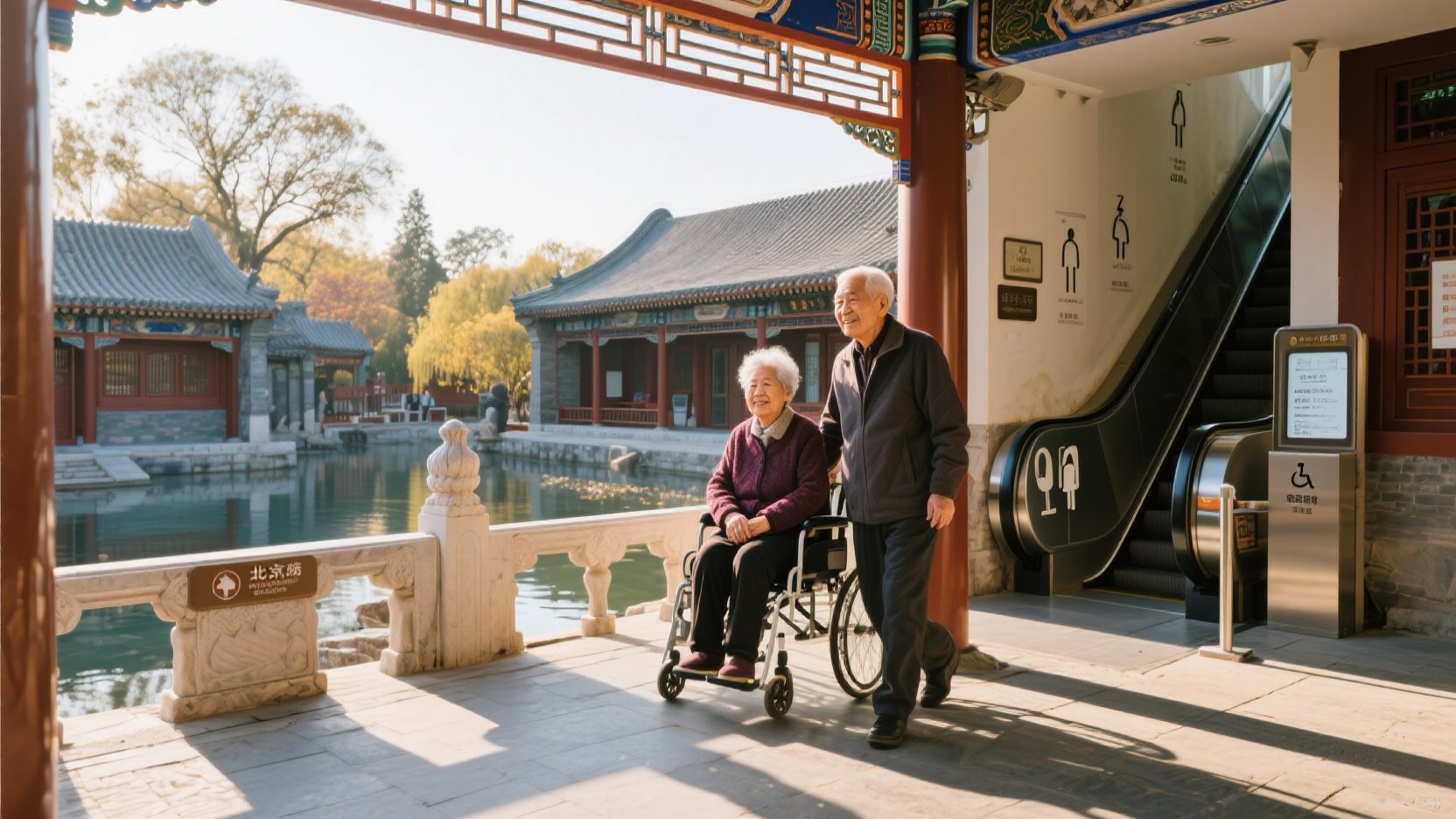
This is the third time I've taken my parents, who are in their seventies, to Beijing. The first two trips were full of pitfalls: cramming them into three major attractions in one day, not being able to find seats deep in Nanluoguxiang, and making them walk forty minutes longer in the Forbidden City just to see the Treasure Gallery. This time, I redesigned a five-day, four-night itinerary specifically for senior citizens, with only one principle: better to see less than to tire them out.
Itinerary Overview and the "No Change of Location" Accommodation Principle
I plan to stay in only one hotel for five days, choosing a location between Dongdan and Wangfujing. The advantages are flat streets, numerous restaurants, pharmacies, and convenience stores, and fewer subway transfers. When choosing a hotel, first check if the elevator reaches all guest room floors; exclude hotels with elevators or staircases only on some floors.
I take a two-hour nap at the hotel every day, without fail. I leave at 9:00 AM and return to my room before 11:30 AM; I leave again at 4:30 PM and return to my room before 9:00 PM. I prioritize public transportation and taxis to minimize transfers, and I check the locations of subway elevators in advance.
The minimum requirement is that the nearest top-tier hospital be within a 15-minute drive. Every day, a card is placed in the elderly person's shirt pocket, clearly stating the hotel address, emergency contact person, and basic medical history.
Days 1-2: The central axis of the Temple of Heaven and the Forbidden City: First, reassure the elderly.
On Day 1, after arriving in Beijing in the afternoon, I only visited the Temple of Heaven Park. Entering from the South Gate and exiting from the West Gate, the roads were flat, shaded by ancient trees, and the restrooms were close together, making it easy to push a wheelchair or walk. I kept my total steps under 4,000, preferring to see less of the Echo Wall exterior rather than taking a longer route.
On Day 2, we visited Tiananmen Square and the central axis of the Forbidden City, entering through the Meridian Gate and exiting through the Gate of Divine Might. The entire route was approximately two kilometers long, focusing solely on the central axis and avoiding the Eastern and Western Six Palaces. Wheelchair rentals were available at the Meridian Gate entrance, and accessible pathways were clearly marked. Restrooms were frequently used, with reminders given every half hour. If elderly individuals were unwell, they could exit through the right-wing gate.
You must book your earliest morning session at the Forbidden City in advance to avoid long queues in the sun. In case of extreme weather, skip the square and go to Zhongshan Park instead; it has more trees and seating, making it more comfortable.
Day 3: Choose one of two options: Ancient Town Hot Springs - Don't turn "relaxation" into a grueling training session.
That morning, we had two options. If we chose the ancient town, we would hire a car to Gubei Water Town, only walking along the main street, without climbing the Simatai Great Wall or taking the cable car. The main focus would be on seeing the water, the old houses, and having tea. Hiring a car would also allow the elderly to easily return to the car for a rest whenever needed.
If choosing a hot spring, go to one near the city that offers daytime baths. Pay attention to whether it has gentle indoor and outdoor slopes, non-slip floors, a rest area, and a medical room. Soak for two hours in the morning, rinse off, and return directly to the hotel for a midday rest; do not go out again in the afternoon.
Both options should be avoided on weekends and holidays. The ancient town has many stone-paved streets, so make sure the elderly wear non-slip shoes; after the hot springs, remember to stay hydrated, and sit for five to ten minutes before standing up.
Days 4-5: Summer Palace Long Corridor and Capital Museum: Prioritize walking and air conditioning.
On Day 4, head to the Summer Palace in the morning. Enter from the East Palace Gate and walk along the Long Corridor to the Marble Boat, a distance of about one kilometer, without any hiking. Prioritize taking a boat to South Lake Island to avoid backtracking. There are accessible ramps and ample restrooms around the East Palace Gate.
Day 5: Before check-out, the itinerary includes only the Capital Museum or similar indoor venues, equipped with air conditioning, elevators, drinking fountains, and benches. There are plenty of clean restrooms, and you can stop anytime on foot. Return to the hotel before noon to collect your luggage, concluding the trip.
If you visit Beijing in autumn or winter, limit outdoor activities to after 10 a.m. and focus on indoor activities in the afternoon; in summer, avoid midday and try to stay in the shade.
Blogger's summary: Five ironclad rules and a 20-item packing list
Five ironclad rules: 1. Check for accessible pathways and elevators; 2. Calculate walking distance and toilet density; 3. Allow two hours for lunch break; 4. Check the nearest top-tier hospital; 5. Don't chase sunrises or go to nightclubs.
20 items to pack for seniors traveling: 1. Two pairs of non-slip soft-soled shoes; 2. Foldable lightweight walking stick; 3. Wheelchair or walker; 4. Original boxes of commonly used medications; 5. Photocopies of medical insurance card and ID card; 6. Thermos cup; 7. Light jacket and hat; 8. Raincoat is less strenuous than umbrella; 9. Small stool or folding cushion; 10. Portable blood glucose meter and blood pressure monitor; 11. Back and knee supports; 12. Tissues and wet wipes; 13. Individually packaged snacks; 14. Spare reading glasses; 15. Spare hearing aid batteries; 16. Non-slip bathroom slippers; 17. Hotel card; 18. Power bank and long-range charger; 19. Disposable toilet seat covers; 20. Resealable bagged medications.
Five common medication categories to keep in your carry-on bag, not checked baggage: cardiovascular medications, hypoglycemic drugs, joint pain relievers, cold and gastrointestinal medications, and topical medications such as band-aids and iodine swabs. Please also include a small note with instructions on how to use the medications.
Print out and check each item on the above list and medication recommendations before departure. A senior citizen's trip to Beijing isn't about completing a checklist KPI, but about ensuring that parents feel "this trip was worthwhile" wherever they can sit.