
Hidden Gems of Beijing Nightlife | A Blogger's Comprehensive Guide to Lakeside Lights and Hutong Livehouses (Avoiding Common Pitfalls in Autumn and Winter)
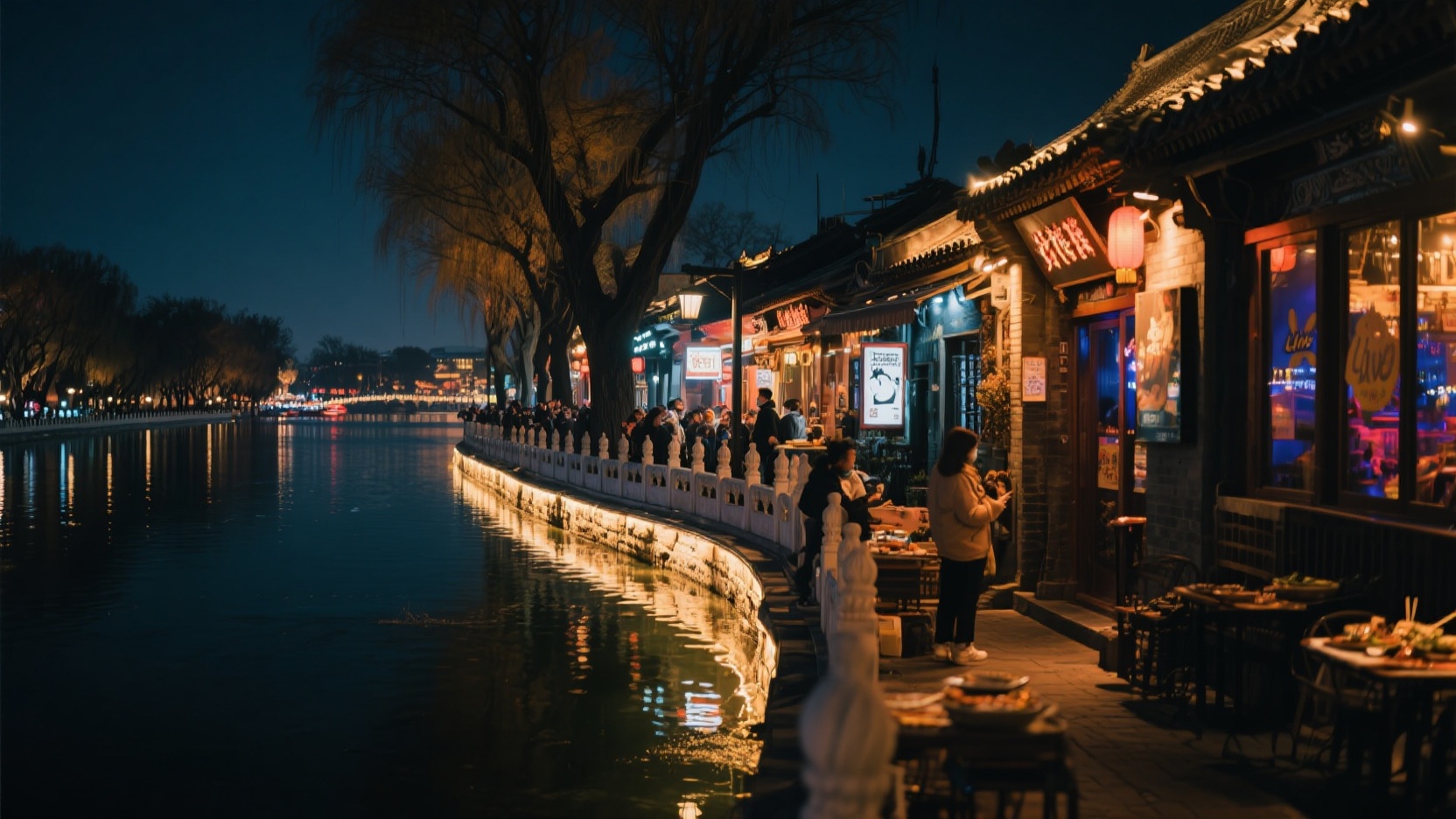
1. 18:00-19:20 Shichahai West Lake to Houhai North Lake: Lakeside lights bypassing the bar street
The starting point was chosen at Xihai Wetland Park, west of Jishuitan Metro Station, rather than the main entrance to Shichahai. After 6 PM, the lakeside walkway was lit by low-lying lights, and the reflections on the water were much cleaner than those in the Houhai bar street. Walking along the north bank of Xihai, you'll pass Huitong Temple, a boardwalk, and several reed beds. This section is almost devoid of touts; you'll only see elderly people strolling and night fishermen.
After reaching Desheng Bridge, turn onto the north bank of Houhai Lake. A word of caution: avoid the Lotus Market side, as it's teeming with bartenders there, and they'll stop you as soon as you raise your camera. The north bank is sparsely lit, with old-fashioned door lamps and tree branches creating a distinctly Beijing-style play of light and shadow. The outlines of the Bell and Drum Towers on the opposite shore are also clearer. This walk is about 2 kilometers and takes 40 minutes. You can exit near Yinding Bridge at 7:20 PM.
2. 19:20-19:40 Shared bikes will be relocated to Guijie Street: Avoid taking taxis during this period.
Walk from Yinding Bridge to Di'anmen West Street and rent a shared bike. Guijie Street isn't far from Houhai in a straight line, but taxis during rush hour will get stuck in traffic at Di'anmen. Riding a bike for about 3 kilometers and 20 minutes is much safer. I once took a taxi from Houhai to Guijie Street during rush hour and was stuck in traffic for almost half an hour. After switching to a shared bike, the time was consistently 20 minutes, which is completely manageable. The route follows Di'anmen East Street—Jiaodaokou South Street—Dongsi North Street—Dongzhimen Inner Street. The streetlights are well-lit, and remember to bring thin gloves on windy days.
The route will pass the south entrance of Nanluoguxiang, but don't get distracted; that's not the focus tonight. This bike ride will also warm you up from the lakeside coolness, preparing you for a late-night snack.
3. 19:40-21:10 Walk north from Guijie to Xinqiao: Focus on local late-night eateries
The red lanterns on Guijie Street are worth photographing, but don't queue in front of the big shops. My personal favorite way to eat is to "eat as you walk": start east from Beixinqiao subway station, first buy a freshly cooked dalian huoshao (a type of fried dough) or luzhu (a type of stew), then buy a few skewers of lamb and a plate of stir-fried hawthorn berries at the intersection. Keeping your budget to a few dozen yuan per person, you can try more than three different dishes, which is closer to the local way of having a late-night snack than sitting down for a large meal.
The true local flavor of this street emerges after 8 p.m.: skewers vendors in white hats, late-night drivers, and locals just off work mingle together, the air thick with a relaxed atmosphere amidst the cooking fumes. If you prefer something less oily, the Beixinqiao area also offers traditional dishes like congee, side dishes, and sweet buns—foods gentle on the stomach at night.
Finish the event before 9 PM to leave time for the second half. Don't exhaust your stomach and energy on Guijie Street, as you'll be standing for over an hour in the livehouse.
IV. 21:10-21:25 Wudaoying Hutong Entrance: From the everyday life of the city to the underground scene
Cycling north from Beixinqiao intersection for about 1.5 kilometers, it takes about 10 minutes to reach the east entrance of Wudaoying Hutong. This section of road is mostly on the outer edge of the hutong, with little traffic at night, but you should avoid riding against traffic on the non-motorized vehicle lane of Andingmen Inner Street. Wudaoying Hutong is more beautiful at night than during the day, with the low-rise shops lit up, and the blue brick walls and tree shadows creating a layered effect.
Don't rush to explore. First, go to the livehouse to check the lineup and entry time for the night, then take a short walk through the hutongs. The string lights, wooden doorways, and the occasional cat darting out from the hutongs in Wudaoying make for great nighttime photography opportunities.
5. 21:30-23:30 Livehouse: The true Beijing night.
If I had to choose one of the three options, I'd recommend saving the second half of my Beijing nighttime adventure for a livehouse, not a teahouse. I often go to SCHOOL at the entrance of Wudaoying Hutong, a representative of Beijing's underground rock scene. It's a small space with a direct soundstage, and the real shows don't start until after 10 PM. Tickets are mid-range, drinks are extra. Students can opt for smaller, more affordable shows during the week, and the crowds won't be so dense. If there's no show on a particular day, you can try other livehouses around Gulou East Street, but you need to check the schedule beforehand to avoid a wasted trip.
Even if you don't understand rock music, it's okay. Just standing there and experiencing "Beijing's underground soundscape" is worth the ticket price. The show usually ends after 11 p.m., and when you leave, the alley is quiet, with only a few lights and footsteps remaining. It's a completely different place from Guijie Street two hours earlier.
VI. Night Shooting: 5 Camera Positions + 4 Safety Tips
Here are five ideal spots for night photography along this route: First, the middle section of the Xihai Wetland boardwalk, to capture the reflections in the water; second, the south side of Desheng Bridge along the north bank of Houhai Lake, to capture the outline of the Bell and Drum Towers and the lake; third, the pedestrian overpass or the north side of Guijie Street, to capture the red lanterns and traffic; fourth, the middle section of Wudaoying Hutong, to capture the string lights and old brick walls; and fifth, the entrance of a livehouse or the alleyway, to capture the empty alley after the show.
Safety Tips (4 points): 1. When going out at night in autumn and winter, be sure to bring a light down jacket and scarf, as it feels colder by Houhai Lake than in the city center; 2. Don't wear headphones while cycling, as there are many electric bikes between Di'anmen and Beixinqiao; 3. After a live music show, go out of the hutongs in groups, and don't take shortcuts through unlit alleys; 4. Use a wristband when taking photos at night, as most shooting positions are near the sidewalk, which helps prevent theft and slipping.
This route doesn't rely on trendy shops; it relies on the authentic layers of Beijing after nightfall. The lakeside lights, late-night eateries, and underground live performances are vastly different, yet all can be experienced along the same northern city line. If you only have one night and are visiting Beijing in autumn or winter, this route will bring you closer to the city's true breath than any daytime route I've ever planned.