
A Culinary Journey Through Zhengzhou's Markets: Delving into the Old Market at the Intersection of Yihe Road and Weisi Road, and Discovering Local Delicacies That Locals Repeatedly Buy
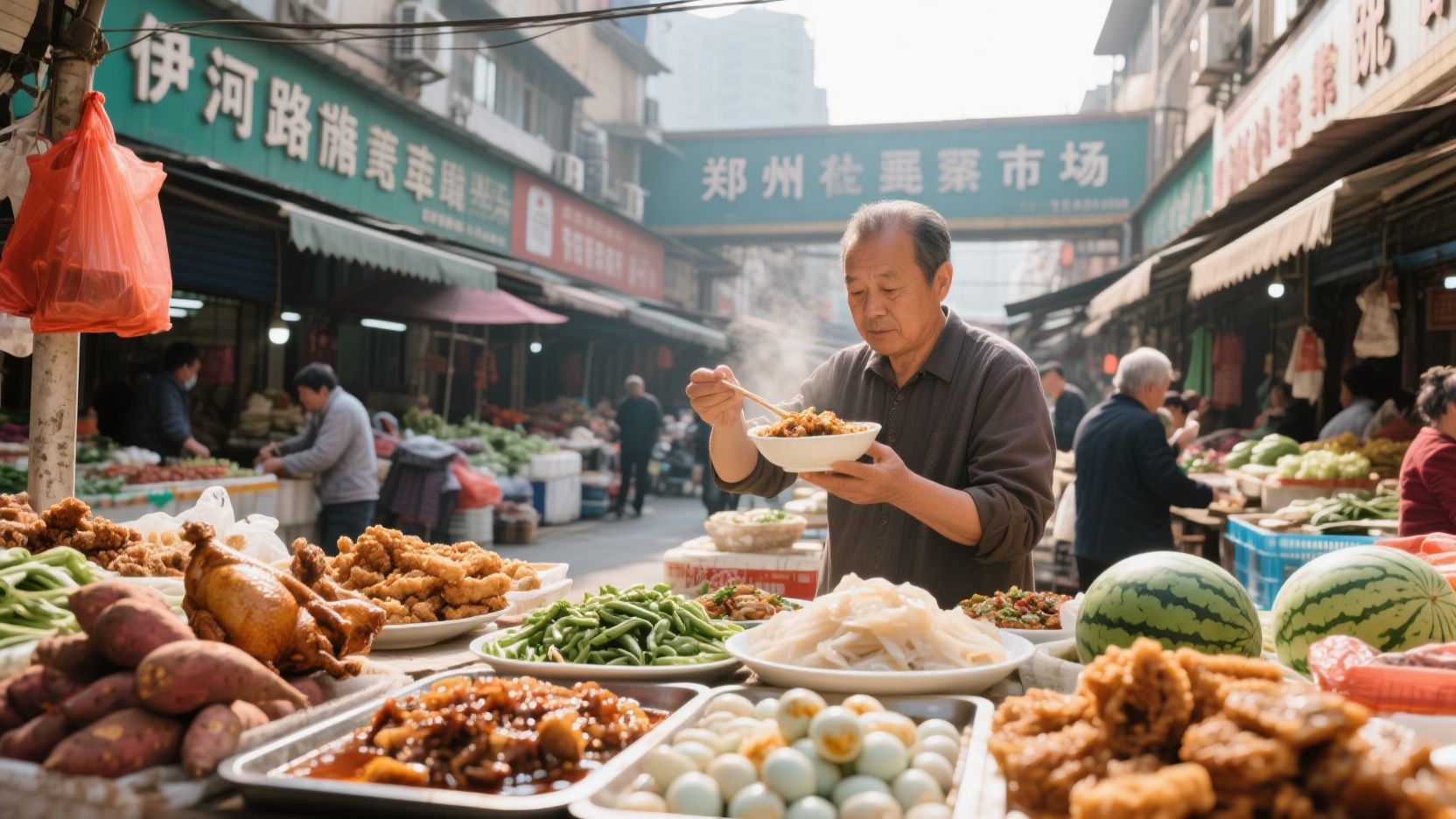
In the early morning in Zhengzhou's old city, the first places to awaken are the Yihe Road Farmers Market and the Weisi Road Farmers Market. The former has been rooted in the western suburbs for over thirty years and serves as the daily shopping center for families in the Zhongyuan District; the latter has been located in the old city of Jinshui for decades, with a particularly dense concentration of cooked food and pickle stalls. Neither market relies on trendy online advertisements, yet it fills its stalls with the most direct clues to the products of the Central Plains, making it a perfect place to start browsing slowly from the morning market.
Mung bean jelly and sweet potato dumplings: handmade noodle products from the market
At the handmade noodle stalls in the middle of Yihe Road Market, two items are always stocked by locals who repeatedly buy them. One is mung bean jelly. Choose light green jelly with evenly spaced pores on the cut surface; avoid sticky or overly dark jelly. Cut it into strips about a finger's width, top with sesame paste, garlic juice, vinegar, and a little mustard oil—it has a more fragrant bean flavor than restaurant jelly. The other is sweet potato jelly, made by mixing sweet potato starch and steaming. Choose thick, evenly shaped pieces with no dry starch particles on the cut surface. A recommended way to eat it is to cut it into pieces and pan-fry until both sides are crispy, then stir-fry with garlic sprouts and dried chili peppers. The result is crispy on the outside and soft on the inside, even more fragrant than a cold salad. When pan-frying the jelly, heat the pan first, then add a little oil to prevent sticking.
Steamed vegetables, watermelon sauce with fermented soybeans and shredded mustard greens: sauces and vegetables with a Central Plains flavor
The steamed vegetable stalls in the market offer seasonal options such as shepherd's purse, noodle greens, locust flowers, and garland chrysanthemum. The criteria for judging freshness are thin, non-clumped noodles and loose, non-sticky leaves. Avoid choosing vegetables already mixed with garlic sauce; the original flavor is a better indicator of freshness. After buying, don't eat them cold immediately. Steam them again for three minutes, then shake them to separate them and mix with minced garlic, sesame oil, and a little salt. This method preserves their sweetness better than stir-frying. The most worthwhile items to take home from the pickled vegetable section are watermelon-flavored fermented soybeans and Dengfeng mustard greens. For watermelon-flavored fermented soybeans, choose beans that are whole, reddish-brown and glossy, with no obvious moisture. After opening, they should have a strong bean aroma and no sour taste. They are suitable for pairing with freshly steamed buns or stir-frying with eggs or mixing with noodles. For mustard greens, choose hand-shredded ones with a crisp texture and a slightly pungent feel. After buying, rinse them twice with clean water to remove the salt, squeeze dry, and drizzle with sesame oil. They are delicious with porridge or as a filling for steamed buns. Consume within one week of refrigeration.
Delicatessen stalls: The everyday logic of roast chicken, crispy fried pork, and barrel-cooked chicken
The cooked food section of Weisi Road Market is busiest around noon, with most stalls opening by 9 AM and offering the widest selection. For traditional roast chicken, look for intact skin, a bright red color without blackening, and tender, shredded leg meat that isn't dry or powdery breast meat. Half a chicken is sufficient; dry breast meat indicates overcooking. Shredded chicken breast and mixed with cucumber offers more flavor than eating it plain. For crispy fried pork and fried lotus root sandwiches, choose freshly fried ones with a crispy exterior, plenty of meat, and a thin coating; avoid those that are too dark or smell rancid. Don't eat them plain at home; grab a handful and cook them in a clay pot with cabbage and vermicelli, or refry them and dip them in Sichuan peppercorn salt – a common way to enjoy them in Zhengzhou homes. Bucket-cooked chicken differs from roast chicken; it's about chewiness. Choose chicken with bright yellow skin and firm meat, slice thinly, and serve with scallions. The more you chew, the more savory and flavorful it becomes, making it a perfect accompaniment to drinks.
Traditional snacks and seasonal fruits: A timeline of the market
Choose honey-glazed pastries from the snack stalls with clear syrup, evenly distributed sesame seeds, and that don't stick to your hands when squeezed. They're best enjoyed with strong tea to cut through the richness. For peanut cakes, choose those with densely packed peanut kernels on the cut surface that don't crumble in your mouth. Store them in an airtight container to prevent moisture absorption. Buy honey-glazed pastries in small quantities each time. Century eggs are a unique product of Henan markets. Choose eggs with intact shells that are springy when shaken. The best ones have a soft yolk that doesn't leak liquid. Cut them into wedges and serve with cucumber salad, or dip them directly in ginger and vinegar sauce. Store them in a cool, dark place; do not refrigerate, otherwise the soft yolk will harden. For seasonal fruits, consider the month: In late autumn, choose pomegranates from Heyin. Select those with yellow ridges, natural cracks at the bottom, and a heavy feel. The seeds are deep red, indicating higher sweetness. Don't cut them with a knife; gently score along the ridges before breaking them open. For Xinzheng dates, choose large ones with shiny skin and a firm feel. In summer, judge the ripeness of Zhongmu watermelons by their sound. Chill them after purchase and cut them into pieces. Fruit stalls are the most honest indicator of time in a market; they show what's on display for what month, more clearly than any signboard.
Visiting a local market is the best way to experience a city. There are no menus, but you get the most direct taste of the local culture and seasons. A handful of peanuts offered by a vendor, or a comment like "Today's steamed vegetables are tender," often reveals more about Zhengzhou than any recommended list. Bring home a roast chicken, a bag of braised meat, and some preserved eggs. No complicated cooking is needed to recreate the daily life of an old city in Central China at your dining table.