
A Culinary Journey Through Shazhou Market: The Tastes of Shazhou Worth a Visit on an Empty Stomach in Zhangjiagang's Old Market
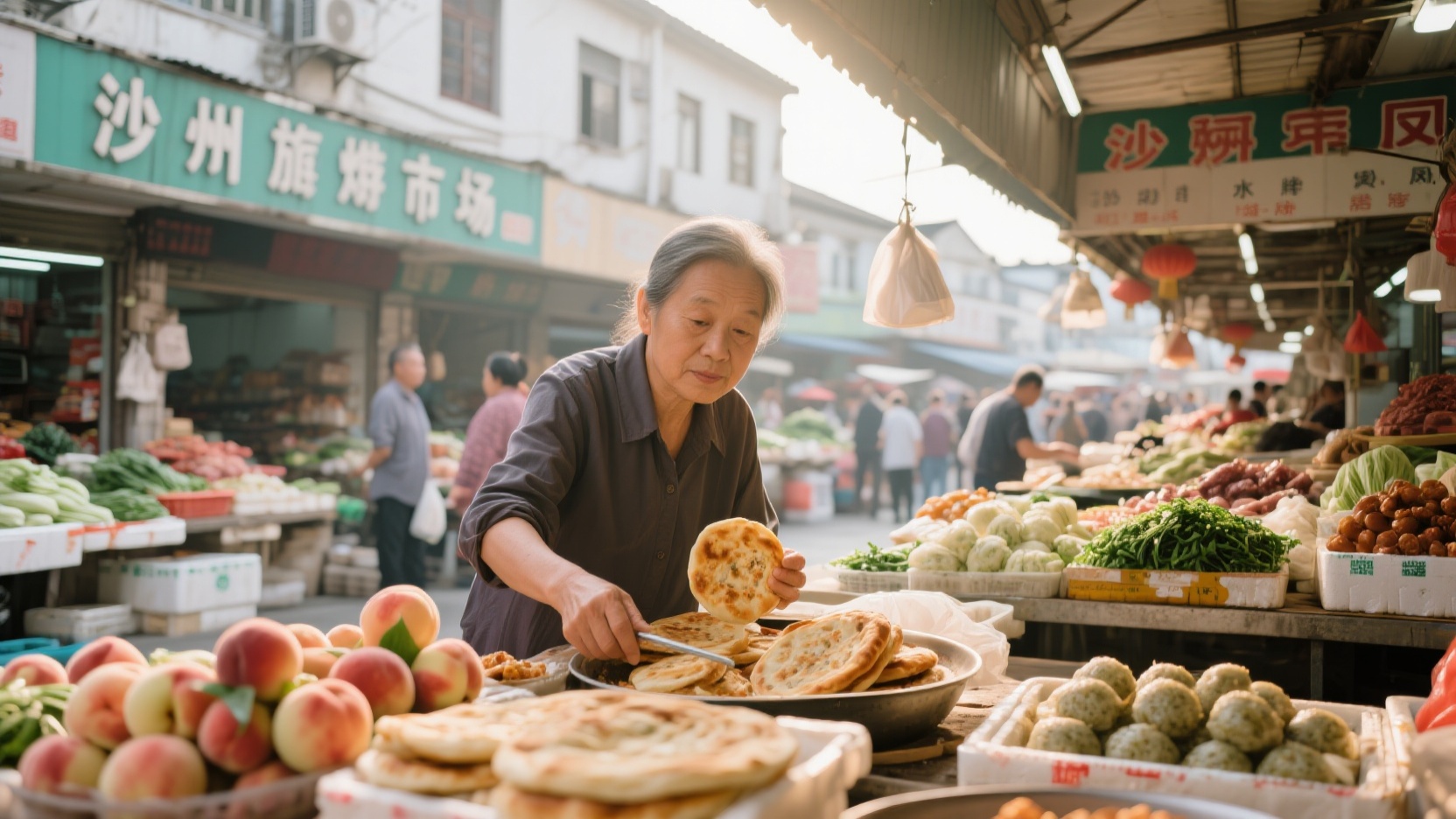
In Zhangjiagang, to judge whether someone is a connoisseur of food, you don't need to ask about restaurants serving river delicacies; simply see if they're willing to venture into the old market for a simple pancake or a bag of pickled herbs. Yangshe First Market and Houcheng Farmers Market, one the daily culinary center of the old Shazhou County town, the other a distribution center in an old town along the Yangtze River, preserving the aromas of dew and cured meats. Neither is refined, but both are precise.
Yangshe First Market: A Breakfast Radius from Baked Flatbread to White Cut Chicken
At the Yangshe First Market in the early morning, the first thing worth queuing for is Tuolu Bing (拖炉饼). This handmade cake, unique to the Shazhou area, is made by wrapping chopped shepherd's purse, sugar, and a little lard in leavened dough, then baking it in an inverted oven. The resulting crust is thin and crispy on the outside and has a sweet and savory filling. When choosing one, look for three things: whether the sesame seeds are evenly sprinkled, whether there are any burnt spots on the bottom, and whether the filling still retains the vibrant green of the shepherd's purse after breaking it open. Tuolu Bing must be eaten hot, ideally with a bowl of light soy milk or a cup of local stir-fried greens. If it has cooled down, do not microwave it; instead, dry-fry it in a pan over low heat for two minutes to restore about 70% of its crispness.
At the cooked food stalls in the same market, Lu Yuan poached chicken is often packed in aluminum boxes and taken away by locals. Lu Yuan has a long history of chicken farming, resulting in firm yet tender meat with thin, oily skin. When choosing poached chicken, first check if the skin is intact and has a natural, slightly yellow color, then smell it to see if there's an overpowering smell of scallions and ginger masking any fishy odor. Buy half or a quarter of a chicken, and ask the vendor to break the bones but not chop them. At home, drizzle some cold chicken broth and local fermented bean curd oil over it to best appreciate its natural flavor.
At fruit stalls, Fenghuang peaches are Zhangjiagang's summer signature. The clayey soil and abundant sunshine of Fenghuang Town allow these peaches to accumulate sugar earlier than those from the plains. When selecting peaches, first smell their aroma, then gently lift them with your palm; they should feel heavy but not mushy. Peaches with a natural reddish tip and intact fuzz are more stable. After purchasing, refrigerate for two hours, then peel and eat immediately. Avoid slicing and storing for too long, otherwise the aroma will quickly dissipate.
In the condiment display case, pickled alfalfa and fermented bean curd are two underrated flavors of the sandy area. Alfalfa, a common green manure plant along the Yangtze River, retains its herbaceous aroma after pickling and is suitable for chopping and stir-frying with edamame, or simply serving with rice porridge. When choosing fermented bean curd, check if the brine is clear and if the aroma of the wine is pure. Drizzle a little sesame oil on it after buying it, and it will be the perfect base color for rice when you have no appetite in the summer.
Houcheng Farmers Market: The time difference between pickling, steaming vegetables and a pot of river delicacies
The cured meat stalls at Houcheng Farmers Market exude the patience characteristic of this old town. Shazhou sliced pork is a prime example, made from local pork hind leg meat that is cured at low temperatures and air-dried for a long time. The finished product is sliced into translucent thin slices; the lean meat is rose-colored, while the fat resembles jade. When selecting pork, avoid pieces with dark lean meat and yellowish fat; it should smell slightly fermented rather than sour. The easiest way to eat it is to lay it at the bottom of a deep dish, cover it with tofu knots, and steam it for forty minutes without adding extra salt, allowing the meat juices to naturally seep into the tofu knots.
The steamed dish stall is filled with Tangqiao-style home-style dishes. Braised pork belly and steamed three delicacies are two quick-to-serve semi-finished products. For braised pork belly, choose pork with noticeable wrinkles on the skin, clear lean meat texture, and a springy texture when pressed. For steamed three delicacies, check if the egg dumplings, fried fish, and meatballs are intact, and the broth should be clear and not cloudy. These steamed dishes only need to be steamed on high heat for about fifteen minutes after the water boils at home, making them closer to the taste of local home cooking than takeout.
From around Qingming Festival to Dragon Boat Festival, freshwater snails and clams in the aquatic product area are plumper than ever. For snails, choose those with a bright blue shell, a thin, intact opening, and tentacles that extend when left to rest. After buying them, add a few drops of vegetable oil and let them marinate for three or four hours before trimming the tail and stir-frying or adding to soup. For clams, ask the vendor to gut them and remove the gills on the spot. After blanching them at home, stew them with salted pork and tofu; the broth will gradually turn white – this is the simplest and most delicious spring delicacy from the Yangtze River.
Seasonal Desserts: Soft and chewy treats you'll have to wait another year if you miss them.
The handmade pastry stalls around the market are the most seasonal places in Zhangjiagang. In late winter and early spring, there are clover dumplings, made by mashing tender clover and kneading it with glutinous rice flour. The fillings are either lard and red bean paste or shepherd's purse and minced meat. To buy freshly steamed clover dumplings, check if the bottom is covered in fragrant bamboo leaves and if the surface is firm and doesn't collapse. After cooling, they shouldn't be left out for too long; steaming them for six to eight minutes after the steam returns to normal will result in a more glutinous texture than microwaving.
Around the Qingming Festival, malt cakes briefly appear. These small, dark-colored, glossy cakes have a sweet aroma from fermented malt, and the filling is usually red bean paste or sesame. When choosing, gently press them with your fingertip; those that spring back and are not sticky are best. They are most flavorful when eaten on the day they are bought. Fried dough twists are a more common craft. Freshly fried dough twists are uniform in thickness and golden in color. They are crumbled and soaked in savory soy milk or fish soup, a hidden gem in the breakfast scene of old markets.
In Zhangjiagang, the market isn't just a place to buy and leave; it's the most direct way to experience the city. You have to hear the crackling of the oven-baked flatbread coming out, you have to taste the peaches while they're still fresh from the morning dew, and you have to wait for the regulars to sort through the sliced pork before you buy any. There are no fancy storefronts, but the most accurate seasonal schedules and the most honest flavors are preserved here. Go to the market on an empty stomach, work up a light sweat, and casually pick up a few snacks—that's the essence of Zhangjiagang.