
A 4.2km old town art and culture tour route in Xuzhou that bypasses the main street of Hubu Mountain (Springtime test and pitfall avoidance list)
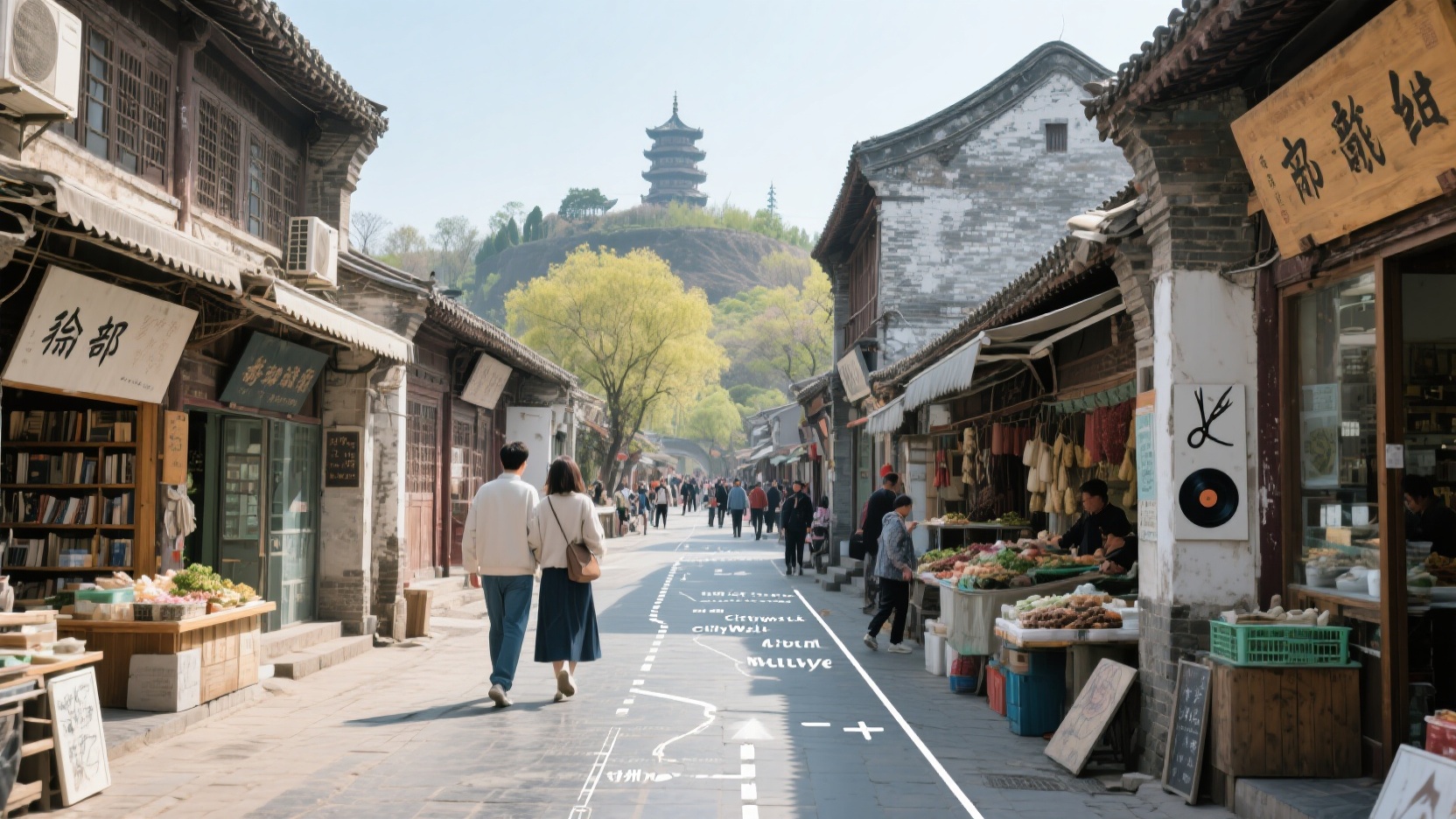
On my third visit to Xuzhou, I realized that what truly captures the city's cultural essence isn't the Han Dynasty jade artifacts in museum displays, but rather the four-kilometer-long walking route from Huilongwo North Alley to the Old East Gate. The first two times, I followed guides, walking along Hubushan Main Street and Huilongwo South Gate, only to be swept along by the crowds; tour group flags on the cobblestones were denser than brick carvings. This time, I deliberately avoided the main road, choosing a Wednesday morning in mid-April to spend half a day weaving together old houses, markets, secondhand bookstores, vinyl record corners, and pocket parks into a roughly 4.2-kilometer old city stroll. It's perfect for a leisurely walk alone or for couples to take photos and explore at their own pace; I don't recommend rushing to check off tourist spots.
Section 1 | From Huilongwo North Alley to the East Slope of Hubu Mountain (approximately 15 minutes)
To enter Huilongwo, you must enter through the alley next to the North City Wall Museum, not through the South Gate archway. Before 8:00 AM, there are almost no tourists, only elderly people emptying their chamber pots and cats licking their fur in the corners. The blogger's camera angle: Standing on the east side of the outer wall of the City Wall Museum, using the shadow of the old locust tree as the foreground, capturing the three-layered stacking of the rammed earth cross-section. Why it's worth stopping for 5 minutes: This section of the wall stretches from the Ming and Qing dynasty foundations to the modern brick and concrete structure, each layer representing a different dynasty. It's more visually striking than the exhibits inside the museum, and ferns even grow in the cracks between the bricks, shining brightly green, especially in spring.
Walking south along the alley for about ten minutes, passing through the back gate of Cui Tao's former residence, you'll reach the eastern slope of Hubu Mountain. Don't rush to Ximatai; first, go around to the back street on the east side. The blogger's camera position: before 10 AM, on the eastern gable wall, the sunlight just cuts through the eaves tiles; using a telephoto lens, only capturing the light and shadow boundary at the top of the wall. Why it's worth watching for 5 minutes: This gable wall retains the original color of the Qing Dynasty blue bricks, untouched by later repairs and plastering; several crooked "Taishan Stone Guardian" stones at the base of the wall still reveal the original alleyway's direction.
Second segment | Hubu Shandong Street—Jianzi Gu—Fengchu Vegetable Market Corner (approx. 20 minutes)
Descending from the eastern slope of Hubu Mountain to Cuijia Lane, turn left after crossing the Jiefang Road overpass, and you'll enter Jianzi Gu. This stretch of road takes about twenty minutes; in some narrow places, only two people can pass each other sideways. It's the alley in Xuzhou's old city that most resembles the handle of a pair of scissors. The blogger's camera angle: an old-fashioned wooden door next to a watch repair stall, with a faded "Home of Glory" iron plaque hanging above the door. At three in the afternoon, the warm light illuminates the edges of the plaque with a rusty red glow. Why it's worth stopping for five minutes: through the crack in the door, you can see the terrazzo floor of a public water feature from the 1970s—a miniature sample of life left behind in Xuzhou's old industrial community, more authentic than any nostalgic exhibition.
At the end of Jianzi Gu (a street name), you'll find the corner of Fengchu Street's vegetable market. You don't need to buy vegetables, but you should definitely stop for a while at the intersection of Fengchu Street and Liaoyuan Lane. The blogger's camera angle: shooting west from the entrance of the pickle shop, capturing the colorful sunshade, the aluminum basin on the back of an electric scooter, and a string of drying chilies all in one frame. Why it's worth stopping for 5 minutes: This corner is most vibrant around 4 PM, where residents who have finished shopping and children leaving school converge; the colors, sounds, and smells seem to leap straight out of an old photograph.
Section 3 | Branch Line A: Turn from Fengchu Street towards Lianhuajing Lane and Pocket Park (round trip approximately 25 minutes)
If you have enough time, you can turn east from the corner of Fengchu Street Market into Lianhuajing Lane. This branch line is about 800 meters long, taking about 25 minutes round trip, and is my favorite low-interference route. The most worthwhile place to stop is a pocket park surrounded by old well rings. My camera angle: crouching down, using the well rings as the foreground, and including the bamboo poles drying bed sheets and the yellow walls of the old residential buildings in the background. Why it's worth stopping for 5 minutes: This well is one of the few still identifiable remnants of the "Seventy-Two Wells" of Xuzhou from the Qing Dynasty. The grooves worn into the well rim by ropes are more convincing than any explanatory sign.
Further along, there are several secondhand bookstores and antique shops; you can browse even if you don't buy anything. The blogger's camera angle: a booklet with an old map of Xuzhou tucked inside, using macro photography to capture the words "Huaihai Road," formerly known as "Bo'ai Street." Why it's worth spending 5 minutes looking: These old place names are secret codes to Xuzhou's urban development. If the vendor is in a good mood, they might even tell you which street was next to which bathhouse before its name was changed. Note that this branch of the road closes from 12:30 PM to 2:00 PM; it's recommended to go before 11:00 AM or after 3:00 PM.
Section 4 | The Republican-era architectural complex and community cultural pockets on Zhongshu Street (approximately 18 minutes)
After returning to Fengchu Street, continue west along Zhongshu Street to Datong Street, about eighteen minutes. This section features the former site of a telegraph office from the Republican era and the facade of an old department store, but the highlights aren't limited to the street-facing side. The blogger's camera angle: at the west intersection of Zhongshu Street, photographing the concrete decorative patterns on the facade of the old department store. At 4:30 PM, the cement gray and the new ginkgo leaves across the street create a natural contrast of warm and cool tones. Why it's worth stopping for 5 minutes: those diamond and gear patterns are typical symbols of local state-owned department stores in the 1950s, now half-obscured by billboards, looking from a distance like teeth marks peeking out from the folds of the city.
Turning into the Houjingya old community on the north side of Zhongshu Street, you'll find a pocket park of only about 200 square meters. The blogger's camera angle: standing behind a stone bench at eye level, capturing the enamel cups pressed down and the cracks in the bamboo chairs of two elderly people playing chess. Why it's worth spending 5 minutes there: This corner preserves the social structure of old Xuzhou communities—"playing chess in the front yard, drying clothes in the back"—and sitting for five minutes allows you to hear the most authentic Xuzhou dialect echoing across the chessboard.
Section 5 | Sub-section B: Old East Gate—An Afternoon of Vinyl Records and Vintage Clothing by the Yellow River (approx. 20 minutes)
Walking north from Datong Street to the Old East Gate, then back along the Old Yellow River Trail, takes about twenty minutes round trip. The most easily overlooked part of this section is the two Republican-era red brick buildings. The blogger's camera angle: Standing beside the stone railing of the Old Yellow River Trail, using sycamore trees as a foreground, reflecting the red brick buildings on the river surface; the best effect is achieved in the half hour before dusk. Why it's worth stopping for five minutes: This is one of the few places in Xuzhou where you can simultaneously see industrial red bricks, the old course of the Yellow River, and modern high-rises in the same frame. The setting sun will paint the bricks with an orange hue for about ten minutes, a fleeting moment.
Hidden nearby are several semi-underground doorways leading to vinyl record corners and vintage clothing stores. A word of advice to avoid: most vintage clothing stores are closed on Mondays; weekend afternoons have the best selection, but fitting rooms are limited. The vinyl record stores have a rare selection of local Xuzhou storytelling records; even if you don't buy anything, it's worth asking the owner to play a few. Prices range from affordable to mid-range; used books and items can even be found for just a few yuan, so take your time browsing.
Blogger's Summary + Practical Tips
This route doesn't climb Yunlong Mountain or enter the main street of Hubu Mountain, but it brings out the most easily overlooked "cultural charm" of Xuzhou's old city from its blue bricks, vegetable markets, secondhand bookstores, and pocket parks. The main route is about 4.2 kilometers long, taking about 70 minutes on foot, and with the two branch routes and stops, it takes about 3 hours. It's best to walk between 9 am and 4 pm in spring.
Tips for avoiding common pitfalls: The ground in Jianzi Gu and Lianhuajing Alleys is covered with moss, so be sure to wear non-slip shoes; many secondhand bookstores and watch repair stalls only accept cash, so bring some change with you; nod to people before taking pictures of them in the market, and don't face residents' windows directly; the south gate of Huilongwo becomes a live broadcast site after 10 am on weekends, so be sure to go early if you want to photograph empty alleys.