
The Flavors of Wuxi in the Markets: 10 Local Specialties from Chaoyang and Daoxiang Markets
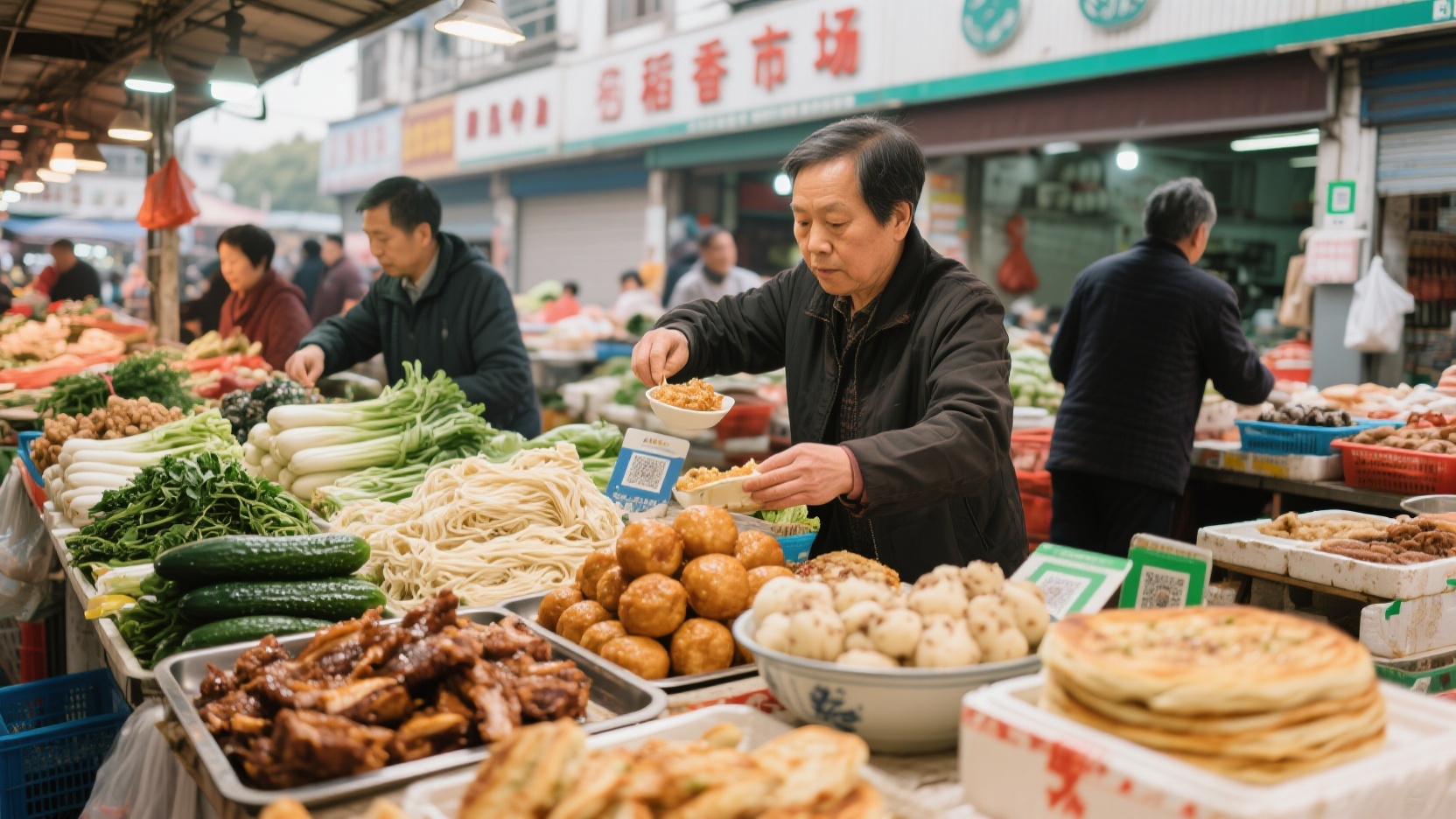
To truly understand Wuxi, you don't need to visit tourist attractions first; start by exploring the Chaoyang Farmers Market and Daoxiang Vegetable Market. Chaoyang Farmers Market is one of the oldest and largest farmers markets in Wuxi's main urban area, with clearly defined sections for cooked food, bean products, pickles, and seafood, starting to stock up as early as five or six in the morning. Daoxiang Vegetable Market is tucked away in the alleys of Xincun, with small stalls but a collection of freshly fried snacks that locals have enjoyed since childhood. The following ten items are a microcosm of Wuxi residents' daily meals and snacks.
Chaoyang Farmers Market: Cooked food, bean products, and pickled vegetables
Braised pork ribs. The braised pork ribs from deli stalls are completely different from those in vacuum-packed gift boxes. They're freshly cooked and sliced, with a bright red sauce and a slight tendon at the bone. When choosing, check if the sauce is evenly distributed and if the meat is tender but not dry. Avoid ribs that are dark in color or overly sweet and sticky. They're best eaten cold, but can also be steamed with the sauce. The remaining sauce is more flavorful than regular soy sauce when used for noodles or rice.
Clear water oil gluten. Wuxi oil gluten is characterized by its thin, hollow skin, golden color, and the fact that it doesn't break easily when lightly pinched when sold loose, and has a fragrant aroma of rapeseed oil. At home, it is often used to make stuffed gluten, where seasoned minced meat is stuffed into the gluten, and then simmered over low heat with soy sauce and sugar; it can also be torn apart and stir-fried with bamboo shoots and wood ear mushrooms, making it a key ingredient in "stir-fried vegetarian" dishes.
Thick tofu skin. Wuxi thick tofu skin is thicker than regular tofu skin, with a prominent bean aroma and a fine, dense cut. When selecting it, smell the bean aroma, check that the edges are not sticky, and that it is elastic when pressed. It can be cut into thick strips and stir-fried with green peppers and shredded meat, or used as a base in braised pork belly, where it absorbs the broth and becomes even more popular than the meat itself.
Pickled mustard greens and pickled cucumbers. The pickled mustard greens at the market stalls come in two varieties: whole and chopped. They are yellowish-green in color and have a moderately salty and sour taste. After buying them, soak them in water to remove excess salt, squeeze out the excess water, and then stir-fry them with shredded meat and edamame. This is a classic side dish for Wuxi people to eat with rice porridge. For the pickled cucumbers, choose tender ones; slice them and serve with white porridge, or dice them and stir-fry them with minced meat for a salty, crisp, and appetizing flavor.
Huishan Shortbread, also known as "King Kong's Navel," is a vegetarian shortbread available in flavors such as sesame and salt and pepper. When buying in bulk, choose those with intact shapes, clearly defined layers, and no greasiness. It's suitable as a tea snack, paired with either green or black tea. Leftovers should be sealed and stored to prevent moisture absorption.
Daoxiang Market: Freshly Fried Snacks and Seasonal Desserts
Magnolia Cake. Freshly fried magnolia cakes are made with glutinous rice flour dough wrapped around a meat filling. The outer skin is golden and slightly crispy, while the inside is soft, chewy, and juicy. Choose only those that are fresh out of the fryer; the skin should not collapse and should spring back when pressed. When eating, take small bites to cool the cake and avoid scalding your mouth with the meat juices. They are even more delicious when paired with soy milk or hot and sour soup.
Egg Pancake. This is a traditional Wuxi pastry. Eggs are cracked into the dough after it's been fried in oil until both sides are crispy and golden brown, resulting in a savory-sweet flavor. Choose pancakes where the egg mixture adheres tightly to the dough and the edges are crispy. Best eaten hot; if they soften after cooling, they can be reheated in an oven or pan for a few minutes.
Plum blossom cake. Plum blossom cakes made with old-fashioned molds come with fillings such as red bean paste, minced meat, and sesame. The batter is mixed with small glutinous rice balls and nuts, resulting in a crispy top and soft bottom. When selecting a cake, check if the caramel color is even and if the filling is plentiful. When eating, bite the edge first, as the filling is hot, especially the red bean paste filling, which can be scalding.
Sweet Taro with Osmanthus. You can buy ready-made sweet taro at some stalls in the market, or you can choose red-stemmed taro to make it yourself. Peel the taro, add brown sugar and osmanthus, and simmer until soft and tender. For ready-made sweet taro, choose those with clear broth and intact, non-mushy taro. It tastes even better chilled, but should not be kept overnight.
Seasonal fruits: Yangshan peaches and Dafu bayberries
From early summer to midsummer, fruit stalls at Chaoyang Farmers Market and Daoxiang Vegetable Market will offer Yangshan peaches and Dafu bayberries. When choosing peaches, smell their aroma, check the fineness of the skin, and feel their elasticity when gently squeezed; after buying and refrigerating, peel and eat them directly. For bayberries, choose plump, purplish-red fruits with no alcoholic smell; soak them in lightly salted water before eating.
Visiting the local market is the best way to experience a city.
The local markets lack the touristy filters and excessive packaging of traditional markets. The true flavor of Wuxi isn't found on banquet menus, but in the feel of an auntie picking through gluten, the slicing of braised pork ribs at a cooked food stall, and the aroma of freshly fried magnolia cakes. A visit to Chaoyang or Daoxiang markets offers a deeper understanding of Wuxi people's use of sweetness and their dedication to bean products and pastries than reading ten travel guides. Slow down, observe first, ask questions, buy small quantities to try a few different things—that's the most authentic way to travel.