
Taking Parents to Tangshan | Blogger's Personal Review of a 5-Day, 4-Night Slow Travel Guide (Wheelchair-Friendly Version for Seniors)
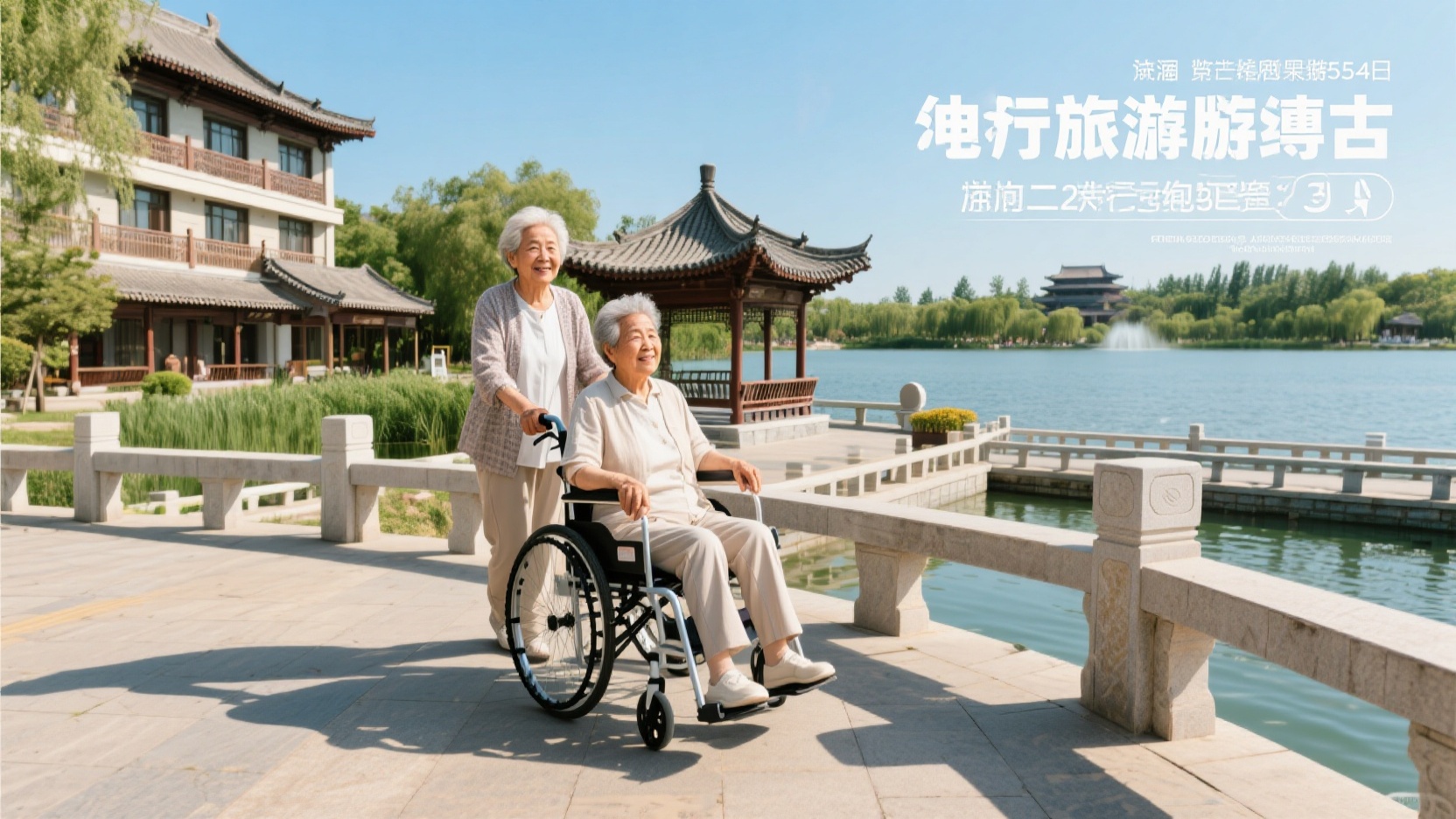
After spending four nights in Tangshan with my parents, my first thought is: don't be deterred by the label "industrial city." This time, I traveled with my father, who has difficulty walking, and my mother, who had undergone minor knee surgery. Our strict rule was to plan only one or two key destinations per day, followed by a two-hour nap at the hotel. The biggest mistake I made before setting off was trying to cram Luanzhou Ancient City and the Eastern Qing Tombs into the same day. The one-way drive takes over an hour, which my parents' backs and knees simply couldn't handle. This post only includes the itinerary that senior citizens can truly manage.
I. Housing and Transportation: Make "walking less" the first principle
In Tangshan, location is more important than star rating when choosing accommodation. I recommend choosing a hotel near Nanhu Lake or along Jianshe Road. Prioritize hotels with elevators, rooms within a 100-meter walk from the lobby, and shared restrooms on every floor. Our floor had wide hallways, wheelchair-accessible, and non-slip mats in the bathroom. Hospital distances must also be checked in advance: a taxi ride from the Nanhu area to the Affiliated Hospital of North China University of Technology or the Workers' Hospital should take less than 15 minutes during off-peak hours. We consistently return to the hotel for a two-hour afternoon nap from 1:30 PM to 3:30 PM, so choose a quiet hotel with blackout curtains during this time.
Avoid taking public transportation; the steps and bumpy ride are not suitable for the elderly. Use ride-hailing services or chartered cars for the entire journey, providing point-to-point service to the scenic area entrance. When arriving in Tangshan, choose Tangshan Station if possible, rather than Tangshan North Station, as the latter is farther from the city center. Tangshan Station has elevators and wheelchair accessible ramps, making it convenient for wheelchair users.
Days 1-2: Nanhu and Kailuan, only flat terrain, no uphill climbs.
For the first two days, we only planned two locations in the city that wouldn't strain our backs. On the first morning, we went to Nanhu Park, but definitely not a long walk around the lake. We entered from the main gate, took a sightseeing bus for a few dozen yuan per person for a loop, and then strolled leisurely near Danfeng Chaoyang Square. This path was flat, with plenty of benches, and restrooms were conveniently located in the square and visitor center; I kept the walking distance under 500 meters. On the second morning, we went to Kailuan National Mining Park. The above-ground museum had a complete elevator system, and restrooms were conveniently located on each floor. The underground mine experience had many steps and slippery surfaces, so we skipped it because my father has leg problems. We had lunch at a nearby shopping mall and returned to the hotel for a nap before 12:30 pm. In the evening, if we felt energetic, we could take a 15-minute walk on flat ground at the Earthquake Memorial Square.
Day 3: Choose between the ancient town and the hot springs; don't be greedy.
The third day is the easiest to make mistakes on because you want to visit both Luanzhou Ancient City and hot springs. The conclusion is: choose one, and definitely don't combine them on the same day. If you prefer a lively atmosphere and can explore at a leisurely pace, choose Luanzhou Ancient City. The ancient city has many flat roads, but the stone slabs have gaps, making it slightly difficult to push a wheelchair. Restrooms are reasonably plentiful near the East Gate and Drum Tower. It's recommended to take the scenic electric cart for a tour first, then get off to eat a chess-piece-shaped sesame seed cake; don't walk from the East Gate to the West Gate and back. The one-way trip takes about one hour and fifteen minutes. Go early and return early; after a midday rest at the hotel, don't plan any further outings.
If your parents have joint problems that are sensitive to cold and prefer a more sedentary lifestyle, then head straight to the Zunhua Hot Springs. Choose a hot spring area with non-slip mats, changing rooms with benches, or a mid-range hotel with a private hot spring bath in the room – that would be much easier. Make sure to get up to rehydrate after each 10-15 minute soak, and wear a bathrobe when switching between indoor and outdoor areas. The hot spring area is quite far from the city hospital, but there is a medical clinic; if your elderly parents have high blood pressure or heart problems, be sure to consult a doctor before soaking. This time, we chose the hot springs, and after waking up from an afternoon nap, we sunbathed on the terrace – it was much more comfortable than rushing to tourist attractions.
Day 4: Visit only the core area of the Eastern Qing Tombs; do not attempt to see the entire area.
The Eastern Qing Tombs are very large, so don't buy a combined ticket for the entire park if you're bringing elderly people. We only visited the two core areas: the Empress Dowager Cixi's Mausoleum and the Yuling Mausoleum. There are electric shuttle buses connecting them, and while the paths are smooth, the spirit path is quite long. Make sure the driver takes you to the nearest drop-off point to minimize walking. The visitor center has accessible restrooms and wheelchairs for rent; make sure the elderly use the restroom before you start, as the restrooms are spaced far apart within the mausoleum area. If it's hot or windy, I would skip the outdoor attractions and go to the Tangshan Museum instead: it's free, air-conditioned, has elevators, and the indoor level is more suitable for seniors. In the afternoon, we returned to the hotel for a nap, and in the evening, we just took a leisurely walk in a nearby park.
V. Food and Daily Rhythm: Treat Lunch Break as a Regular Schedule
Tangshan cuisine tends to be salty and oily, so be sure to specify "less salt, less oil, less sugar" when ordering. You can try the chess-piece-shaped sesame cakes, honey sesame candy, and braised pork knuckle, but don't eat them every meal. Breakfast is usually eaten at the hotel, ensuring hot porridge, eggs, and a staple food. Finish lunch before 11:30 AM, return to the hotel by 12:30 PM, and sleep until 2:30 PM before going out again. Dinner should be finished before 6:00 PM to avoid affecting sleep. Stick to the rule of "reminding yourself to drink water every hour and finding a restroom first when arriving at a new place." I generally prioritize finding restrooms in shopping malls, visitor centers, hospitals, and museums, as these are usually accessible by elevator. Keep your daily step count between 6,000 and 8,000 steps; exceeding this will easily strain your back. It's better to sit on a bench for an extra ten minutes than to enter an extra attraction.
VI. Packing list for seniors (20 items) + reminders for 5 categories of commonly used medications
The packing list can be copied below: 1. Foldable lightweight wheelchair or walker; 2. Two pairs of non-slip soft-soled shoes; 3. Seven-day supply of commonly used medications in individual packets; 4. Blood pressure monitor; 5. Insulated cup and straw cup; 6. Small packs of tissues and wet toilet paper; 7. Portable toilet seat cover; 8. Foldable seat cushion; 9. Photocopies and originals of ID card and medical insurance card, packed separately; 10. Hotel address card to be placed in the elderly person's pocket; 11. Light jacket and knee pads; 12. Umbrella or foldable raincoat; 13. Power bank and flashlight; 14. Individually packaged snacks; 15. Reading glasses and magnifying glass; 16. Eye mask and earplugs; 17. Slippers for outerwear; 18. Vaseline or lotion; 19. Disposable underwear; 20. A large scarf for covering or draping.
Five categories of commonly used medications to remind you: First, cardiovascular medications, such as antihypertensive drugs and nitroglycerin; have your doctor assess these before departure. Second, digestive medications, such as montmorillonite powder and digestive tablets. Third, bone and joint medications, such as pain relief patches and diclofenac sodium ointment. Fourth, cold and fever medications; prepare adult fever reducers and a thermometer. Fifth, topical medications, such as adhesive bandages, iodine swabs, and anti-chafing patches. Carry all medications with you; do not check them in. Take photos of the prescription or instructions for future reference.
After five days and four nights, what my parents were most satisfied with wasn't how many attractions they saw, but that they could lie down for two hours every day at the hotel. When taking elderly people to Tangshan, what you really need to find out in advance isn't the number of places to visit, but rather "where are the elevators, where are the restrooms, how far is the hospital, and can we guarantee a midday nap?" Slow down the pace, and Tangshan is actually much gentler on senior citizens than you might imagine.