
Avoid These Popular Spots in Tangshan | Local's Guide to Avoiding Pitfalls: This 5km Artistic Walk is the Real Must-Take
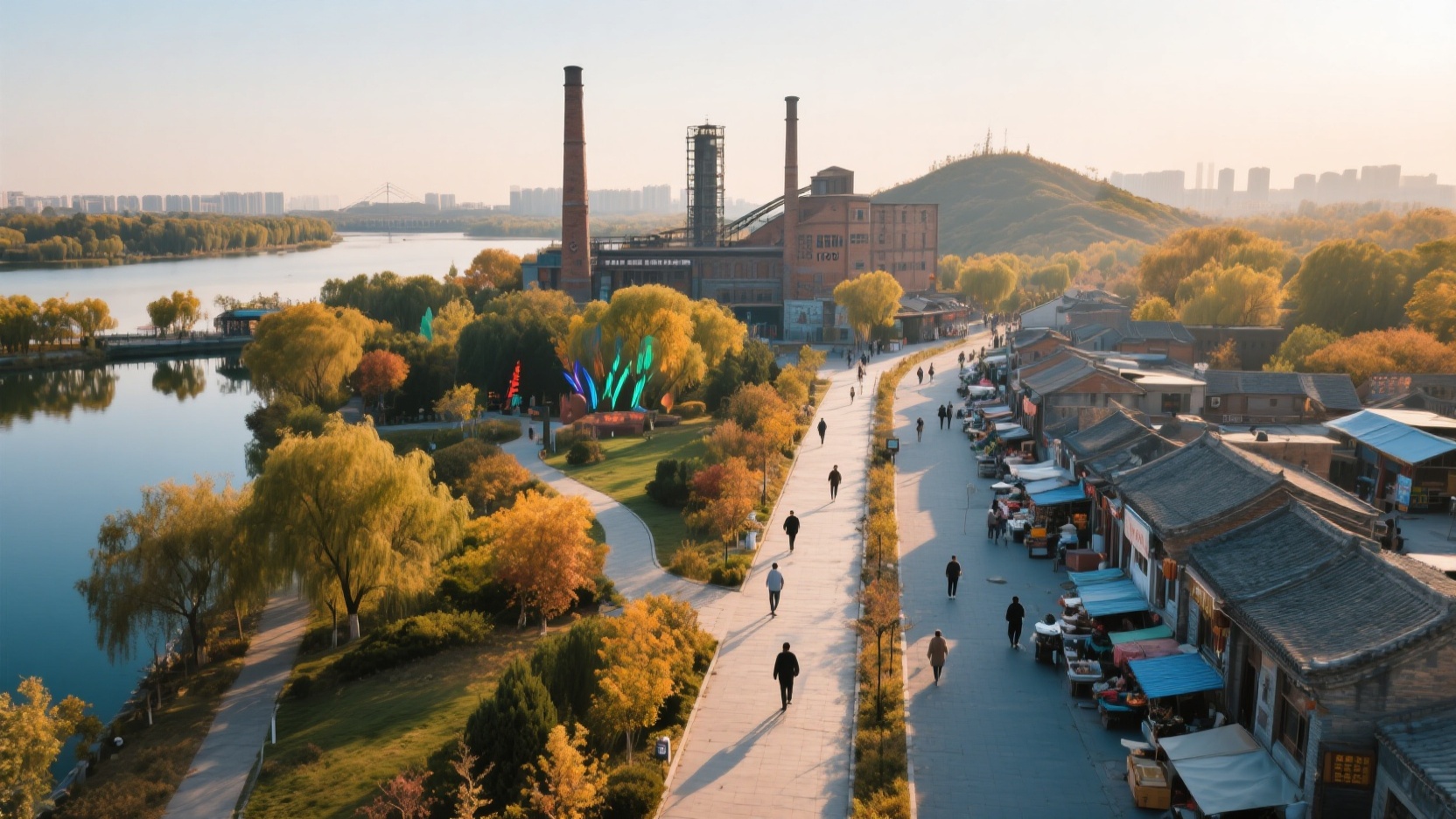
Having lived in Tangshan for over five years and traveled there and back twenty times, I can say this frankly: the Nanhu Light and Shadow Show, which is listed as a "must-see" in travel guides, is avoided by locals when they exercise in the evening.
Tangshan isn't lacking in culture and art; what it lacks is a route that won't lead you into crowds. Those photo-op sets built specifically for taking pictures are often ignored even by locals passing by. Below, I'll first clarify the three most common pitfalls, and then give you a walking route I've repeatedly taken over the years.
Let me first list three pitfalls I will never fall into again.
The first pitfall is the Nanhu City Light and Shadow Show. On weekend evenings, the lakeside boardwalk is packed with selfie sticks and live-streaming tripods, with people blocking the view of those behind. The resulting photos are either backlit with dark faces or filled with heads. The content itself is like a tourism promotional video projected onto a water screen, with a few pieces of music playing on repeat. You'll want to leave after standing there for twenty minutes. Locals only walk along the outer path and never venture into the core area.
The second pitfall is Peirenli Historical and Cultural Street. It's touted in short videos as "Little Shanghai of Tangshan," but in reality, there are only a few imitation Republican-era buildings, filled with chain milk tea shops and travel photography studios. The authentic atmosphere of old Tangshan life is almost nonexistent. On a sunny midday, the overhead sunlight makes the walls reflect light like a photo studio backdrop, and the sidewalks are so narrow you can barely turn around.
The third pitfall is the "cultural experience area" of Tangshan Banquet. The queue at the entrance is at least an hour long, and once inside, the so-called intangible cultural heritage stalls basically become an assembly line; tourists take a quick photo and leave. Locals who want to eat here mostly go to small restaurants in the nearby residential area; the food is consistently good, and no one is chasing you with their phones.
A 5-kilometer art and culture walking route, here's the most comfortable way to walk it.
This route starts from the old Qixin 1889 factory, passes the plaza outside the Tangshan Museum, Phoenix Mountain Park, and Shuguanglou Farmers Market, then walks along the Douhe River towards the old streets of Longze South Road. The entire route is about five kilometers long and there is no entrance fee. Starting at 2:30 PM, you'll arrive just in time for the most vibrant hour before the farmers market closes for the day.
The best time to visit is from mid-September to mid-October. Autumn in Tangshan is windy but not dry, the plane trees are just beginning to turn yellow, and the light is perfect for photographing old walls and metal frames. Spring is windy and dusty, and summer afternoons are too sunny, making the riverside spots only suitable for evening shots.
Old factories, independent bookstores and old museums
Our first stop is Qixin 1889 Cultural and Creative Industrial Park. The silos and kiln frames of the old cement factory haven't been demolished, resembling a giant industrial sculpture. The park often hosts small art exhibitions and design studios. A ten-minute stop is enough; the best spot to take photos is from below the iron stairs under the old kiln on the north side, where the slanted sunlight around 3 or 4 pm will create layers of color in the cement dust. Nearby, on a street corner, there are stalls selling chess-piece-shaped baked flatbreads—freshly baked and still piping hot, inexpensive, perfect for a stroll and a quick bite.
The second stop was an independent bookstore in the park. The selection leaned towards local industrial history and art, with no tourist souvenirs or stamp books, which allowed one to see a different side of Tangshan. The camera was positioned in the reading area by the window, under the old cement wall, where natural light fell on the spines of the books, resulting in quiet and unpretentious photos. In the same alley, there was a stall selling mung bean cakes, savory and fragrant, a local snack.
The third stop was the plaza outside the Tangshan Museum. The museum has permanent exhibits on Pingju opera, shadow puppetry, and Tangshan history, making it much more substantial than the trendy streets. The plaza is free, and you can sit on the benches under the plane trees. The row of old plane trees outside the east gate is a good spot for photos; backlighting helps to capture the building facades, and the shadows perfectly conceal the messy electric bikes. Nearby, on Wenhua Road, there's a stall selling old-fashioned tofu pudding—it's tender and available both morning and afternoon.
Community parks and farmers' markets are the real local art.
The fourth stop was the pavilion halfway up Phoenix Mountain Park, accessible from the east gate. There were no stage sets; every afternoon, locals sang Pingju opera, played the erhu, and kicked shuttlecocks – the vibrant sounds of Tangshan. We stopped for ten minutes and slowly walked from the east gate to the pavilion. From there, we took photos of the city skyline to the west, capturing the grey-blue hues of the evening sky. Across from the east gate, in a residential area, there were small bowls of beef noodles, costing only a few dozen yuan per person; the broth was clear and the meat tender.
Our fifth stop was the Shuguanglou Convenience Market. The color schemes of the vegetable stalls, the steam rising from the cooked food shops, and the handwritten price tags were more pleasing to the eye than many art installations. We stopped for ten minutes to photograph the backlighting at the market entrance, especially the moment a vendor lifted a blanket to take out tofu. There were fried dough sticks at the market entrance, crispy on the outside and soft on the inside; we bought a small bag to eat while walking.
After leaving the market, don't rush to use navigation. Walk along the community road towards Dachengshan. The old building exteriors and the shadows of the plane trees falling on the ground are the quietest scenes in Tangshan.
Riverside, old streets and alleys, and a chance encounter with a small amateur theater.
The sixth stop was the Douhe Strip Park. People fishing along the riverbank were in no hurry. The old residential walls were reflected in the water, a world apart from the commercial district a few hundred meters away. From a vantage point halfway up the western slope of Dacheng Mountain, you could capture the old Qixin factory area alongside residential buildings—industry and daily life intertwined. Near the Heyinli community, there were meat-filled sesame flatbreads—generous portions of meat, perfect for a quick bite after a long walk.
The seventh stop is the entrance to the old alleyway on Longze South Road. Don't go into the main street of Peirenli; turn into the old alleyway next to it. You'll find shoe repair stalls, old barbershops, and weathered apartment building doors. Standing at the alley entrance when the streetlights just come on in the evening creates the best contrast between warm and cool lighting, making for the most photogenic shots. Even a mobile phone can capture a story in the photos. Sometimes there are fried food carts at the alley entrance; it's not a fixed schedule, but you're likely to run into them in the evening.
The eighth stop is the lobby of a small street-side theater or community art center. Tangshan Pingju opera enthusiasts often rehearse in these lobbies; they don't sell tickets or clear the area, so you can listen for ten minutes from the side. Camera positions should be on the outside of the lobby, with the principle of not disturbing the performance. There's a mutton soup restaurant nearby; you can have a bowl after dark. This walking route is just the right length.
In closing: Don't ask the locals if I didn't tell you.
First, don't wear white shoes; they get quite dusty when the wind blows in Tangshan. Second, avoid going into the main street of Peirenli on weekend afternoons; it's more comfortable to go around through the old alley on the west side.
Third, if you really want to go to the Nanhu Light Show and the Tangshan Banquet, choose a weekday morning when there are fewer people and you can see them, but don't make it the highlight of your cultural and artistic trip.
Fourth, you should arrive at the market before 5:30 pm, as the cooked food stalls will be closing up by then. However, the fried food carts will start appearing in the evening, so it's better to go hungry.
Fifth, don't rush along this route; approach it with the mindset of "waiting ten minutes to watch a segment of the show." Tangshan culture isn't just a tourist attraction; it's a way of life.