
Eating in Suzhou at the Right Time | A Seasonal Must-Have List Compiled After Eating in All Four Seasons (Personally Tested and Tested to Avoid Pitfalls)
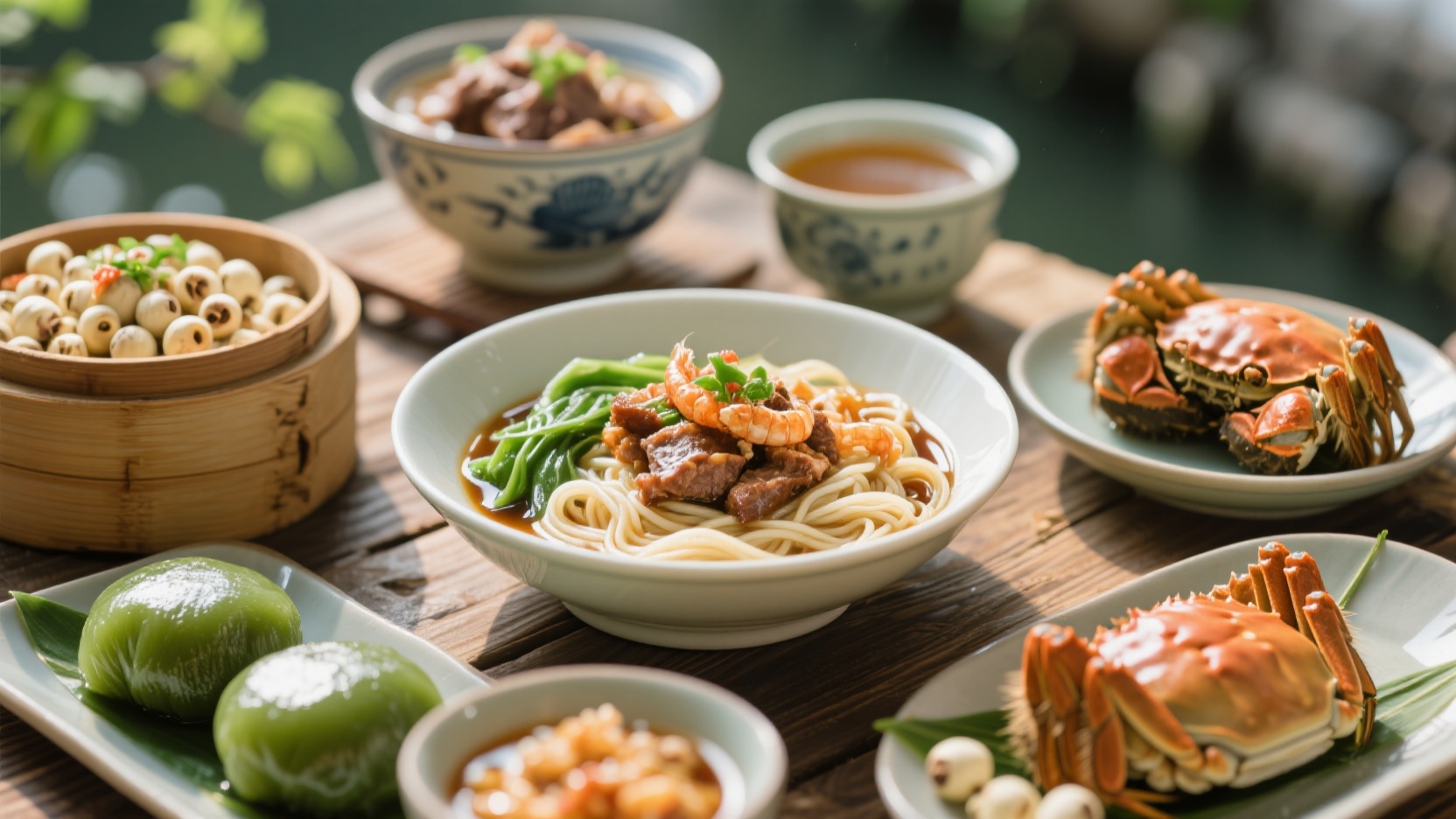
The biggest mistake I made in Suzhou wasn't blindly following the trend and queuing up for some popular pan-fried buns, but rather braving the scorching sun in mid-July to search for a piece of braised pork. I visited three established restaurants, all of which shook their heads in disapproval. Finally, a local old lady couldn't bear to watch any longer and slowly said in Suzhou dialect, "Braised pork is for before Qingming Festival; now you should eat three-shrimp noodles." That's when I realized that Suzhou's food isn't based on a menu, but on the seasons. Later, I simply divided the seasonal offerings into four segments and made four separate trips to try and find them, eventually compiling this "once you miss it, you're gone" list.
From the Spring Equinox to Qingming Festival: The unique green of qingtuan (green glutinous rice dumplings) and braised pork.
Qingtuan (green glutinous rice dumplings) are not available year-round in Suzhou. The ideal time to make them is after the Awakening of Insects (Jingzhe) each year, when wild wheatgrass or mugwort sprouts its tenderest stems and leaves, their juice is bitter yet fragrant. Local Suzhou qingtuan are known for their "firm skin," not a soft, mushy glutinous rice ball, but rather glutinous rice flour kneaded with scalded wheatgrass juice, resulting in a dark green color and fine plant fibers after steaming. The most authentic filling is fine red bean paste, made by soaking red beans overnight and stir-frying them until they become sandy but not completely crushed, retaining a slight grainy texture. Around Qingming Festival, several pastry shops in the old city start steaming their qingtuan as early as 7 am. Locals only buy freshly steamed qingtuan, carrying them on the go and eating them as they walk. The room-temperature pre-packaged, bright green ones are completely ignored by the older women.
Alongside the Qingming Festival (green glutinous rice dumplings), braised pork in soy sauce is another signature dish of Suzhou's spring. This dish is only available for about a month around the Qingming Festival because it uses freshly harvested bamboo shoots as a base; the tender shoots absorb the fat from the pork. The pork chunks are dyed a peach-colored hue with red yeast rice powder, so tender they fall apart with a touch of chopsticks, yet the skin remains intact and the shape doesn't crumble. Locals enjoy braised pork in soy sauce in two ways: the lean meat is served with white rice, drizzled with a spoonful of sauce; the fatty meat is sandwiched in a hot steamed bun or lotus leaf pancake, eaten like a northern-style roujiamo (meat sandwich). After Qingming, most established restaurants close down, and you'll have to wait until next spring to enjoy it again.
From the Beginning of Summer to the Grain Full: Stir-fried Meat Dumplings and Three-Shrimp Noodles – The "Early Summer Alarm Clock"
In Suzhou, the arrival of summer isn't marked by the temperature, but by the sale of stir-fried glutinous rice balls. This cold dessert only appears from the beginning of summer until around the Dragon Boat Festival, and its popularity ends after the Lesser Fullness of Grain. The filling includes minced meat, diced bamboo shoots, wood ear mushrooms, daylily buds, and shrimp. The bamboo shoots must be the tail section of seasonal spring bamboo shoots; any later and they'll be too tough. The most unique aspect is the way it's eaten: a small opening is made in the steamed glutinous rice ball, a spoonful of warm broth is poured in, and then a freshly peeled river shrimp is stuffed inside. Locals don't bite into it immediately; instead, they gently squeeze the ball, letting the broth swirl between the glutinous rice and the filling, sip a small amount, and then eat it skin and all. Many unsuspecting people take one bite, and the broth spills all over the paper, prompting the older Suzhou locals to shake their heads with a smile.
Three-Shrimp Noodles are a limited-time treat for noodle lovers in early summer. Around the Dragon Boat Festival each year, the female shrimp from Taihu Lake or Yangcheng Lake are at their fattest, laden with roe. The shrimp brains are full and the roe is abundant. The noodle shop chefs start dissecting the shrimp at two or three in the morning, stir-frying the roe, shrimp brains, and shrimp meat separately until fragrant, and then mixing them with a bowl of noodles in a rich, oily broth. Locals emphasize "three quicks" when eating Three-Shrimp Noodles: quickly mix the noodles, quickly eat them, and don't wait for the shrimp roe to become soggy. The noodles must be firm, and you should stop mixing after three stirs so that the shrimp roe clings to the surface like sesame seeds, rather than sinking to the bottom of the bowl. This noodle dish is only available for about a month. Once the female shrimp have laid their eggs and the roe has fallen off, the shop immediately removes it from the menu without hesitation.
From White Dew to Frost's Descent: Autumn's Perfect Duo – Water Chestnut and Hairy Crab
For Suzhou locals, autumn begins with a bowl of water caltrop seeds. Water caltrop, scientifically known as Euryale ferox, is produced in many parts of China, but Suzhou people only recognize the local "Nantang water caltrop," with its round grains, slightly yellow color, and soft, sweet after cooking. Around the time of the White Dew solar term, water caltrop seeds are harvested at their tenderest, with farmers picking the seeds in the early morning and shelling them the same day. Hand-peeled seeds taste completely different from machine-peeled ones. The local way of eating them is extremely simple: bring water to a simmer, add the water caltrop seeds and blanch for twenty seconds, then remove them from the heat, adding a small spoonful of rock sugar and a few dried osmanthus flowers. It's absolutely crucial not to overcook them, as they will become tough and like "rubber beads." Many people from other regions cook them for half an hour like they would for multigrain porridge, but this completely ruins the texture.
After the Cold Dew solar term, the real highlight of Suzhou's cuisine, the hairy crab, truly arrives. An old saying goes, "When the northwest wind blows, the crab's legs harden," meaning that only when the temperature drops will the female crab's roe solidify into a paste, and the male crab's roe become sticky enough to eat. Before the Mid-Autumn Festival, many markets are already flooded with crabs, but locals know that those are just early crabs caught to coincide with the season, with empty shells and sparse roe. The real crab feast comes around the time of Frost's Descent, when the crab has a green back, white belly, golden claws, and yellow hair. When steaming, the belly should face upwards, with a piece of perilla leaf underneath to prevent the roe from dissipating. Locals eat crab without any seasoning other than vinegar and minced ginger. After eating the crab body, they disassemble the claws and finish with a bowl of ginger tea. More particular families will even save a little crab roe to mix with leftover rice, making "crab roe rice," which is the proper way to enjoy this delicacy.
From the Winter Solstice to the Beginning of Spring: The "Winter Ritual" of Winter-brewed Wine and Zangshu Lamb.
In Suzhou, the Winter Solstice night takes precedence over Lunar New Year's Eve, with the saying "Winter Solstice is as important as the New Year." And the limited-edition winter-brewed wine for the Winter Solstice is the soul of this meal. This osmanthus-scented glutinous rice wine is only available about ten days before the Winter Solstice each year. Large barrels are displayed outside several sauce shops and braised food stalls in the old city, and locals bring empty bottles to buy it in bulk. The wine is milky white and slightly cloudy, with fine bubbles. It tastes sweet and light, like a slightly tipsy soda with osmanthus. Most importantly, it is not sterilized at high temperatures, resulting in an extremely short shelf life; it's basically unavailable after the Winter Solstice. Many first-time visitors mistakenly believe that the bottled version in supermarkets is the same, but the bottled version undergoes processing to extend its shelf life, resulting in a significantly less effervescent and fresher taste.
The dish often paired with winter-brewed wine is Zangshu mutton. Although Zangshu mutton is available starting in autumn, it truly reaches its peak flavor after the winter solstice. Having accumulated grazing grounds during the early winter, the goat meat has a milder gamey taste and a firmer texture. Suzhou locals typically enjoy Zangshu mutton in a white broth hot pot. The broth is milky white; first, they drink a bowl of the original broth, then add cabbage, vermicelli, sheep's blood, and mutton. The dipping sauce is extremely simple: sweet bean sauce with a touch of chili oil. The meat slices are dipped in the sauce, resulting in a fragrant but not greasy flavor. On a deep winter night, sneaking into a small shop with a warm yellow light, ordering a pot of mutton, cabbage, and vermicelli soup, and pairing it with a bowl of white rice is the most comforting way for Suzhou locals to spend winter. After the beginning of spring, the peak season for mutton soup gradually comes to an end, and to enjoy that warming sensation again, one has to wait until the following late autumn.
These eight dishes, from qingtuan (green glutinous rice dumplings) to hairy crabs, from three-shrimp noodles to winter-brewed wine, are not available year-round. They share common characteristics: an extremely short window of availability, highly selective local preparation methods, and absolute respect for the principle of "once it's out of season." Suzhou people value the concept of "being in season" when it comes to food; they eat what's available at the right time of year to bring out its best flavor.
Practical Tips: First, before entering a traditional restaurant, ask "What's in season now?"—it's more reliable than flipping through the menu. Second, look for freshly steamed qingtuan (green glutinous rice dumplings), hand-peeled jitou mi (chicken head rice), and individually ordered winter-brewed wine—these three are the easiest to mistake. Third, don't rush to buy three-shrimp noodles as soon as they're available; wait until the price stabilizes and the chef is most skilled for the two weeks leading up to the meal for a better experience. Fourth, avoid the rush to eat hairy crabs before the Mid-Autumn Festival; wait until after the first frost to arrive, when the crab roe and fat are at their peak. Fifth, definitely go to buy winter-brewed wine a week before the Winter Solstice; by the afternoon of the Winter Solstice, most barrels will be empty. Eating according to the seasons is the right way to experience a city.