
Stop going to Pingjiang Road Main Street | A 5km Anti-Routine Cultural and Artistic Route Tested by a Suzhou Native
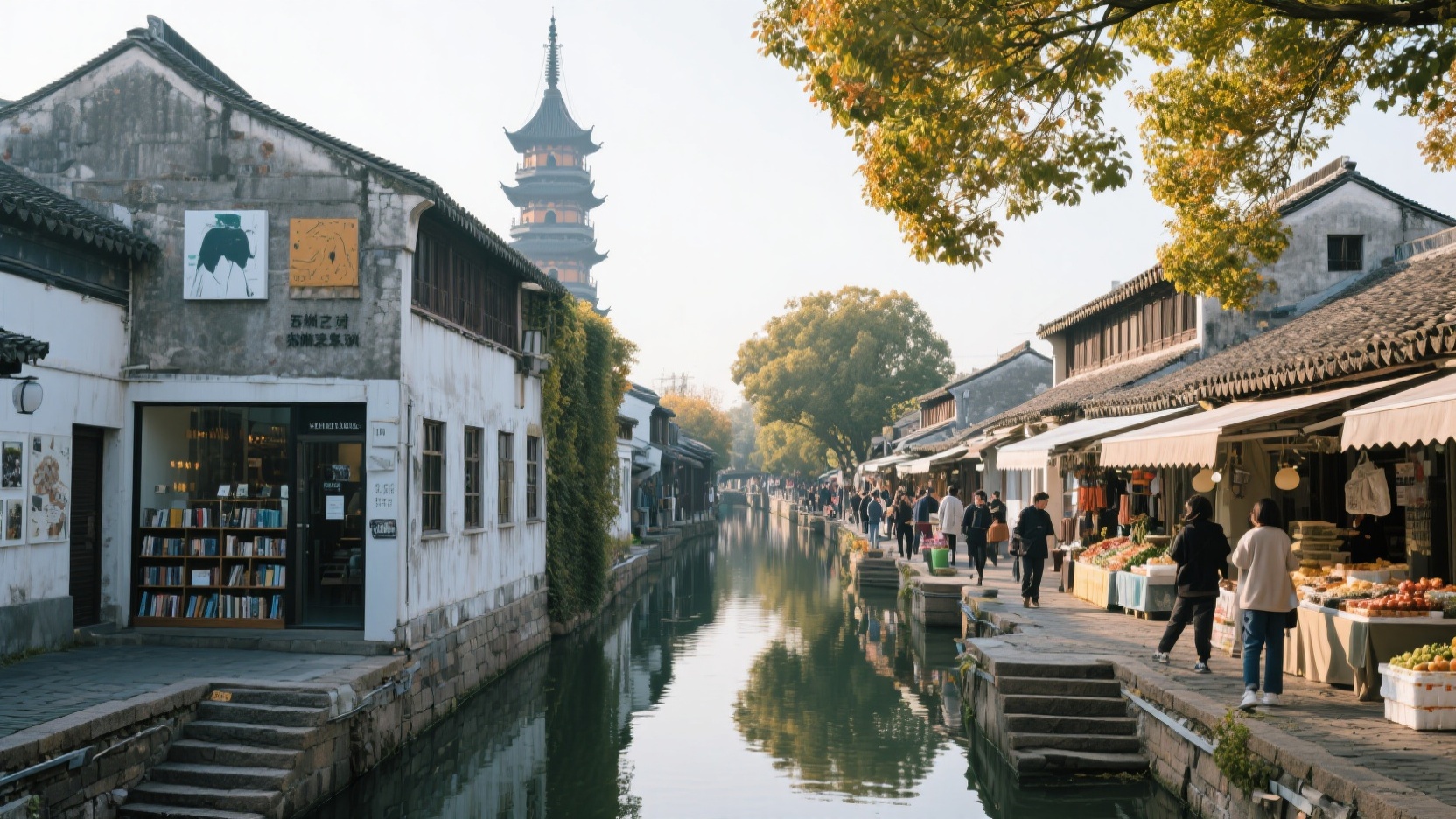
Last week, I accompanied a friend from Beijing to stroll along Pingjiang Road. I waited for fifteen minutes on a stone bridge, and the last photo I took showed nothing but the back of my head and a bamboo tube of milk tea. At that moment, I suddenly realized that the worst places in Suzhou to follow a travel guide for "cultural check-ins" are precisely those locations that have been overhyped by short videos.
Pingjiang Road, the eastern section of Shantang Street, and the Shuangta Market are places locals rarely venture into—not because they aren't beautiful, but because the crowds filter out Suzhou's most crucial qualities: tranquility and a slower pace. The truly local, artistic routes lie within the daily walks from west to east through the ancient city. The following five-kilometer route is one I walk every month.
Let me first tell you about three pitfalls that even locals wouldn't fall into.
The first is Pingjiang Road, the main street. During the day, tour groups and photography crews block every stone bridge, turning it into a one-way street. It's difficult to capture a clean "small bridge and flowing water" scene; you can only photograph bamboo tube milk tea and Hanfu reflectors. Locals going to the Pingjiang Road area basically only walk through side alleys like Xuanqiao Alley and Dingxiang Alley, quickly passing through the main street.
The second is the eastern section of Shantang Street. The lights are indeed beautiful at night, but the section from Xinmin Bridge to Duseng Bridge is subject to almost daily crowd control. What you'll see at the bridgehead isn't an empty view, but rather the same massive crowds seen on the Bund during holidays. To see the Shantang River in its original state, head west past Xinmin Bridge; that's where life gradually returns.
The third is Shuangta Market. After being packaged as the "most beautiful vegetable market," the stalls have become more and more like chain food courts, with prices and volume rising together. Locals prefer to buy vegetables at Fengmen Hengjie, where it hasn't been modified by filters, and the haggling and Wu dialect hawking are still there.
Indigenous Route Overview: Five Kilometers from the Old Factory to the Farmers' Market
This route starts from the Blue Fanghua Creative Park on the west side of the ancient city, passes through Dashitou Lane and Ximei Lane, then goes to Suzhou Park and Manshufang, then turns into the small theater in Pingjiang Road side alley, then goes to Yan Wenliang Memorial Hall, and finally ends at Fengmen Hengjie, with a total distance of about five kilometers.
The best time to visit is from April to May and October to November, when the temperatures are comfortable and the plane trees and ginkgo trees are changing color. It's suitable for artsy young people who don't like rigid, task-oriented photo opportunities, independent bookstore enthusiasts, small theater lovers, and those who want to capture clean street scenes. It's recommended to leave around 2 PM, so you'll arrive at the market by evening.
Lan Fanghua Creative Park and Da Shitou Lane: Two of the most photogenic, less-visited spots in the western section
Lan Fanghua is a converted old factory building, preserving its red brick walls, old beams, and iron staircases. Why it's worth stopping for ten minutes: there are no tourist loudspeakers or uniform-themed souvenir shops, occasional small exhibitions, and the interplay of light and shadow on the old walls is more captivating than paid exhibition halls. The best spot for photos is in the stairwell on the north side of the main building, looking up at the skylight; around 3 or 4 pm is ideal. Nearby are Suzhou-style noodle shops and wonton shops, costing only a few dozen yuan per person, and there are half the number of people compared to tourist attractions.
The areas around Da Shi Tou Lane and west Mei Lane haven't yet been uniformly turned into trendy "Instagrammable" alleys; old wells, vines, and clotheslines are still there. Why stop for ten minutes? Here you can see authentic traces of life, not a staged "Jiangnan" experience. Good vantage points for photography are the east entrance of Da Shi Tou Lane looking west, or the old gate at the intersection of Xi Mei Lane and Liu Lane. Nearby, there are stalls selling sweet osmanthus lotus root and radish cakes—buy some and enjoy them while walking; it's the quintessential Suzhou experience.
Suzhou Parks and Slow Study Rooms: Cultural Living Rooms and Studies for Locals
Suzhou Park, known locally as "Big Park," is a popular spot for retired seniors to play chess, walk their birds, and dance; there are no tour groups. Why stop for ten minutes? You can easily spend an afternoon in a teahouse with a pot of Biluochun tea, surrounded by the relaxed atmosphere of Suzhou dialect – a feeling that tourist attractions and teahouses can't provide. Good photo spots are under the plane trees near the old teahouse in the southwest corner of the park, or near the old pavilion in the northeast corner. North of Park Road, there are local pastry shops selling green rice dumplings and mint cakes, available seasonally, for a few dozen yuan per person.
Slow Bookstore is an independent bookstore near Guanqian Street, with a small, easily missed entrance. Why stop for ten minutes? The selection includes niche categories like Suzhou local history, garden architecture, and Kunqu Opera, unlike trendy bookstores that rely on grand staircases and lighting to attract photos. Good photo spots are the wooden tables by the windows inside, or next to the old bookshelves near the entrance. Walking out of the bookstore and into Jiayufang or Renmin Road, you'll find affordable Suzhou-style restaurants where you can order small portions of dishes like braised eel in hot oil and stir-fried shrimp.
The small theater in a side alley on Pingjiang Road and the Yan Wenliang Memorial Hall: Enjoy opera and exhibitions without the crowds.
Don't listen to the "Pingtan teahouses" advertised on the main street of Pingjiang Road. Turn into Zhongzhangjia Lane or Daru Lane and look for small theaters or Pingtan storytelling venues. Locals often go to listen to a performance or two after dinner. Why stop for ten minutes: the performers don't rush, the interaction is natural, and sometimes you can hear the opening in authentic Suzhou dialect. Position your camera at the back of the audience area in the small theater to film the elderly gentleman on stage with the accompaniment; you can also film the alleyway scene when the lanterns at the entrance are lit. Nearby side alleys have local restaurants selling salted pork and vegetable rice, and stuffed fried gluten balls, costing only a few dozen yuan per person.
The Yan Wenliang Memorial Hall is located east of Canglang Pavilion, on the former site of the Suzhou Academy of Fine Arts, in an old building with Greek columns. Why it's worth stopping for ten minutes: the hall regularly hosts small exhibitions of local Suzhou painters, attracting fewer visitors; the building itself resembles a European art academy, yet it's nestled beside a garden. The best vantage point is on the main entrance steps near the Roman columns, ideal for afternoon sunlight; photos of the waterways around Canglang Pavilion from the arched windows inside are also beautiful. Nearby, around Canglang Pavilion, are many traditional Suzhou-style noodle shops; the Fengzhen braised pork noodles are a seasonal treat, especially in autumn.
Fengmen Hengjie Market: A Living Art Gallery in Its Final Stages
Fengmen Hengjie is a traditional, old-fashioned market street frequented by locals. Why stop for ten minutes? The vendors sell a variety of local specialties: water chestnuts, dried aquatic plants, dried bluefish, and fermented rice cakes, changing with the seasons. The sounds of vendors hawking their wares and Suzhou storytelling blend together, creating a more authentic "Suzhou art scene" than any trendy market. The best spot is in front of an old stall with a rain shelter in the middle of the street, capturing the moment of weighing and receiving change; the reflection of the ground after rain makes for even better shots.
The food options nearby are all street-side: fried dumplings, sweet rice porridge, and water chestnut soup, all reasonably priced and inexpensive. It's recommended to go in the evening, just before the vendors close, when the area is busiest and has a more vibrant, lively atmosphere than during the day.
In conclusion: Don't ask the locals if they didn't tell you.
First, you can go to Pingjiang Road main street, but avoid going in between 2 pm and 5 pm and after 7 pm, because during those times you'll see people, not the river.
2. If you want to take photos of empty scenes on Shantang Street, go before 7:00 AM or walk west from Xinmin Bridge, and avoid the crowded eastern section.
3. The Twin Towers Market is only suitable for buying a cup of soy milk and taking photos. For food, go to the side or directly to Fengmen Hengjie.
Fourth, this 5-kilometer route is recommended to be traveled in spring and autumn. Wear soft-soled shoes, no reservation is required, and you can stop and go at any of the stops.
Fifth, the true art and culture of Suzhou is not found in a particular storefront, but in the radio sounds deep in the alleys and the Wu dialect spoken by the old women in the market. Don't come with the mindset of "collecting all nine squares of images".