
A Taste of Shenyang in the Markets | Delve into Dadong Food Market and Xita Market and grab 10 local favorites: cooked food, pickles, and snacks.
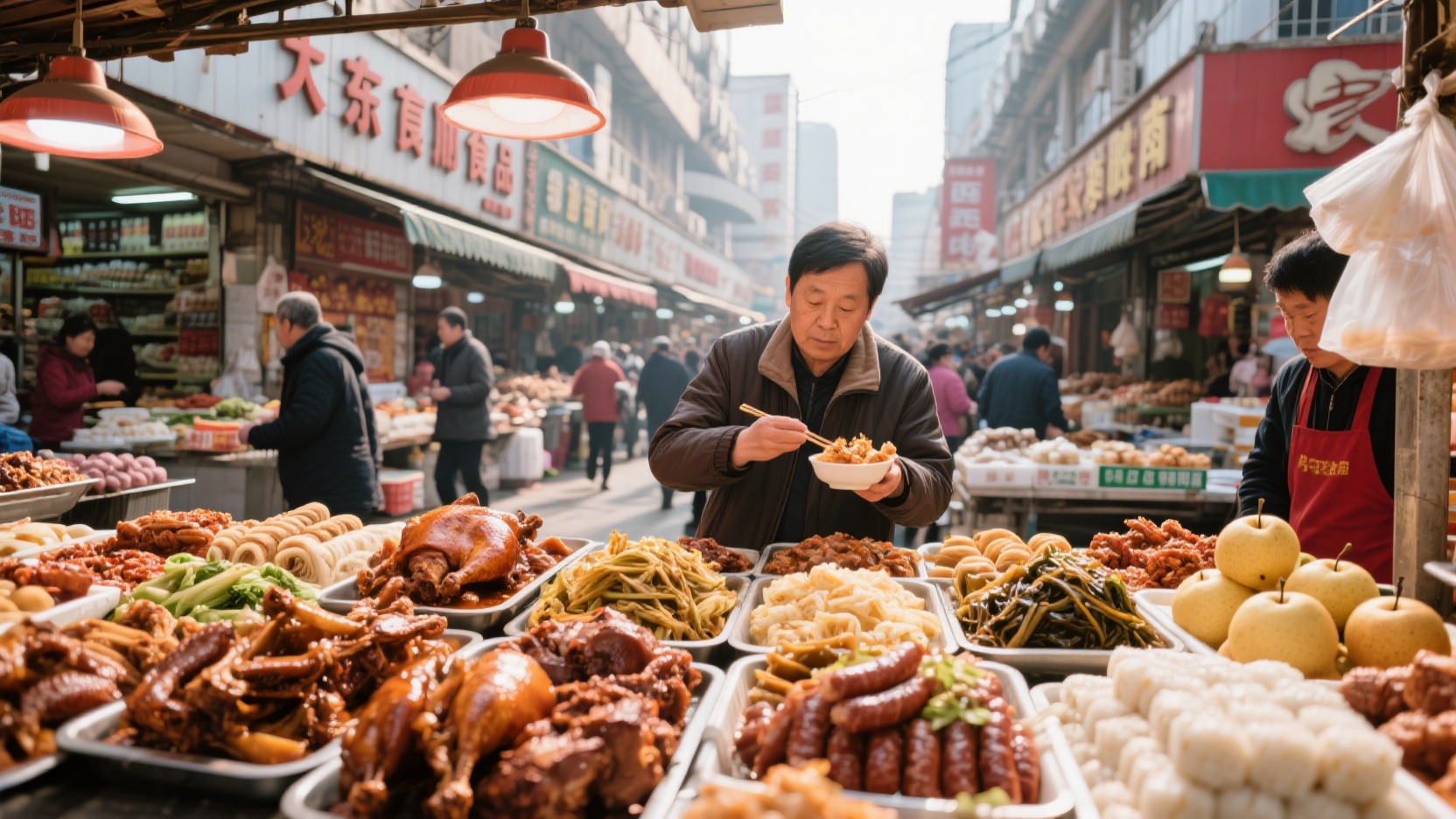
To truly appreciate the flavors of Shenyang, you don't need to start by queuing at popular restaurants. At the Dadong Food Market in the early morning, the first wisps of smoke rise from the smoked chicken stalls; turn into the Xita Farmers Market, and the fermented, tangy aroma of kimchi mingles with the powdery scent of glutinous rice cakes. These two old markets are the starting point for locals' daily meals, and also culinary treasures easily overlooked by tourists.
Dadong Food Market: The Old Flavors of Cooked Foods and Manchu Snacks
As one of the oldest food distribution centers in Shenyang, Dadong Food Market has a high density of stalls, with a concentration of cooked food and snacks. When visiting, it's recommended to look at four items first.
The first item is smoked chicken frames. In Shenyang, people eat chicken frames not only roasted and mixed, but also smoked ones, which have a bright red color and a fruity aroma when torn. When choosing chicken frames, select those with intact skeletons, tender breast meat, and dry, non-sticky skin. The most direct way to eat them is by hand, and they can be sprinkled with salt and pepper, or mixed with onions, cilantro, and a little aged vinegar.
The second dish is Goubangzi smoked chicken. The whole chicken is smoked, resulting in a deep reddish-brown skin and firm meat. When choosing a chicken, look for a plump breast, undamaged skin, and a smoky aroma rather than a burnt or bitter smell. It's more chewy when eaten cold than hot, and is perfect as an appetizer or shredded for noodles.
The third item is Eight Treasures Pork Knuckle. You often see boneless, tied-up pork knuckles at braised food stalls; when sliced, the meat and aspic are clearly layered. When choosing, check if the cut surface is dry and the gelatinous texture is transparent. It can be eaten directly with a sesame flatbread, or with minced garlic and vinegar sauce.
The fourth item is perilla leaf buns. A representative of Manchu sticky foods, these are made by wrapping red bean filling in glutinous rice flour in perilla leaves and steaming them. When choosing buns, select those with dark green leaves that don't fall off and are full of filling. They need to be steamed thoroughly before eating, and dipping them in white sugar brings out the bean flavor best.
If you happen to be there in late autumn or early winter, it's worth buying some loose pickled cabbage from the market. Choose cabbages with golden-yellow stems, a mild sour and fragrant taste, and no mold spots; they'll be perfect for stewing pork ribs or making hot pot at home.
Xita Farmers Market: A Living Showcase of Korean Pickles and Rice Noodle Snacks
Unlike the traditional Manchu and Han flavors of Dadong Food Market, Xita Farmers Market specializes in Korean ethnic cuisine. The abundance of pickles, rice, noodles, and seasonal fruits is rare in Northeastern cities.
The fifth item is kimchi. The kimchi here is mostly freshly prepared and sold, selected for its thick leaves, translucent appearance after pickling, and evenly distributed chili paste. It should have a fermented, sour aroma without being pungent. Besides simply cutting it into pieces, it's also suitable for stir-frying with pork belly or adding to tofu hot pot, significantly enhancing the flavor.
The sixth item is pickled vegetables. Common examples include pickled black beans, pickled sweet potato stems, and pickled perilla leaves, displayed in glass cabinets or large basins. When selecting them, look for an even color of the sauce, no white film on the surface, and a crisp but not mushy texture. They are perfect with white porridge or mixed with rice.
The seventh item is glutinous rice cake. Freshly made glutinous rice cake is coated with soybean flour or red bean flour, resulting in a soft and chewy texture with a dry, fluffy consistency. It's best to eat it on the same day you buy it, and enjoy it with honey or rice wine. It's more elastic than vacuum-packed ones from the supermarket.
The eighth item is rice sausage. It's made by stuffing glutinous rice and pig's blood into pig intestines, then steaming it until the cut surface is purplish-brown. When choosing sausages, select those with intact casings, where the glutinous rice and blood are well-integrated after cutting, and without any fishy smell. It can be sliced and pan-fried with a little oil, or added to soy sauce or spicy soup.
The ninth item is seasonal fruit, with a focus on Nanguo pears and frozen autumn pears. For Nanguo pears, choose those with a yellowish-red peel, slightly soft to the touch, and a wine-like aroma. Let them soften before biting into them and sucking out the juice. For frozen autumn pears, choose those with a dark brown peel and firm flesh. Before eating, thaw them in cold water until the outer shell softens, then bite into them and drink the juice, which is sweet and has an icy texture.
From the first steam rising from the cooked food stalls in the early morning to the fermented, tangy aroma of pickles in bags at the pickle stand, Shenyang's markets don't rely on elaborate plating or fancy signs; every bite is a testament to the locals' everyday experience. Tourists who queue with the locals are less likely to make a mistake than those who order from guidebooks. The market preserves a city's seasons, accents, and character; exploring the market is the best way to truly experience a city.