
Shanghai's Art and Culture Avoidance Guide | A Local's Tested List: Don't be fooled by Tianzifang and Wukang Road, this 4.6km stretch is the real art and culture spot.
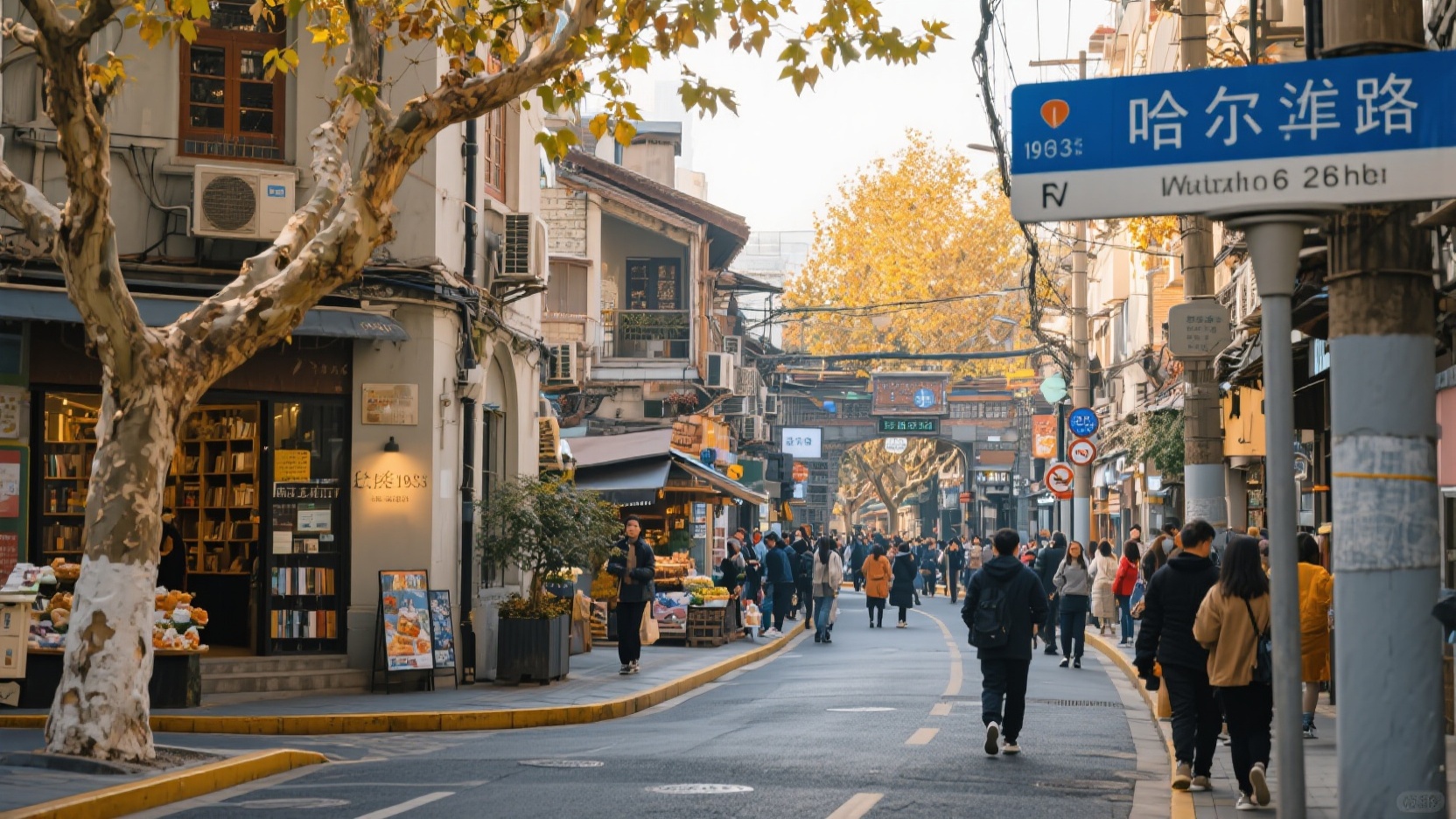
I've lived in Hongkou for six years now. Every time I pass by the entrance of the 1933 Old Millfun and see a group of people queuing for a camera on the cement stairs on a rainy day, I want to go up and tell them: Harbin Road next door is ten times more interesting, but nobody goes there.
Shanghai is a city that can never be truly understood by simply "checking off landmarks." If you consider Tianzifang, the intersection of Wukang Road and Anfu Road, or 1933 as artsy landmarks, you're missing the street corners where locals actually linger. The following three pitfalls are ones I always point out when taking friends on detours.
Avoid these pitfalls: Three "artsy" traps that even locals wouldn't go into.
Tianzifang is the first place to be disappointed. It's so crowded you're shoulder to shoulder, the alleyways reek of fried stinky tofu, and the shops are most likely selling scarves and fridge magnets wholesale from Yiwu. Locals mostly pass by Taikang Road to eat at the Sun Moon Light Center, not to suffer in Tianzifang.
The intersection of Wukang Road and Anfu Road is even more outrageous. A traffic light intersection is touted as "Shanghai's most artistic corner" through filters, but in reality, the background is full of pedestrians holding up their phones. A nearby cafe dares to charge a mid-range price for a cup of hand-drip coffee, and there aren't even enough seats to put bags; locals have long since turned away from Wuyuan Road.
The 1933 Old Millfun is more beautiful on the outside than on the inside. The building does have a cold, austere feel, but the interior exhibits remain unchanged year after year, and the famous staircase is extremely challenging to navigate. Taking photos on a cloudy day feels like searching for an exit in an abandoned factory; there's no artistic vibe, just pure grayness.
A 4.6-kilometer walking route: Harbin Road—Duolun Road—Shanyin Road
I walk this road at least twice a week. It connects old streets and alleys, old factory creative parks, independent bookstores, community parks, farmers' markets, and small theaters. It's about 4.6 kilometers long and takes about two and a half hours to walk if I'm not in a hurry. After exiting the Hailun Road subway station, first turn onto Harbin Road towards Music Valley.
Don't rush to take out your camera; first, let the atmosphere of a "local taking a stroll after get off work" set in. Autumn and winter are the most comfortable seasons for walking; the plane tree leaves are just turning yellow, and the quilts drying in the alleyways have more stories to tell than any filter.
The first leg of the journey: Turning from Music Valley onto Harbin Road, the old factory buildings still feel alive with life.
Music Valley at the Harbin Road intersection is a small creative park converted from several old factory buildings. There aren't any staged photo opportunities like those at the M50. If you stop for ten minutes, you can see studios making installations downstairs, elderly women carrying groceries, and uncles squatting by the bridge taking pictures of cats. The best shooting spot is on the north side of the Harbin Road Bridge; from there, you can capture both the old factory buildings and the riverfront.
Don't go to the mall for food nearby. There's a local noodle shop on the corner of Jiaxing Road. Spicy pork noodles with pickled vegetables are a regular lunch for nearby office workers. It costs only a few dozen yuan per person and is much more substantial than the trendy brunch spots.
Just two steps further on is a half-floor bookstore. It's small, but the selection leans towards social sciences and urban studies, unlike chain bookstores that only stock bestsellers. My spot is on the second floor, at the old wooden table by the window, where natural light at 10 am falls perfectly on the pages. You can stay there for twenty minutes; no one will rush you to buy anything, and a cup of Americano at the small coffee shop next door isn't expensive.
The second section: Duolun Road and Luxun Park, where you can enjoy the cultural heritage of your community without having to queue.
Duolun Road Cultural Celebrity Street sounds like a tourist attraction, but in the early morning and evening, it's mostly locals walking their birds and playing chess. Stop for ten minutes, don't just stare at the sculptures, go stand in front of the Xishi Bell Tower for a while; the slanting shadows of the plane trees look like something out of an old movie. Take a photo from the east side of the Xishi Bell Tower, looking up, to avoid the red flags of tour groups.
The Toronto Museum of Modern Art is located by the roadside, and its exhibitions change frequently, often featuring experimental projects by small local Shanghai art spaces. The red brick wall and wrought iron windows at the entrance offer good photo spots, especially after 3:30 pm when the light softens. After viewing the exhibition, walk towards Lu Xun Park.
Lu Xun Park isn't a "tourist attraction," but rather a vibrant hub for the morning arts and culture activities of the older folks in Hongkou District: someone plays the erhu by the lake, someone sings Suzhou storytelling in the pavilion, and you might even bump into an old gentleman writing calligraphy on the ground. A good vantage point is on the west bank of the island in the middle of the lake; using a telephoto lens to photograph the pavilion on the opposite bank captures a sense of everyday life even without editing.
There's no shortage of food along the way. Near Duolun Road, there's a Hongkou Rice Cake Shop where you can buy a soft, savory glutinous rice ball to eat while walking. Outside the north gate of Luxun Park, the snack shops on Shanyin Road are more reliable than any travel guide.
The third section: Shanyin Road vegetable market and small theater, and the real fireworks display after the show.
The Shanyin Road vegetable market is the most vibrant "art space" on this street. Take ten minutes to look at the colors of the vegetables piled up against the light at the entrance stalls—it's bolder than many oil painting exhibitions. The best spot for taking photos is next to the second pillar on the right side of the entrance. The light is best between 7:30 and 8:30 in the morning, but don't point your camera directly at the stall owner; ask them first before pressing the shutter.
You can eat almost anything near the market. Wan Shou Zhai steamed buns, Guang Tou pan-fried dumplings, and the neighboring potstickers are all locals who have been eating at these places since childhood. You can eat until you're stuffed for just a few dozen yuan per person. You can sit on the steps by the roadside and watch the children leaving school and the elderly buying groceries give way to each other.
Before dusk, head to the vicinity of Jiaxing Road, where there are small street theaters. If you're lucky, you might stumble upon a local drama club or a small open mic talk show. Tickets are mid-range, and the content is down-to-earth. The neon lights at the theater entrance look quite stylish in the dim light. The camera position is across the street next to the mailbox.
After the show, don't rush to hail a taxi. Head to a side street and find a bowl of small wontons or hamburger wontons. Only after you've finished the hot soup will you have truly completed this "artsy" route.
In closing: Don't ask the locals if I didn't tell you.
1. Avoid going to Tianzifang and the intersection of Wukang Road and Anfu Road on weekend afternoons, as the crowds will make the signal weak; if you really want to take pictures of the Wukang Building, just pass by before 7 a.m., take a picture, and leave.
Second, this road is best traveled in autumn and winter. Don't try to push yourself in the summer afternoon, as the smells from the market and the chirping of cicadas will be amplified, and you'll easily break a sweat.
Third, those who like contemporary art can change the order: go to the Toronto Museum of Modern Art in the morning, to the Half-Floor Bookstore in the afternoon, and to the small theater in the evening to avoid crowds and not rush.
Fourth, when taking your parents or elderly relatives on a walk, focus on Luxun Park and Shanyin Road, and avoid the Harbin Road section, as the road is narrow and the traffic is chaotic, and the elderly will get tired from walking there.
5. Don't cram all the sights into one day. Pick two or three to explore at your own pace, sit down, and enjoy a meal. This is more like being a local and a true cultural and artistic journey than rushing around taking photos.