
Avoid these spots in Nanchang | A local's testimonial list to avoid pitfalls: Don't be fooled by 3-day, 2-night itineraries!
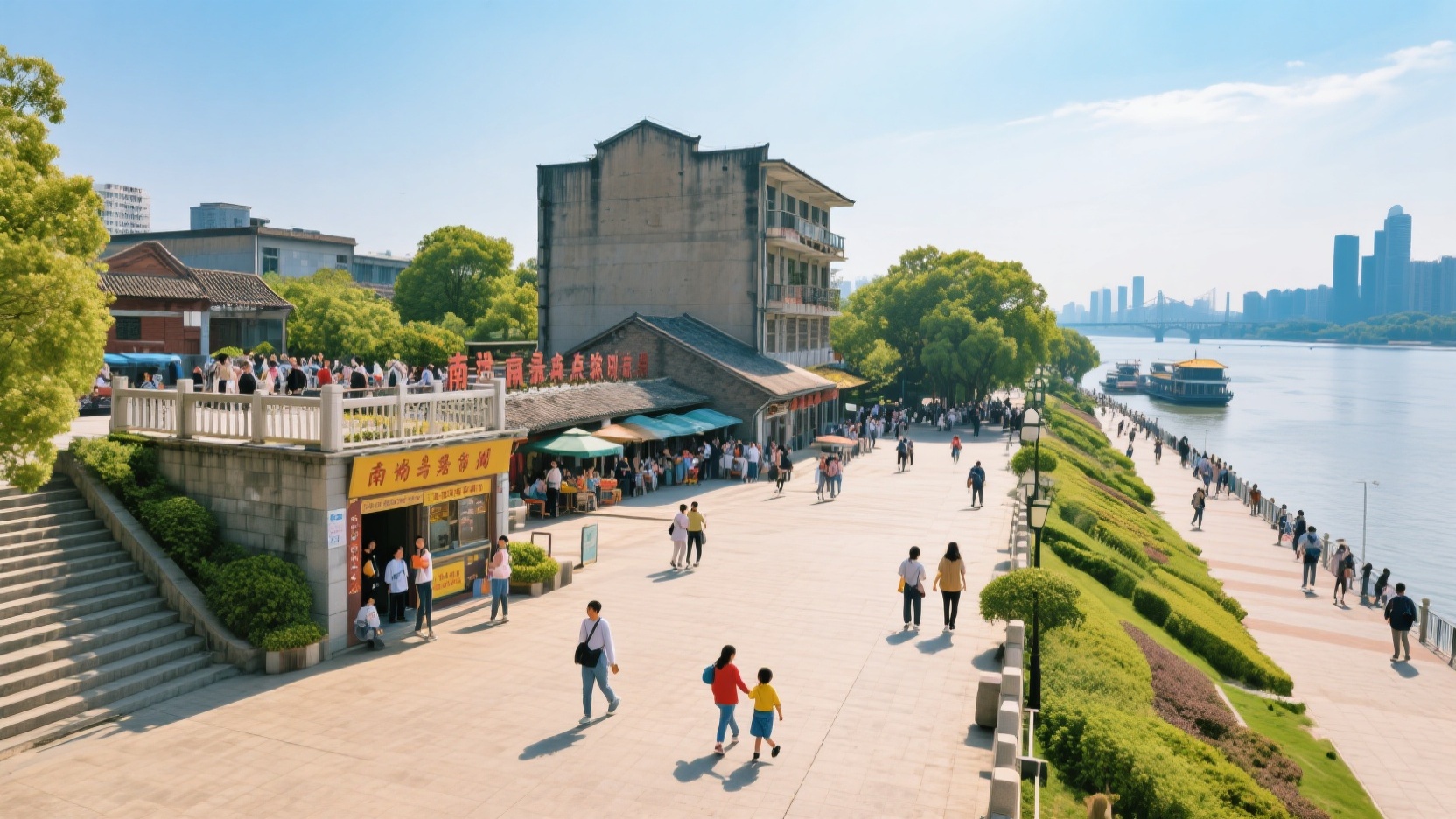
First, let's break down the popular three-day route: How can the route of Tengwang Pavilion, Wanshou Palace, and Bayi Square be changed?
The most common itinerary online is Tengwang Pavilion in the morning, Wanshou Palace in the afternoon, and Bayi Square plus the Golden Pagoda in the evening. It sounds logical, but in reality, during peak season, the east gate of Tengwang Pavilion can be jammed all the way to Dieshan Road, making it especially frustrating for those driving. The scenic area itself is not bad, but if you treat it as a "must-see for most of the day," you'll quickly find yourself wandering around the Tang-style building and feeling lost.
Wanshou Palace Historical and Cultural District is best visited in the evening, but many travel guides suggest going during the day and finding lunch there. During the day, shops are sparsely open; the truly photogenic and lively time is around sunset. As for Bayi Square, there's no need to make a special time to visit; just glance at it as you pass by. There's no compelling reason to explore the nearby commercial areas.
Locals rarely go to Shengjinta Food Street. It's more like a tourist hotspot, with many similar stalls and prices significantly higher than neighborhood shops. It's better to save your dinner for Ximazhuang or Chuanshan Road than to queue in the antique-style street.
Part Two: Day Two - Nanchang Star, Qiushui Square, Honggutan: Some free attractions are most expensive in terms of time.
The fountain at Qiushui Square is indeed free, but the experience of not being able to get a taxi afterward and the subway station being so crowded that crowd control measures are in place means that locals will only go if their friends from out of town insist. If you absolutely must see it, it's recommended to leave early from the outer perimeter of the station, and not wait until the last music finishes before leaving.
Riding the Nanchang Star Ferris Wheel during the day is basically like being exposed to the scorching sun, and queuing at night is another exhausting experience. It's more suitable as the end of a stroll in Honggutan than to start waiting in the afternoon. The high-rise buildings in Honggutan are more impressive from a distance than up close, and a short walk along the riverside promenade is enough.
The real waste of the second day was the "treating Honggutan like a tourist attraction" mentality. This place is suitable for eating, enjoying the river view, and feeling the breeze, but not for rushing from one checkpoint to another.
Third, on the third day, visit An'yi Ancient Village or Meiling: It's not that it's bad, but don't fill three days in the city.
An'yi Ancient Village is not close to the city center; public transportation is inconvenient, and even driving takes a considerable amount of time each way. The village has its charm, but cramming it into a three-day, two-night trip leaves even more fragmented time in Nanchang city. For similar experiences, renovated old communities and factory areas around the city center offer a more relaxed experience.
Meiling is a great spot for locals to hike or camp on weekends, but travel guides often advise tourists to carry their luggage up the mountain on the third day. Summer brings mosquitoes, winter brings strong winds, and those unfamiliar with the route are prone to getting lost. If you only have three days, it's more reasonable to remove this advice.
IV. How to eat well in Hama Street, Jewelry Street, and Yangzi Alley after queuing for two hours: How to make the most of your meal?
After some shops on Hama Street became popular through short videos, long queues formed even on weekday evenings. The taste hasn't gotten worse, but waiting two hours for a bowl of mixed noodles or a pot of soup is less appealing than turning to a long-established neighborhood shop that's been around for over a decade. Locals have limited patience while queuing, so small shops with fast turnover are the norm.
The "trendy snacks" on Jewelry Street are good to buy a few to eat while walking, but not recommended as a main meal. Many stalls are similar, so going after 4 pm might help you avoid tour groups. Breakfast in Yangzi Alley is more interesting than lunch, and it's often missed in travel guides.
The authentic breakfast in Nanchang is mixed rice noodles with clay pot soup, but it's best to go to the shops downstairs in residential areas before 8 a.m. After 9 a.m., many locals close up shop as soon as the morning rush hour is over.
V. Optimized version for locals: Three days and two nights: Change the itinerary from visiting other places to the rhythm of Nanchang.
Day 1: In the morning, go to the old town for mixed rice noodles and clay pot soup. In the cool morning, visit Tengwang Pavilion, but only have an hour and a half allotted. Have lunch near Ximazhuang or Chuanshan Road, then return to the hotel to rest. In the evening, go to Wanshou Palace. After dark, walk along the Fuhe River to Bayi Bridge; it's more comfortable than squeezing into the square.
Day 2: In the morning, visit the Jiangxi Provincial Museum or a renovated old factory area. At noon, find a local chain or community store in Honggutan. In the afternoon, take a walk along the Ganjiang River Trail. In the evening, have dinner in Honggutan, then just stop at Qiushui Square Station and leave without waiting for the event to end.
Day 3: Wake up naturally, store your luggage, and then have brunch at Yangzi Lane or Dashiyuan. In the afternoon, choose a local old park or the area around a wet market to stroll around, buy some handmade snacks, and end the day comfortably. This way, you won't be tired and you can still enjoy some authentic food.
VI. Add one day for flexibility: to accommodate different seasons and demographics.
If it's spring or autumn, adding a day for hiking in Meiling or camping by the lake is perfect; summer is not recommended due to the heat and mosquitoes. If traveling with parents, you can dedicate this day to the Bada Shanren Memorial Hall and Elephant Lake for a slower pace.
Young people looking for something different can visit Nanchang's old factory areas, along old railway lines, or riverside docks; the photos there will be more appealing than those taken at popular Instagram spots. Families with children are better off visiting the Science and Technology Museum or the area around Sunac Mall; avoid forcing your way into ancient villages.
VII. In conclusion: Don't ask the locals if I didn't tell you.
1. Don't drive to Tengwang Pavilion, and don't make Bayi Square your go-to destination; the traffic jams and empty streets will make you question your existence. 2. Don't queue for the trendy shops on Hama Street, and don't buy a bunch of packaged powders as souvenirs on Jewelry Street; many packaged powders are no more convenient than ordering them online from home.
Third, don't wait for the fountain show to end at Qiushui Square, and don't ride the Ferris wheel during the day; the time spent there is more expensive than the ticket price. Fourth, don't cram three days and two nights into Anyi Ancient Village, and don't wear thin-soled shoes to explore Meiling; you'll want to go back to the city early.
Fifth, avoid going out at noon in July or August, and don't believe anyone who claims they can eat their way through Nanchang in three days—even locals can't do that. If it's your first time here and you can only remember one thing: find a rice noodle shop located in a residential building first, then decide how to get around for the day. Nanchang isn't aloof, nor is it suitable for rushing around.