
Avoid paid tourist attractions | Local testimonial: 4-day free-admission bus tour – don't be fooled by travel guides!
Paying to enter a scenic spot in Lanzhou is basically like pushing away the free, vibrant atmosphere along the Yellow River. I once accompanied a friend from out of town to a waterwheel-themed park. Afterwards, he stood under Zhongshan Bridge watching old men play cards for half an hour and said that the latter was more like the real Lanzhou. I still remember that remark to this day.
So this four-day trip didn't cost a single penny in entrance fees; the only modes of transportation were public transport, shared bikes, and walking. Each day, I focused on one thing: immersing myself in the authentic lives of the locals. I skipped the major tourist attractions not because I was on a budget, but because the real gems of Lanzhou aren't actually at the ticket counters.
Day 1: Wuquan Morning Market – the vegetable market is Lanzhou's biological clock.
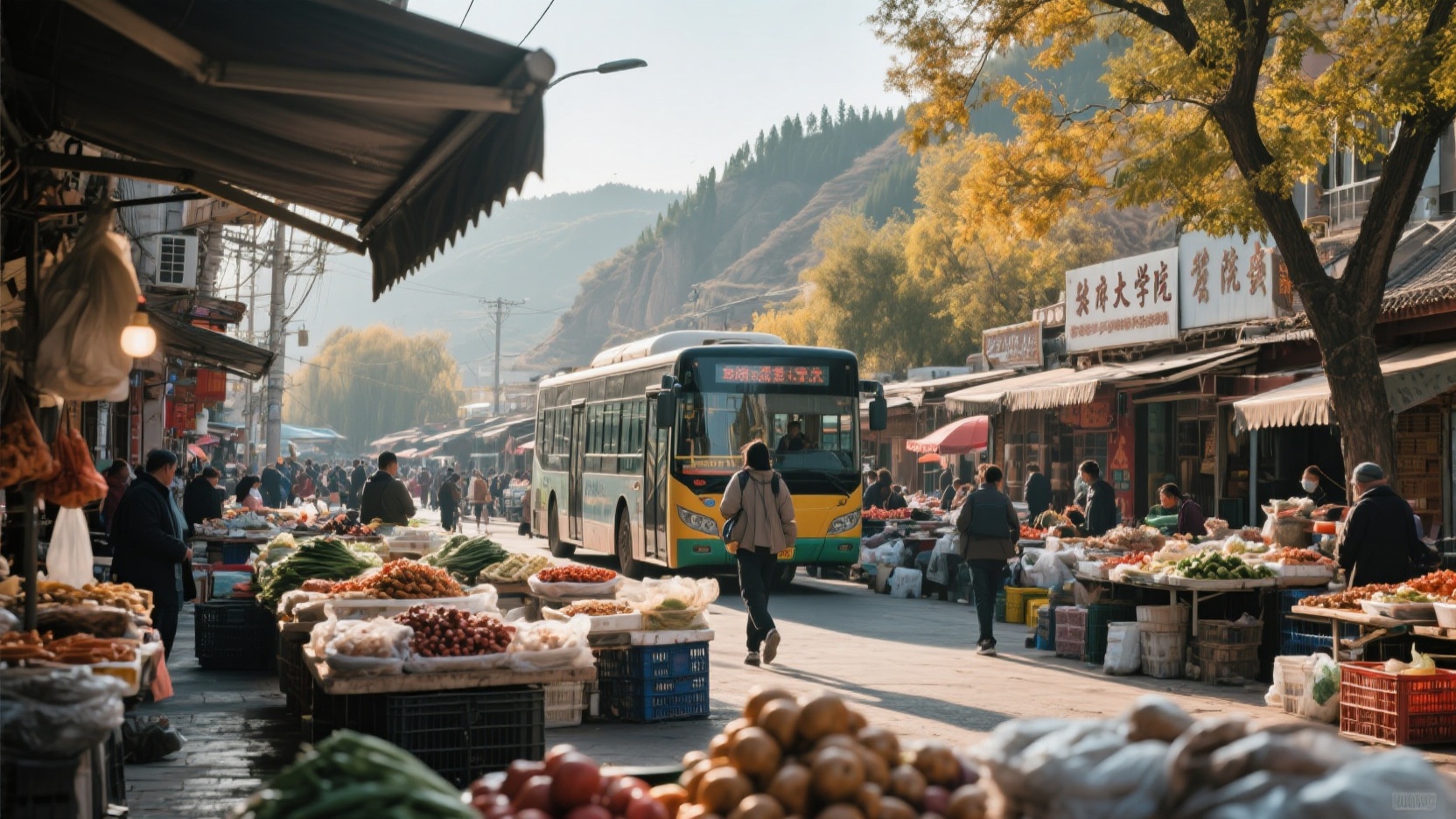
At 7:00 AM, take the bus to Wuquanshan Station, but don't go towards the mountain gate. Follow the elderly folks carrying small carts and turn towards the Wuquanshan Morning Market. The morning market doesn't charge an entrance fee, and it's not on the first page of navigation apps, but it's the most punctual alarm clock in the old town.
Here you can see the breakfast scene of Lanzhou locals: some people squat by the roadside drinking oil tea, while others buy half a jin of freshly baked rose shortbread. The Zhengning Road night market, crowded with tourists, is a nighttime attraction for out-of-towners, while the Wuquan morning market is the locals' unwavering morning routine.
Shopping alone is the most comfortable, without having to accommodate a companion. If you buy half a pound of loose dried lilies, the vendor will tell you how to steam them at home; if you buy two soft pears, the fruit seller will advise you to "freeze them before eating." These free conversations are much more engaging than any tourist guide's explanation.
If you happen to visit during autumn, the morning market will have piles of watermelons and local apples, so cheap you'll wonder if the scales are broken. But don't keep asking for the exact price; just stand where there are lots of elderly people and follow along to be weighed.
Day 2: Street food tour around the university – finding affordable alternatives to the cafeteria is the real food paradise.
Lanzhou's university districts are a free radar for tourists. Take a bus to the vicinity of Lanzhou University, and don't just take photos at the school gate. Take a stroll along Huining Road and Maijishan Road. These streets may not have trendy signs, but they offer excellent value for money, voted for by students themselves.
A bowl of thin beef noodles with a side dish costs very little, and its taste far surpasses many well-known but poorly packaged restaurants. Entry to the main campus of Lanzhou University can be made by reservation; a stroll along the sycamore-lined avenue is like visiting a free botanical garden.
If you visit during autumn, the ginkgo trees around Northwest Normal University in Anning will blanket the sidewalks in fallen leaves, creating a more cinematic atmosphere than many paid parks. Just eat whatever the students eat for lunch; you're unlikely to have a bad experience.
Eating alone isn't awkward; small restaurants around universities are used to seeing solo diners. Cycling is more convenient than taking a taxi because traffic is always congested at the school gate, while shared bikes can squeeze in.
Day 3: The transformation of an old industrial area – Lanzhou's "798" – free of charge.
Many people are unaware that Lanzhou also has a creative park that sprang up from old factory buildings. Take a bus to Duanjiatan area, and you'll find the Lanzhou Creative Cultural Industry Park, hidden within the old factory area. There are no entrance fees or mandatory purchases. This place, once a route for locals commuting to and from get off work, has now become a free photography studio for young people.
Red brick walls, sculptures made from old machine tool parts, graffiti in the workshops—everywhere you look, you'll find an industrial vibe. Even more fascinating is the old neighborhood next door: shoe repair stalls, secondhand bookstores, and small shops selling loose tea—it feels more like the 1980s than the park itself.
If you want to see the "old industry" to its fullest extent, you can take a suburban bus towards Agan Town, where you can find traces of the old tracks of the coal-carrying trains. However, there are few buses, so it's best to go in the morning and return in the afternoon if you have plenty of time.
The lighting in the old industrial area redevelopment zone is generally poor at night, so it's best to take photos in the natural light before 4 PM. If you're going alone, don't go too late, as there are fewer buses back to the city than you might expect, and if you miss one, you might have to wait a long time.
Day 4: Walking through the old town's alleys, from the bridge gate to the back alley of Baitashan.
On the last day, we'll walk the entire way, without taking any vehicles. Starting from the South Square of Zhongshan Bridge, don't rush to the bridge for photos. First, wander into Qiaomen Street and watch elderly Hui people making dumplings at their doorways, inhaling the aroma of Sichuan peppercorns wafting from the alley. You won't find this smell inside the tourist area.
Wandering through Dazhong Lane and Muta Lane, these old alleys, though lacking uniform signage, retain Lanzhou's most chaotic and vibrant street life. If you get tired, buy a skewer from a roadside vendor and chat with the old man selling apricot juice while squatting on the steps; he'll tell you which stall has been grilling lamb skewers for decades.
Returning to Zhongshan Bridge in the evening, I watched the Yellow River shimmer and reflect the city lights. The entire walk racked up at least 20,000 steps on my phone, but I didn't spend a single penny on admission. You'll realize that the most expensive thing in Lanzhou is actually time.
If you have the energy, you can walk along the riverside path for a while longer. There are always empty seats on the benches along the Yellow River, perfect for sitting alone, relaxing, and watching the sheepskin rafts drift by. No one will rush you, and there are no ticket gates to stop you.
In closing: Don't ask the locals if I didn't tell you.
First, Lanzhou buses support QR code payments, but it's still advisable to have some cash on hand, as some suburban lines and night buses are more reliable. Second, go to the farmers' market early; many stalls close before 2 PM, so don't sleep in.
Third, when eating beef noodles alone, don't add too much meat; a bowl of noodles and a pot of free jujube tea are enough to warm your stomach. Fourth, try to avoid peak get out of class times around universities; shared bikes are faster than taxis.
Fifth, the lighting in the old industrial area redevelopment zone is generally poor at night, so it's best to take photos before 4 PM. Sixth, wear an old pair of shoes; the old alleys of Lanzhou are a cure for high heels.