
Jincheng Flavors at the Market: 9 Local Delicacies Frequently Purchased by Locals at the Wuquan and Zhangye Road Markets
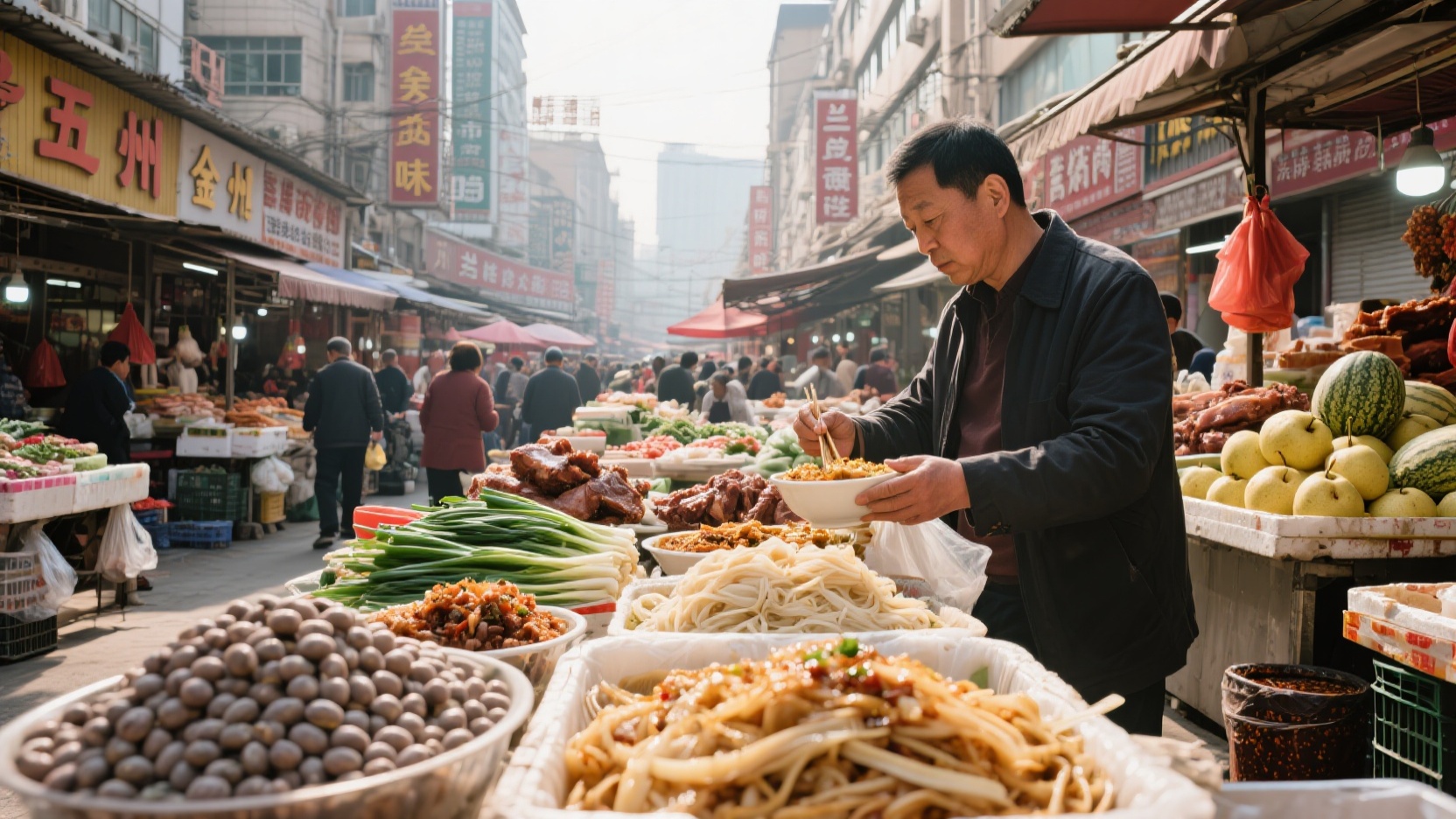
To understand Lanzhou's culinary system, you don't need to queue at restaurants. The Wuquan Market and Zhangye Road Market, one nestled in the old residential area of the south of the city, the other embedded in the old town's urban area, both open early in the morning, bustling with vibrant flavors. The former offers a complete selection of fresh and cooked food, while the latter concentrates on side dishes, pickles, and handmade pastries. Here, cooked food stalls, pickle stands, dried and fresh fruit stalls, and handmade pastry shops intertwine, offering the default options for locals' three meals a day.
Grey Beans: A sandy, glutinous base flavor from simmering peas.
The grey bean soup sold at the breakfast stalls in the market is made by simmering soybeans, red dates, and a small amount of baking soda for a long time. The beans break apart but don't fall apart, and the soup is a deep reddish-black color. When choosing, check the consistency of the soup; it should be thick enough to flow slowly with distinct bean paste. If it's too thin, it means it wasn't cooked long enough. It's best eaten hot. Sprinkle a spoonful of sugar on top and stir. Serve it with fried dough sticks or dry noodles; the sweetness and bean flavor won't overpower each other. Once cooled, the bean paste will thicken slightly and can be eaten as a sweet porridge.
Sweet fermented oats: a sweet and sour staple food made from fermented oats.
Sweet fermented oats and grey bean fermented oats are often found at the same stall. They are made by steaming oats or barley and then fermenting them with yeast. Good sweet fermented oats have a clear, slightly cloudy broth, plump grains, and a taste that is initially sour followed by sweet, with a slight aroma of fermented rice. When choosing, look for a naturally fermented, sour aroma; a pungent sour smell may indicate over-fermentation. After buying and chilling, you can drink the broth and eat the grains directly, or mix it with ice-cold milk or add a spoonful to yogurt for a more complex flavor profile than commercially available drinks.
High-quality Liangpi and Water-washed Liangpi: Distinguish the two textures at a glance
In the cooked food section of the market, liangpi (cold skin noodles) stalls typically offer two types: "gaodan" (high-quality, thick, and chewy) and "shuixi" (washed). Gaodan liangpi is bright yellow, thick, and chewy, made without washing the gluten; shuixi liangpi is thin and translucent, with a noticeable honeycomb texture in the gluten. When choosing, prioritize those made that morning, cut without sticking to your hands, and ensure the gluten is elastic when pressed. For serving, gaodan is best cut into wide strips and served with plenty of garlic sauce, mustard, vinegar, and chili oil; shuixi liangpi is served with gluten and cucumber strips, and the chili oil should soak up the gluten for maximum flavor. For both types, ask the vendor to pack the sauce separately to prevent it from becoming soggy during transit.
Old-fashioned braised pork stall: The perfect combination of hot pancake and braised pork.
Deep within the market, braised meat stalls often specialize in aged braising liquid, producing braised pork hocks, large intestines, and trotters with a bright, but not overly vibrant, reddish color. When selecting braised pork hocks, check for a springy skin and a sheen of braising liquid between the lean meat fibers. The aroma should be rich and mellow, without any fishy smell. A suggested way to eat them is to buy freshly braised pork hocks, slice them thinly, and place them in a hot baked flatbread or lotus leaf bun. Ask the vendor to add a spoonful of braising liquid; this is more satisfying than serving them plain. Large intestines can be cut into sections and served with minced garlic and vinegar to cut through the richness and enhance the flavor.
Fermented vegetable juice and pickled shallots: the two ends of the spectrum of sourness and crunchiness
The sourness of Lanzhou cuisine doesn't just come from vinegar. The fermented vegetable broth at the market stalls is made from celery, lotus root, and other vegetables, naturally fermented to create a clear, mellow sour and fragrant broth with crisp vegetable stems. When choosing broth, smell it first, then look at it; a good one will have a pleasantly sour aroma without being pungent, and the broth won't be cloudy. After buying it, you can stir-fry it with Sichuan peppercorns and dried chilies to make fermented vegetable broth noodles or to prepare fermented vegetable broth for fish stew. Don't overlook the pickled shallots and pickled chive blossoms from the same stalls: the shallots are crisp and tender, perfect for pairing with hand-pulled lamb; the pickled chive blossoms, mixed with noodles or sandwiched in steamed buns, quickly enhance the savory flavor.
Sanpaotai Dried Fruit Tea Base: A self-blended gaiwan tea base
The dried goods stalls sell spring bud tea, longan, Linze jujubes, goji berries, dried apricots, raisins, and Kushui roses, which are the raw materials for Lanzhou gaiwan tea. When selecting longan, choose those with thin shells and thick flesh; for roses, choose those with intact petals and a natural aroma; for goji berries, choose those that are plump and dark red. The method of brewing is not fixed. Use spring bud tea as a base, add longan, rock sugar, and a few goji berries, pour in boiling water, cover, and steep for three minutes. The bitter aroma and sweetness will slowly seep out. For the second infusion, add dried apricots or roses for a more pronounced flavor profile.
Bitter Rose Jam and Handmade Desserts: Two Forms of Floral Flavor in Food
Kushui roses are an important local product, and handmade pastry stalls in the market often use rose jam as a filling. When choosing rose jam, look for intact petals and a purplish-red color. After opening, the aroma should be a natural floral scent, not an artificial fragrance. Besides spreading it on toasted bread or diluting it with warm water, it can also be paired with yogurt or oatmeal. For handmade rose cakes, if the crust is flaky and the filling is moist, it's best to buy freshly baked ones for the day; after cooling, reheat them in the oven for about three minutes to release the aroma again.
Soft-fleshed pears and hot winter fruit: Two delicious fruits in Lanzhou's winter
The soft-frozen pears at the fruit stand are dark and shiny, and need to be thawed naturally in a bowl. Good soft-frozen pears, once thawed, are soft but not mushy; first suck out the juice, then eat the flesh—it's cool and refreshing. Winter pears, on the other hand, are mostly eaten hot, cooked with rock sugar, Sichuan peppercorns, and ginger slices to make a warm winter pear dish. The flesh is soft and chewy, and the broth is slightly sweet and numbing—a perfect remedy for a soothing throat during the dry season. When choosing winter pears, select those with a bright yellow peel, intact stems, and a slightly waxy skin, as these are more resistant to cooking.
Seed melons and cantaloupes: Hidden options at seasonal fruit stands
Seed melons are commonly found at fruit stalls in autumn markets. They are smaller than watermelons, with white or slightly yellow flesh, high water content, and many seeds. When choosing a seed melon, select one with a fresh stem, a firm and heavy rind, and a dull sound when tapped. They are mainly eaten by scooping out the flesh directly, or the seeds can be removed, dried, and then eaten. White cantaloupes are available in late summer. Choose those with an aroma emanating from the navel; they will have a honey-sweet taste with a refreshing fragrance. Let them sit for a day or two after buying before cutting them to concentrate the sweetness.
The wet market is the smallest unit of a city's flavor. It doesn't screen tourists or embellish the presentation; it simply lays out the local climate, eating habits, and family cooking logic on its surface. Strolling through the Wuquan and Zhangye Road wet markets, from drinking gray bean soup to buying soft pears, from braised pork sandwiches to purchasing rose jam, Lanzhou's "local flavors" truly transform from a menu into portable daily experiences.