
Don't go to Jinhua in spring! | Local testimonials: 7 seasonal foods to eat from the Beginning of Winter to the Winter Solstice – don't be fooled by travel guides!
It took me six years of living in Jinhua to dare to say something that might offend people: People who come to Jinhua in the spring are only experiencing a tourist city that has been softened by a peach blossom filter, not the real dining table of the people of Jinhua.
From the Beginning of Winter to the Winter Solstice, which is from early November to mid-to-late December, is Jinhua's most underrated window for flavor. Yiwu brown sugar is being pressed, Nanshan winter bamboo shoots are sprouting, Qianxiang mutton begins to develop a frosty coating, and the charcoal fires for Jinhua hot pot are burning brightly again. These dishes don't rely on elaborate plating; they rely on the locals' collective craving for warmth and flavor as the temperature drops. Stop asking "What to eat in spring?" The real question should be "Has the sugar frosting formed yet?"
Breakfast | Brown sugar tofu pudding with freshly pounded brown sugar mochi – don't wait until spring to eat aged brown sugar!
The new sugar season in Yiwu begins around the time of the Winter Solstice. The brown sugar has a distinct caramel aroma and a damp feel, completely different from the old sugar that has been stored for half a year in the spring. Locals eat it by buying a freshly unmolded block of brown sugar and pairing it with freshly ground tofu pudding. They sprinkle a spoonful of brown sugar on top and stir it while it's still hot, so the raw bean smell is masked by the aroma of the new sugarcane.
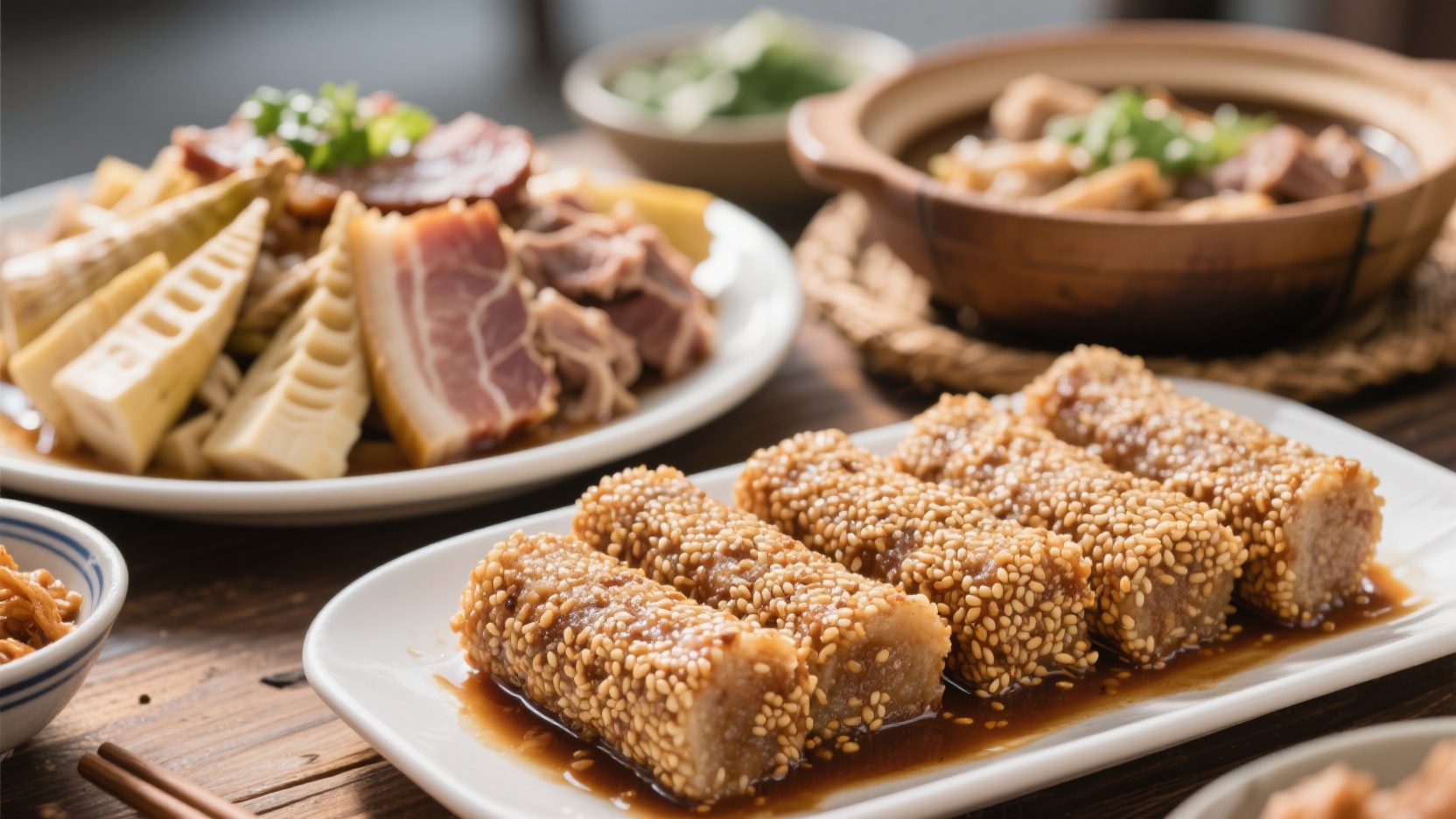
Add half a portion of brown sugar mochi. The glutinous rice is steamed and pounded fresh, and it's rolled in hot brown sugar syrup without any bean flour. Why does it taste best when eaten during this season? The new sugar has a high water content and a strong sugarcane aroma. It can only solidify into a sandy, granular texture when the temperature is low in winter. Once the weather warms up, it becomes sticky, and the taste is much worse.
Afternoon Breakfast | Youbu Meat Dumplings: Only in Winter Morning Markets Will They Dumplings Be Submerged in Eggs
Youbu Ancient Town offers morning tea year-round, but the highlight is the meat sauce in winter. The egg white holds its shape better at low temperatures, allowing the minced meat to sink in without disintegrating, while the yolk remains semi-liquid. Locals usually go before dawn, enjoying a bowl of meat sauce with a side of pickled radish and a cup of coarse tea—enough to warm them up even on the coldest days.
Summer and autumn are too hot, and meat dumplings seem greasy; they're more palatable to eat on a winter morning. Out-of-towners often follow travel guides to queue for popular morning tea shops, but locals prefer to sit on old benches along the river, watching the steam from the steamers mix with the morning mist. At this time, meat dumplings aren't just a tourist breakfast; they're a life-saving soup.
Lunch | Ham stewed with winter bamboo shoots; before the winter bamboo shoots sprout in Nanshan, it's not the right season.
Jinhua ham is often given as a souvenir, but the true way to enjoy ham is with winter bamboo shoots. After the start of winter, the winter bamboo shoots in Nanshan just sprout from the soil, with the lowest astringency and the highest sweetness and crispness. Take aged ham, slice it thinly, and simmer it with chunks of winter bamboo shoots over low heat. No salt needs to be added; the soup will be milky white with the rich aroma of ham fat.
Locals serve a bowl of rice cooked over a wood fire, and the bamboo shoots and ham must be mixed with the rice along with the broth. Each bite is both crisp and tender. Why is this season so authentic? Winter bamboo shoots are only fresh in cold weather. After the winter solstice, their fibers become coarser. The bamboo shoots from spring are called spring bamboo shoots, but they are not the same and cannot be stewed to achieve this rich flavor.
Lunch Extra Dish | Qianxiang Boiled Lamb, You Can't Buy Frosty Lamb Until the Beginning of Winter
In the Qianxiang area of Dongyang, the skin and meat of boiled mutton tend to fall apart when the weather isn't cold enough. Only after the start of winter and the cold wind blows does the mutton skin become firm and develop a translucent, frosty appearance. Locals eat mutton only with salt and pepper and garlic leaf soy sauce, avoiding cumin and chili sauce. They also enjoy it with a bowl of mutton blood soup and a handful of blanched local green vegetables.
Lamb is considered a "warming" food, so people in Jinhua only eat it regularly in winter; eating it in spring can actually make them feel too "heaty." Remember to avoid the famous Dongyang lamb restaurants near tourist attractions; instead, look for freshly cut lamb stalls near the old market in Qianxiang Town—that's the unspoken secret among locals.
Afternoon Tea | Brown Sugar Pastries with Buddha's Hand Tea (not the dried Buddha's Hand tea from tourist spots)
The Yiwu brown sugar season produces many byproducts. Oil-paper pastries are a popular afternoon tea treat for local elders; the thin, flaky crust is coated in brown sugar syrup, and on cold days, they're crisp and molten inside. Locals pair them not with coffee, but with a cup of their own sun-dried Buddha's Hand tea. The Buddha's Hand citron turns yellow after the start of winter, is sliced, dried, and then aged; the resulting tea has a bittersweet aroma, a blend of dried tangerine peel and lemon.
The aroma of Buddha's Hand citron only deepens after the first frost, and brown sugar oil paper pastries need to be shaped at low temperatures, otherwise they easily melt into a clump when the weather is warm. Most of the dried Buddha's Hand citrons bought in spring have been treated with artificial fragrances, while those dried fresh in winter are the cleanest. Paired with freshly made oil paper pastries, the whole afternoon is filled with the earthy, sweet aroma of Jinhua in winter.
Late-night snack | Jinhua pork bone soup, cooking at night is the ritual before the Winter Solstice
Jinhua Hot Pot isn't the kind of mixed clay pot dishes you find at trendy restaurants; it's the kind of hot pot restaurants frequented by locals who live a more relaxed life, especially after winter sets in. The pork bone hot pot is simmered until the broth turns milky white and the marrow can be sucked out, served with pickled bamboo shoots, fried dough sticks, and soft tofu. Locals don't drink the soup first; they use a straw to poke at the marrow, then add the fried dough sticks to slurp up the broth.
Hot pot is too drying in summer and autumn, so many traditional hot pot restaurants only serve during the autumn and winter. From the beginning of winter to the winter solstice, as the temperature drops at night, the streets are filled with the aroma of bone broth, something tourists can't smell while crowding the streets of tourist attractions in spring. You can eat your fill for just a few dozen yuan per person, but what's really valuable is the pot of thoroughly simmered broth.
To wrap up a late-night snack | Lanxi chicken cakes with savory soy milk, a heavy-flavored treat only available late at night in winter.
Lanxi chicken egg cakes are also available in Jinhua city, but eating them in winter is a secret code for locals returning home late at night. The dough is fried until golden brown, and the egg mixture is poured into the meat filling and scallions. With each bite, the sweet scallions, egg flavor, and meat juices burst forth. Locals pair it with savory soy milk, topped with dried shrimp, fried dough stick crumbs, and a touch of chili oil—it's absolutely delicious and refreshing.
This rich, oily, and scallion-heavy late-night snack is so delicious that a single bite in the summer will make you sweat, but it's truly delightful to eat late at night in the winter. In the spring, most people will eat a cold, half-cooked version at the night market stalls. The real, freshly cooked version is best enjoyed on a windy day when the scallions are still sizzling.
In conclusion
First, don't ask locals "where to eat brown sugar mochi in spring". The real new sugar is only available after the beginning of winter. What you see in spring is mostly old sugar or blended sugar.
Second, don't go to Jinhua hot pot restaurants at noon. Many old hot pot restaurants only start cooking in the afternoon, and the soup base is only turned over once after nightfall. What you get at noon is often leftover soup base from the previous day.
Third, when looking at Qianxiang mutton, you should check the frosty skin. If the skin is not transparent or soft, it's not worth queuing for. Locals only recognize the mutton from the period before the winter solstice.
Fourth, don't buy bagged or broken pieces of Buddha's Hand tea at tourist attractions. Go to the market and find dried whole leaves. The older the leaves are, the more medicinal they will have.
Fifth, if you can only come in spring, then don't be obsessed with "winter flavors." Spring has bamboo shoots and wild vegetables, but these seven things are really not what you should eat in spring.