
Jinan's Market Scenery: 9 Local Delicacies from Two Old Markets
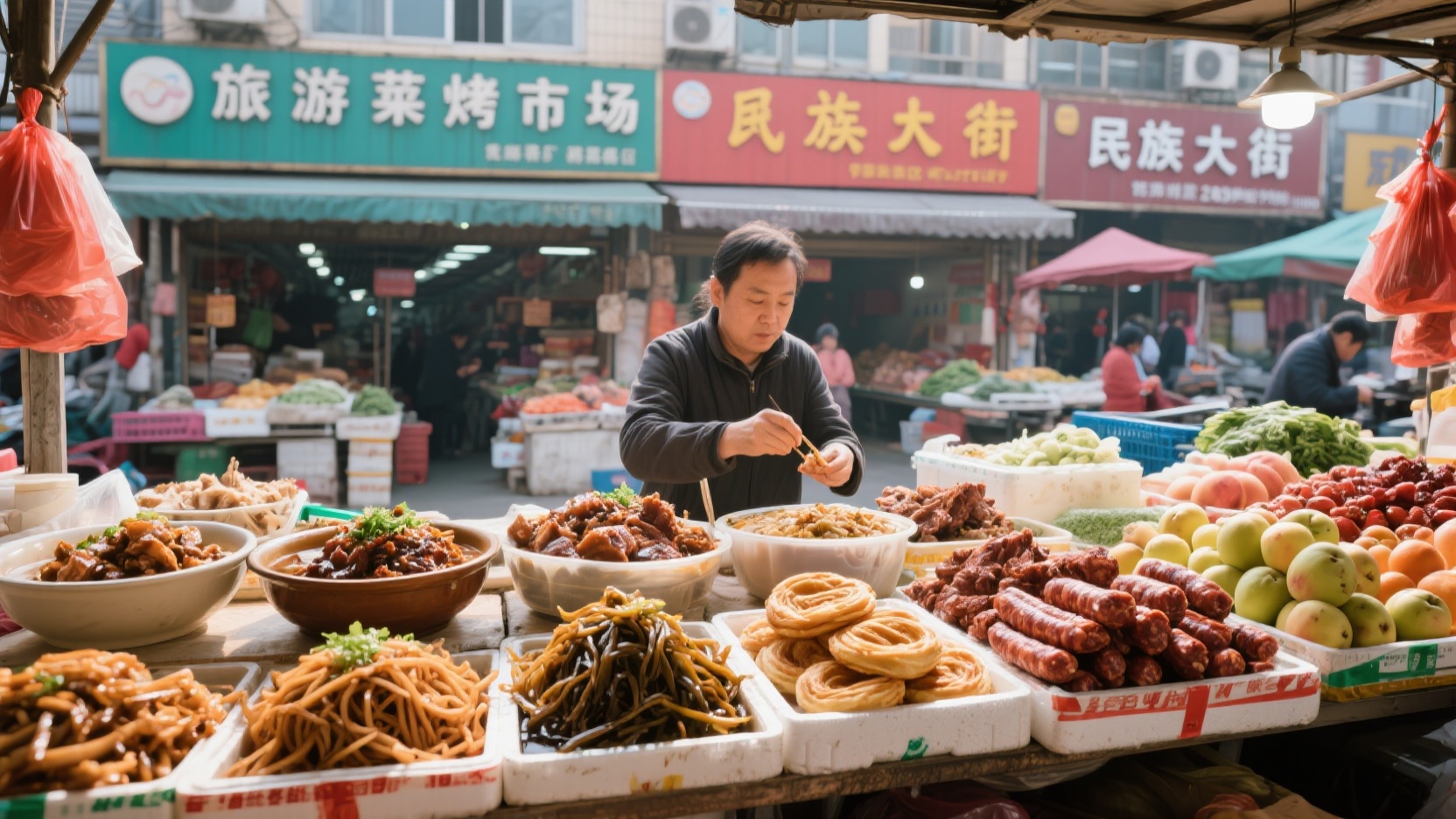
In Jinan, the truly authentic flavors are often found not in the tourist food streets, but in the stalls of the old city's markets. Focusing solely on Furong Street and Kuanhouli would mean missing the aromas of soy sauce, smoked vegetables, and noodles that grace Jinan's daily meals. This study uses two old markets as examples: one is the over 100-year-old "Wanzi Lane Market," which still retains its narrow, long stalls and traditional operating methods; the other is the "Minzu Street Market," where goods begin to arrive early in the morning, with a high density of cooked foods, pickles, and seasonal fruits and vegetables. Neither caters to tourists, yet they perfectly constitute Jinan's most stable culinary heritage.
1. Crispy Pot: A Jinan Family Banquet Dish that can be enjoyed both hot and cold.
The braised dishes at market stalls are usually served in large bowls, with layers of lotus root, kelp, cabbage, tofu, ribbonfish, or pig's trotters layered on top. They are then braised in soy sauce for a long time before cooling and solidifying. When choosing, check if the lotus root holes are soaked through with the sauce and if the kelp is soft but not mushy. A good braised dish will have its broth naturally solidify into a jelly after cooling. There are two recommended ways to eat it: slice it cold as a side dish with drinks for a firmer texture; or heat it up and pour a spoonful of the original broth over rice for a richer, more savory flavor. Alternatively, refrigerate it overnight before slicing for a more complete flavor.
II. Laiwu Sausage and Air-Dried Chicken: Representatives of Salty, Fragrant, and Long-Lasting Cured Foods
Laiwu sausages are dark in color, with firm casings, a clear distinction between lean and fat, and a mild spice flavor. When selecting sausages, they should feel elastic to the touch and be dry and not sticky. For air-dried chicken, check if the breast and leg joint is completely dry and if the skin is a natural, bright yellow; avoid those that are too white or too wet. Both can be steamed and sliced, served with millet porridge or sandwiched in a flatbread. Sausages are best steamed thoroughly; the rendered fat enhances the flavor, especially when mixed with rice. Air-dried chicken is best shredded by hand and served with scallions.
III. Pickled Vegetable Stalls: A spoonful of pickled vegetable strips with porridge – a typical Jinan morning.
The pickled vegetable section is often overlooked, yet it's a staple of local breakfasts. Pay special attention to pickled mustard greens, pickled cucumbers, and pickled garlic. When selecting pickled vegetables, prioritize those with a mild color, natural soy sauce aroma, and no pungent smell; the pickled mustard greens should be uniformly thick and not have a bitter aftertaste. How to eat: Briefly soak in water to remove excess salt, then toss with sesame oil and cilantro; pickled garlic can be served with braised pork or mutton soup to cut through the richness. Diced pickled cucumbers stir-fried with diced chicken can also enhance the flavor of ordinary home-style dishes.
IV. Huang Family Roasted Pork: Crispy skin and juicy meat from a whole pig roasted in a hanging oven.
Zhangqiu Huangjia roasted pork is often sold in chunks at the market, with a golden-red skin and slightly charred edges. When choosing, check if there is a translucent gelatinous layer between the skin and meat; the skin should be crispy and the meat juicy. Avoid pork that is too dark in color or too dry. It can be eaten plain, or sliced thinly and sandwiched in a freshly baked flatbread with a Zhangqiu scallion—a more popular way to eat it among Jinan locals. If you buy bone-in cuts, don't waste them; adding a few pieces to soup will enhance the smoky aroma.
V. Handmade Desserts: Honey-glazed Three-Cut Pastries, Peach Crisps, and Longevity Cake
Traditional pastry stalls offer glossy honey-glazed pastries with a rich sesame aroma; choose peach shortbread with naturally cracked surfaces and a granular texture when broken open. Longevity cake has a soft texture, suitable for the elderly and children. It's recommended to pair it with jasmine tea or local Jinan lotus leaf tea to reduce the sweetness. It also makes a good souvenir, but avoid overly packaged "tourist attraction versions"—loose, weighed items offer a better indication of quality.
6. Fried dough twists and sweet rice porridge: a golden combination at market breakfast stalls
Freshly made fried dough twists are spiral-shaped, with a crispy outer layer and a soft interior, and a distinct scallion aroma. Sweet millet porridge is a savory dish containing peanuts, tofu skin, and spinach. When choosing fried dough twists, look for distinct layers; they should have an oily aroma but not be greasy. Sweet millet porridge should be hot and smooth. Don't eat too much for breakfast; leave room to continue shopping. It's best to buy both before 9 am to enjoy them freshly made.
VII. Spring Water Tofu and Soy Products: A Cleaner Soy Flavor
The spring water tofu sold in the market is usually made with local spring water, resulting in a fine texture and a clean bean aroma. The tofu skin is thin and chewy, suitable for cold dishes or wraps. When choosing tofu, smell for a sour smell, and the surface should be moist but not sticky. After buying it, blanch it and serve with scallions and soy sauce. Shredded tofu skin mixed with cabbage hearts and sesame oil is a refreshing side dish on the Jinan people's spring table.
8. Seasonal fruits in the southern mountainous area: persimmons, walnuts, and hawthorns
The southern mountainous area of Jinan produces persimmons, thin-shelled walnuts, and hawthorns. In late autumn, choose persimmons that are orange-red in color, have firm flesh, and dry stems; walnuts should be silent when shaken, avoiding those with a rancid taste. Hawthorns can be made into hawthorn cakes or dried and steeped in water. Don't buy too much seasonal fruit at once; taste it first before buying, especially persimmons, making sure they are no longer astringent. If there are dried persimmons with a frosty coating in the market, you can buy a small amount as a tea snack.
9. Coarse Grain Pancakes and Cornbread: Underrated Staple Foods Made from Whole Grains
A few stalls still sell handmade millet pancakes and cornbread at the market. When choosing pancakes, check if the edges are thin and crispy, if they are neatly stacked, and if the color is a natural golden brown. How to eat: Pancakes can be rolled with braised meat and scallions; cornbread can be sliced and fried until golden brown on both sides, then served with fermented bean curd. These staple foods are easy to store, but after buying them, they should be kept in a well-ventilated place to prevent them from becoming damp and soft.
Visiting a farmers' market is not simply about buying vegetables; it's about experiencing the daily life of a city through sight, smell, and taste. In Jinan's farmers' markets, the delicate aroma of spring water tofu, the savory fragrance of crispy fried dishes, the smoky flavor of Laiwu sausages, and the sweetness of Nanshan persimmons combine to create a more authentic portrayal of the city than any tourist attraction. To truly understand Jinan, you don't need to visit tourist spots first; simply grab a bag and stroll through the old markets.