
Hohhot made a special trip to Dazhao Temple | Locals test it out: Ride electric bikes along 4 free local routes without paying entrance fees
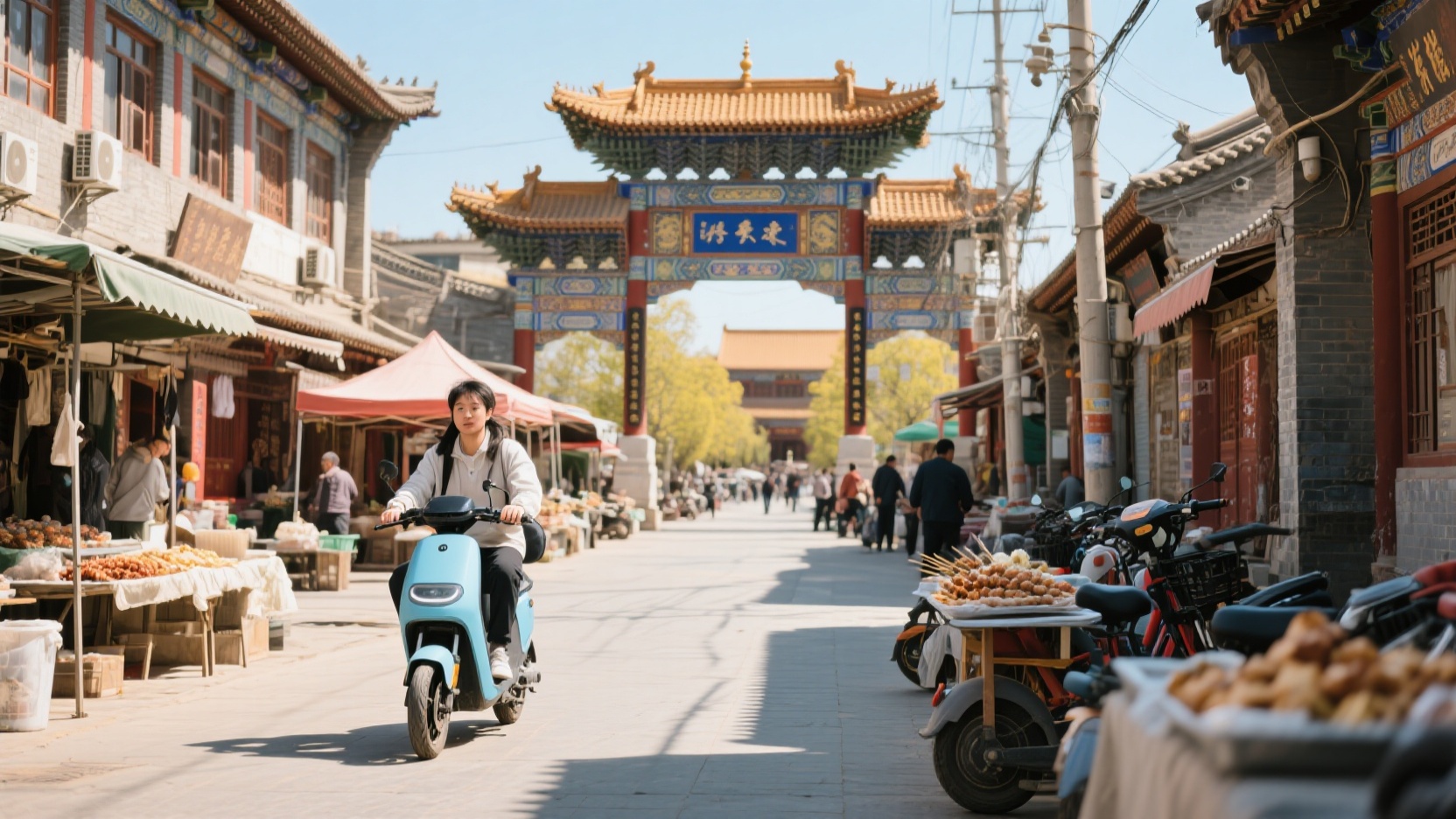
Paying a hefty entrance fee to Dazhao Temple to count the white stupas was the most ripped-off thing I did a few years ago. It wasn't until a local friend dragged me into the alley behind Dazhao Temple, near the Naimoqi Temple, that I realized the truly worthwhile sights in Hohhot are completely free.
This guide doesn't recommend any major paid attractions; it only focuses on a local lifestyle itinerary that can be easily explored by shared electric scooters. The five-day, four-night stay with no entrance fees isn't a gimmick; it focuses on the old town, the local market, the old industrial area, and the area around the university, keeping food, accommodation, and transportation within a comfortable and affordable range.
1. A Day in the Old Town Alleys: Don't queue in front of the Dazhao Gate, go to the back wall to smell the aroma of roasted bread.
Hohhot's old city is connected by several narrow alleys in Yuquan District, forming capillaries. Don't follow the crowds in Dazhao Square. Turn into the alley on the west side of Dazhao. There are the old houses behind Naimoqizhao Alley and Tongshun Alley, selling baked goods, shaomai, and fruit soup.
The thin fruit soup is made with dried apricots, black dates, and persimmon cakes, and it's especially refreshing when served chilled. Walking along Xiaozhaoqian Street to Sanguanmiao Street, you can see old Hohhot residents carrying stainless steel basins to make milk curd, with charcoal piled up at their doorways and dried scallions drying on the walls. There are no tourists waving flags here, only the sounds of Jin dialect and electric tricycles passing each other in the alleyways.
Late autumn or early winter is the most comfortable time to visit. The aroma of mutton offal mingles with the smell of coal stoves, and the cold wind seeps in through the old brick walls—it's far more authentic than the antique performances in tourist attractions. Don't wear white shoes; there are occasional water stains and charcoal ash in the alleyways.
II. Community Farmers Market Day: The shallots and milk skin at the Dongwayao morning market are more affordable than those in the tourist area's specialty shops.
Don't buy the beautifully packaged beef jerky gift boxes at the entrance of the scenic area. Ride an electric bike to the Dongwayao Wholesale Market, which is busiest from 7:00 to 9:00 in the morning. Herdsmen will set up stalls on the outskirts selling wild onions, wild leek flowers, yellow persimmons, and Tuoketuo County chili powder.
Milk skin is sold by the piece, and yogurt cakes are stacked in styrofoam boxes. You can buy a yogurt cake with some change and a bowl of freshly brewed milk tea, watching the vendor reconcile accounts with regular customers in his Hohhot accent. This isn't a tourist attraction, but for those who love browsing local markets, it feels more authentic than any folk village.
Don't buy too much when you're shopping alone; it's best to eat dairy products on the same day. If you see bundles of wild onions, don't hesitate; go back and find a small restaurant to have them stir-fried with eggs—it'll be so delicious you'll want to eat two bowls of rice with it.
III. Old Industrial Zone Renovation Day: The old clubs on Tangchang Road and Hugang North Road have no popular photo spots.
Much of Hohhot's old industrial history has been buried by the new city, but the Sugar Factory Road area still retains the old sugar factory's clubhouse, tenement buildings, and red brick water tower. Riding an electric bike from Guangming Street onto Hugang North Road, you can see the walls remaining from the old Hohhot Steel Plant area, the protruding old chimneys, and old residential areas resembling factory and mining family compounds.
On the south side of Sugar Factory Road, there are several old-fashioned barbershops and tailor shops with faded lettering on the windows. Their customers are mostly old factory workers. When you get tired, you can sit on the steps of the old club, drink a bottle of local soda, and watch old men in tank tops play chess.
This area is free and not suitable for taking photos; it's only suitable for people who appreciate the urban fabric. The light is best in the evening, when the red brick walls take on a warm, aged hue. However, don't push open the half-closed factory gates casually, as some areas are still guarded by security personnel.
IV. Days around universities: The used bookstores at Inner Mongolia University's Taoli Lake and Beijing Normal University are more worthwhile to browse than the trendy bookstores.
Shared electric bikes can be ridden around most universities, and there's no entrance fee for the old campus of Inner Mongolia University. Entering from the east gate and walking halfway around Taoli Lake, you'll find old buildings and the library with a touch of Soviet style. Exiting from the south gate leads to the East Alley of the Affiliated High School, where snack stalls and secondhand bookstores are mixed together, and you can even find local history and literature books from the 1990s.
Heading north along Zhaowuda Road to the Normal University, the cultural street outside the east gate has many copy shops and stationery stores, offering stable and affordable student prices. It's a great place to explore the area around the university alone, especially during the early September start of the semester and the late June graduation season – crowded but full of youthful energy.
I wouldn't recommend coming during winter or summer vacation; it'll be so empty it'll feel lifeless. If you happen to come during exam week, lots of temporary fruit stalls will pop up near the cafeteria. Buy a bag of persimmons and eat them on the go; it's cheaper than sitting in a trendy bookstore.
V. Cycling Routes: Here's how to cycle for 3 days without buying tickets.
On the first day, I cycled through the old city's alleys and north gate, from the back wall of Dazhao Temple all the way to Tongdao South Street. At a slow pace, it took a little over two hours to complete the circuit. On the second day, I cycled to the Dongwayao morning market in the morning, then south to the old community near Xilin Park at noon, and finally headed to the old industrial area on Tangchang Road in the afternoon, without backtracking.
On the third day, I cycled around the universities, from Inner Mongolia University to Hohhot Normal University and then to Hohhot Agricultural University, eating at student stalls near the canteens. There were plenty of shared electric bike parking spots throughout, so there was no need to take a taxi. Hohhot city isn't large; some routes that look far apart on the map are actually only about a 20-minute ride away.
As long as you avoid rush hour, the cycling experience is very comfortable. Remember to wear a helmet; it's windy in Hohhot, so it's best to wear a light windproof jacket when cycling in spring and autumn.
In closing: 5 hassle-free tips I didn't tell you, so don't ask the locals.
First, do not ride shared electric bikes outside the operating area, especially not outside the North Second Ring Road or near the East Railway Station, otherwise the dispatch fee will be more unfair than taking a taxi.
Second, go to the market early, as many vendors close up shop at noon. It's best to buy dairy products in the morning, as they spoil easily in hot weather.
Third, do not take photos of people's doorsteps or children in the old city alleys. Hohhot people are warm but do not like close-up shots.
Fourth, if you are eating shumai alone, you can order half a tael or a tael and drink it slowly with brick tea. Don't be like tourists and order a whole basket as soon as you arrive.
Fifth, avoid traveling during the May Day and National Day holidays, and also avoid the summer holidays from mid-July to mid-August, otherwise the free places will be crowded with local parents and students.