
Guangzhou Food | Don't Wait for Autumn to Enjoy Cured Meats | Local's Guide to Avoiding Food Pitfalls During the Humid Season of Qingming Festival
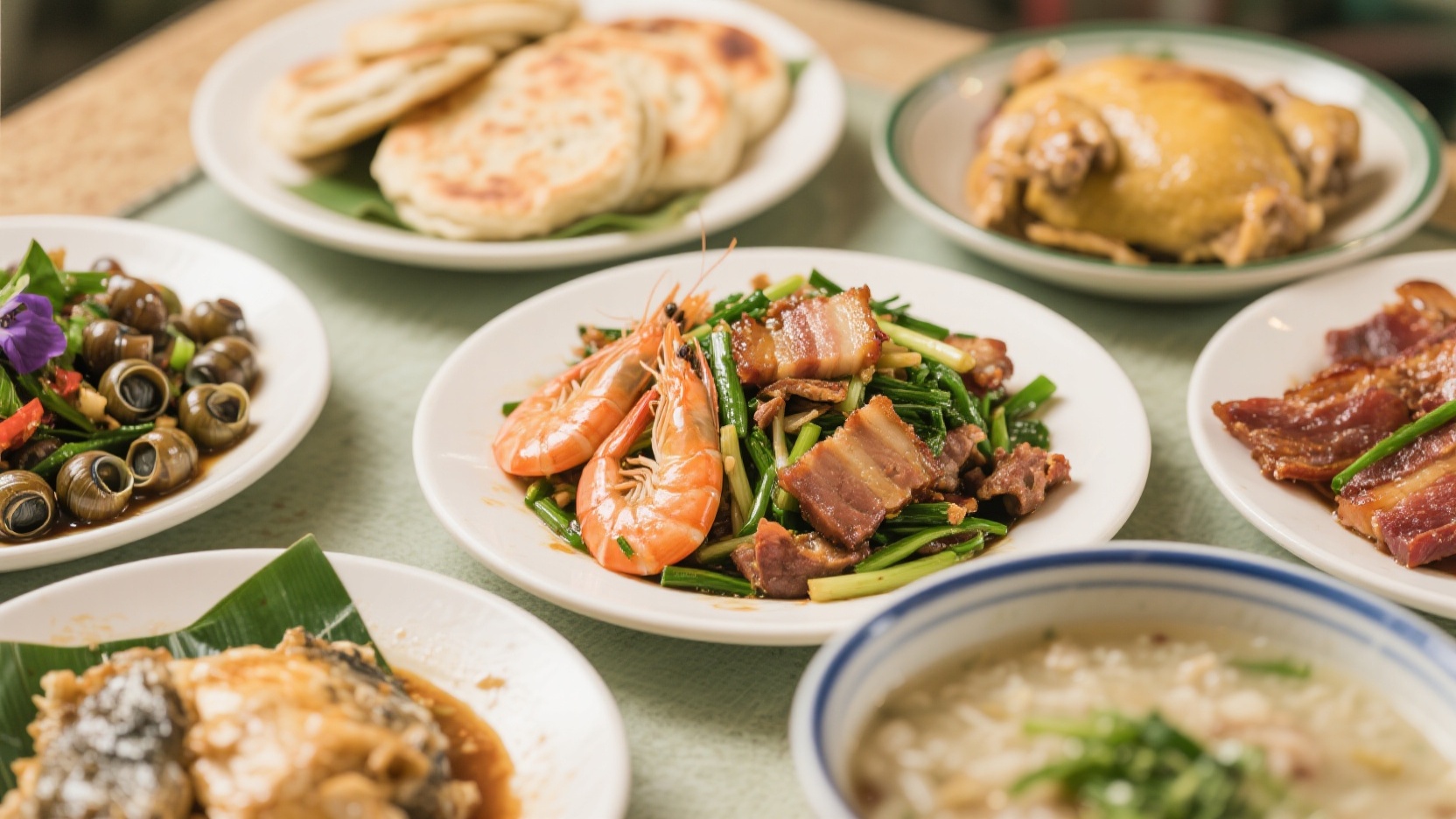
"There's not much to eat in Guangzhou in spring"—this is the biggest misconception I've ever heard. True locals, on the contrary, eat even more heartily during the humid weather around Qingming Festival than in autumn and winter, and even believe that the limited freshness and sweetness of this season is the most hidden version of Guangzhou in travel guides.
Online guides to Guangzhou often recommend "eating preserved meats when the autumn wind blows," as if falling leaves and north winds are the key to Guangzhou's culinary delights. But if you ask the locals living in Liwan and Yuexiu districts, they'll tell you: the twenty-odd days from Qingming to Guyu are the city's most underestimated limited-time food season. The humidity is high, and the fog is thick, but it's precisely during this time that river delicacies, wild vegetables, snails, and a few other refreshing snacks are at their most "in season."
This article won't cover claypot rice or preserved meats; it will simply follow the locals' four-meal-a-day rhythm and take you through the flavors of Guangzhou around the Qingming Festival. The following items will either be unavailable after this period or taste completely different.
Breakfast: Chicken manure vine cakes with pig's blood soup – the first bite to dispel dampness during the humid season.
Around the Qingming Festival, a dark green rice cake appears in Guangzhou markets. Northerners are often scared off by the name, but it's actually a Qingming-limited breakfast for the locals. Chicken shit vine itself is a herb that dispels dampness. When mixed with glutinous rice and steamed, it has a grassy aroma and isn't greasy. Instead, it helps to suppress the sticky, heavy feeling of the humid weather.
Locals don't usually eat just flatbread. The proper way to eat it is with a piece of chicken manure vine flatbread and a bowl of chive and pig's blood soup or pork offal congee, so that the hot soup can push the dampness out of the stomach. Some old ladies will also advise: buy flatbreads with banana leaves as a base, not those on plastic trays, as the aroma is not as good. If you find freshly steamed flatbreads in Pantang or Xihua Road, eat them while they are hot for the best taste.
Lunch: Stir-fried buckwheat vegetables with roasted pork, a "once-in-season" dish served during the Qingming Festival tomb-visiting ceremony.
Buckwheat sprouts are a leafy green vegetable that is easily overlooked by people from other places during the Qingming Festival. It looks like both scallions and garlic, but buckwheat sprouts are only tender around Qingming. After Grain Rain, the fibers become coarse, and the texture changes from crisp to chewy. When people from Guangzhou return from visiting the graves, almost every family will stir-fry a dish of buckwheat sprouts with pork.
The old-fashioned way to eat roast pork is to choose pork belly with skin and brisket, using crispy roast pork that has been blessed at the mountain temple, cut into thick slices. First, sauté the roast pork to render the oil, then add buckwheat greens and stir-fry quickly over high heat. The buckwheat greens absorb the oil from the roast pork and become sweet, while the roast pork is cut through by the greens. Served with a bowl of white rice, this is the most authentic Qingming Festival lunch, more genuine than any trendy roast meat shop.
Lunch extra dish: stir-fried clams with shrimp and chives, the freshest dish in the humid season, served in the last ten minutes.
In Guangzhou markets, shrimp eaten during the Qingming Festival are called "glass shrimp." They have thin shells, plump meat, and many still have roe. Why is it considered the best time to eat them? Because around Qingming, river water warms up and rainfall is plentiful, making the shrimp at their fattest, carrying their eggs. After late April, the shrimp meat begins to soften. Boiling them brings out their freshness and sweetness best, and locals like to dip them in a little chili soy sauce.
Stir-fried clams with chives is another must-try dish. The clams harvested around Qingming Festival have thick, sand-free meat, and when stir-fried with first-harvest chives, the chives' pungent aroma perfectly masks the clams' muddy taste. In Guangzhou families, this dish is often served as a "half-dish, half-meal" after a meal of braised pork with buckwheat vegetables. If you see "seasonal stir-fried clams with chives around Qingming Festival" in a restaurant, don't worry, after Qingming Festival, this dish is basically only available with frozen clam meat.
Afternoon tea: Imperata cylindrica root, sugarcane, and water chestnut drink – a gentler "dampness-removing secret" than herbal tea.
During the humid spring season, Guangzhou locals are less likely to queue for trendy milk tea in the afternoon. Instead, they'll find traditional dessert shops on street corners or near wet markets brewing large pots of Imperata cylindrica, sugarcane, and water chestnut soup. This soup is consumed at this time of year because Imperata cylindrica clears damp heat, water chestnuts moisturize dryness, and sugarcane provides sweetness; together, they're perfect for combating the recurring dampness and heat of spring.
The local way of drinking it isn't the ice-cold, tooth-piercing version, but rather slightly cooled and served lukewarm. Some shops add carrots or corn silk for a richer sweetness. Paired with a piece of water chestnut cake or white sugar cake, it's the quintessential Cantonese afternoon tea for spring. Those travel guides that tell you to drink lemon tea to dispel dampness during the humid season—just take them with a grain of salt.
Late-night snack: Stir-fried snails with perilla leaves; snails are even better than goose during Qingming Festival.
The old saying, "Snails around Qingming Festival are better than geese," is something every night market vendor in Guangzhou knows. Around Qingming Festival, snails emerge from the mud to feed, their meat at its fattest and with the least muddy taste. After this period, they enter their breeding season, and the snails, carrying eggs, become less palatable. Therefore, true connoisseurs among the locals only order stir-fried snails during this time.
Pairing snails with perilla is a golden rule in Guangzhou. The aroma of perilla can transform the last trace of earthy taste of snails into a fresh flavor. Add fermented black beans, minced garlic, and chili rings, and the wok hei (wok aroma) must be strong. When eating, pick out the snail meat, suck out the sauce first, and then eat the meat. Pair it with a bottle of Pearl River Pure Draft or Asian soda, and the humid nights will instantly feel less stuffy.
Second bowl of midnight snack: Panyu mudskipper porridge, the highlight at 1 a.m.
If stir-fried snails are the opening act, then Panyu mudskipper congee is the closing act for the Qingming Festival late-night snack. Mudskippers swim to the near shore to spawn around Qingming Festival. Their meat is delicate and rich in collagen, making it even smoother than seafood congee when cooked in it. Many old Panyu shops only display signs for "Seasonal Mudskipper Congee" in the spring.
Locals eat it by adding dried tangerine peel and ginger to the congee base, simmering the whole mudskipper (meat and bones together) in the broth, and then sprinkling it with chopped scallions and pepper. If they still feel damp halfway through, they'll add a side of blanched bok choy or goji leaves. After finishing this bowl, the dampness of the humid season becomes an excuse to eat congee late at night.
In conclusion
Don't ask the locals if I didn't tell you: First, try to buy buckwheat vegetables and roast pork before noon during the Qingming Festival. Buckwheat vegetables tend to wilt in the afternoon, and roast pork will lose its crispy texture.
Secondly, when looking for chicken manure vine cakes, look for those with a banana leaf base and a dark green color. Those with a bright color usually have added pigments, and the real herbal flavor will be more astringent.
Third, don't go to chain stores in shopping malls to stir-fry snails; it's more reliable to go to open-air stalls under the arcades in the old town. Remember to check if there are chopped perilla leaves on the stove.
Fourth, when preparing shrimp for Qingming Festival, it's not necessary to go for large ones. Smaller ones with roe are actually fresher. After blanching, you should also sip the juice from the shrimp head to avoid wasting any.
Fifth, even if you eat the right things during the humid season, don't overeat. People with damp-heat constitution should drink dehumidifying soups like water, which is better than eating anything else.