
This 4km route in Guangzhou | A blogger's personally tested Citywalk list: 2 branch routes to avoid tourist crowds, perfect for taking photos in autumn and winter afternoons.
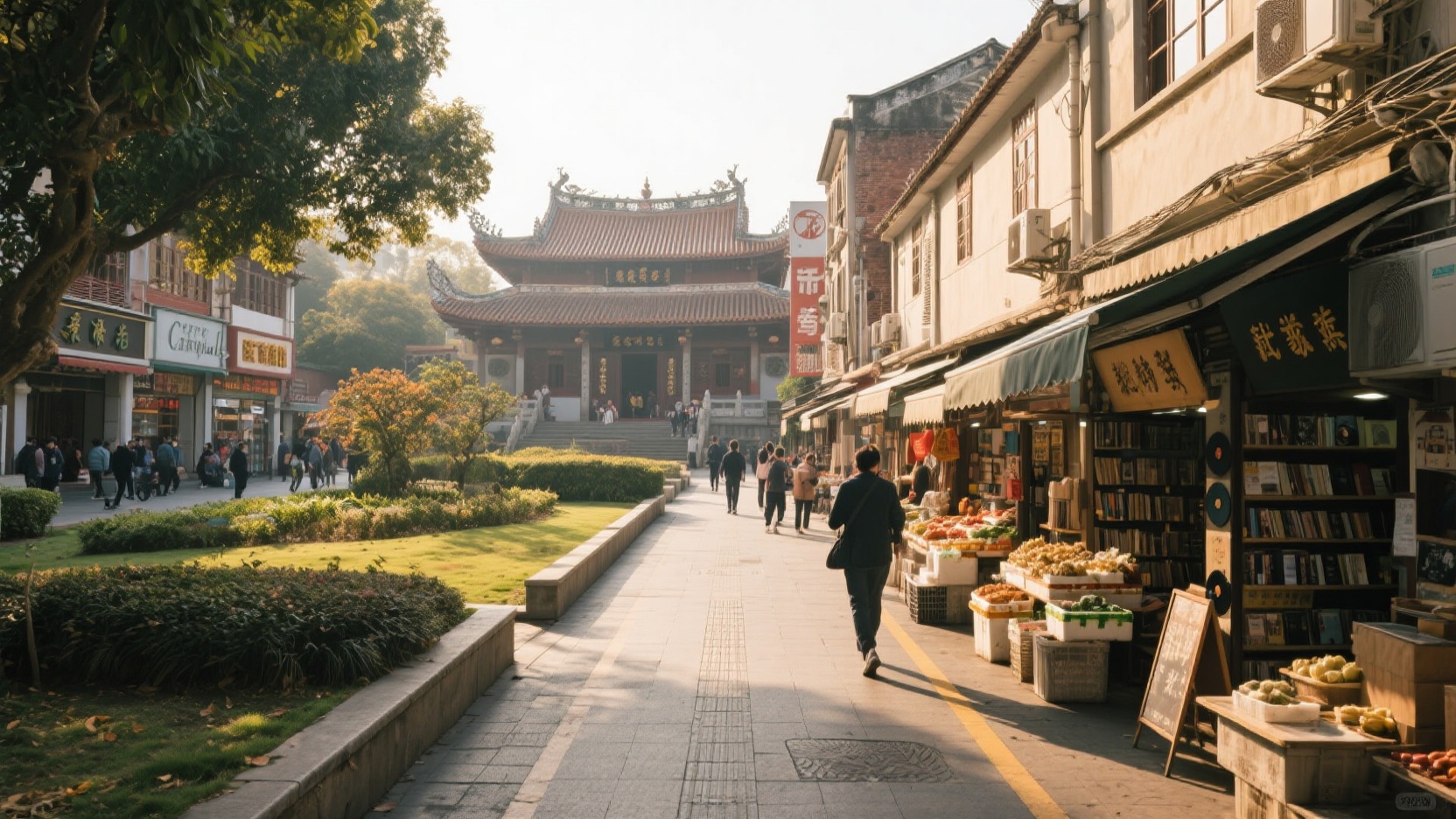
Having walked this approximately four-kilometer route for the third time, I'm certain it's more suitable for a "low-key" exploration of Guangzhou than Shamian or Dongshankou. The main route runs from Ximenkou through Guangxiao Road, Huiji West Road, and Zhongshan Sixth Road to the backstreet of Beijing Road, plus two branch lines: one cutting into the Mishi Road vegetable market, and the other turning into Guangta Road and Manao Lane. A leisurely walk takes about three hours, and the best lighting for photos is after 3 PM in autumn and winter.
This isn't a touristy route; it's more like a series of "humanistic scenes from the old Lingnan town." It's suitable for those willing to stand in the shadow of the arcade buildings for five minutes, and also for those who want to avoid the crowds of tourists.
Main route, first section: Guangxiao Road—Jinghui Road—Liurong Road (approximately 900 meters, 15-20 minutes walk)
After exiting Ximenkou subway station, don't rush into Guangxiao Temple. The old community walls on both sides of Guangxiao Road have the quietest gray tones in Guangzhou's old city. After the morning grocery shoppers leave, only umbrella repair stalls and herbal tea shops remain at the alley entrance. The first good spot is under the roots of a banyan tree diagonally opposite the outer wall of Guangxiao Temple: capturing the red wall, banyan roots, and the three-story balconies of the arcade building in the same frame is more pleasing to the eye than tourist photos of the main entrance.
As you turn the corner of Jinghui Road, the Liurong Temple Flower Pagoda suddenly emerges from behind a cluster of seven- or eight-story old buildings. Many travel guides only show photos of the pagoda itself, but I recommend stepping back to the entrance of an old-fashioned stationery store in the middle of Liurong Road and using the green awning of the store sign as a foreground. The reason for stopping for five minutes is that the pagoda and the skyline of the old neighborhood create a sense of scale where the ancient pagoda is not isolated—a visual order that is often overlooked in Guangzhou's old city.
This section has almost no tourists, but the sidewalk is narrow, so it's recommended to shorten the camera strap to avoid bumping into electric bikes.
Main route, second section: Huiji West – Huiji East – Zhongshan Sixth Road arcade (approximately 1.1 km, 25 minutes walk)
Turning back from Liurong Road to Zhongshan Sixth Road, be sure to turn into "Huiji West". This cluster of Republican-era overseas Chinese buildings is smaller and more concentrated than Xinhepu, with red brick buildings, terrazzo window sills, and old-fashioned mailboxes still in use. The camera is positioned in front of a light green wooden door in the middle of Huiji West: the old light bulb above the door frame, the broom leaning against the door, and the shirts drying upstairs constitute a complete "undesigned daily life in Guangzhou".
Huiji East connects to the old Nanhai County community. At four o'clock in the afternoon, the light shines from the west, dividing the entire street into two halves, one warm and one cool. There are a few independent cafes and vintage shops here. You don't need to make a purchase; just standing at the door and smelling the roasted beans is enough. I always stop outside a vintage shop to look at the old leather suitcases in its window. Those five minutes feel like watching a scene from the Republic of China era without narration.
Back on the main road of Zhongshan Sixth Road, the continuous arcade facade is very intact. Don't walk close to the arcade; go to the sidewalk across the street and use a telephoto lens to compress it into a "repeating arcade line." This is the best section for a mobile phone to capture a cinematic feel.
Branch Line A: Chaotian Road to the corner of the Mishi Road vegetable market (approximately 700 meters, round trip plus stops, 20 minutes)
The first branch road turns onto Chaotian Road at the intersection of Zhongshan Sixth Road and Jiefang Middle Road. Most of the old buildings here don't have nameplates, but they have continuous terrazzo facades and old-fashioned iron gates. Walk for about five minutes to Mishi Road, and the noise from the corner market will suddenly become louder. This isn't a planned market; it's the heart of the community where nearby residents buy fish and vegetables every day.
The camera position is opposite a dried goods stall in the middle of Mishi Road, placing squid and cured meat in colorful plastic basins alongside the old arcade colonnade in the background. Why stop for five minutes? The colors of the market, the shouts of vendors, and the rhythm of bargaining create a more authentic human experience than any exhibition. Don't point your camera directly at someone's face; framing at waist level or taking a picture of their back is more polite.
Once you've completed branch line A, simply return to Zhongshan Sixth Road. There's no need to go any further; save your energy for the independent shops later on.
Branch Line B: Guangta Road—Manao Lane—Outer perimeter of Huaisheng Mosque (approximately 600 meters, 15-minute walk)
The second branch road enters from Guangta Road. This is perhaps the most underrated cross-section of Guangzhou's multiculturalism: on one side is the outline of Huaisheng Mosque's Guangta Pagoda, and on the other side are halal food shops, tin foil shops, and old-fashioned hardware stores. Guangta Road itself is not long, but many shops on the ground floor of the arcade buildings still retain handwritten signs from the 1990s.
The camera was positioned at the entrance of Agate Lane, juxtaposing the tower's structure with the clotheslines drying in the lane. The reason for pausing for five minutes: this lane is deserted, frequented only by locals. When the tower's shadow falls on the cobblestone pavement, it makes you suddenly realize that "Fanfang" (foreign quarter) isn't just a tourist attraction, but a vibrant, living neighborhood.
The interior of Wai Sheng Mosque is not open to the public; just walk along the outer perimeter and do not try to force your way in.
The third section of the main route: Beijing Road back street—Fuxue West Street—Pocket Park (approximately 1 kilometer, 25 minutes walk)
Turn back from Guangta Road to Zhihang Road, then onto Xihu Road, and enter the backstreet of Beijing Road. Don't take the main street; turn directly into Fuxue West Street. Here you'll find a few independent bookstores and vinyl record stores, rare in Guangzhou. The shops are small and tucked away on the ground floor of residential buildings. I usually browse through old magazines in a cardboard box outside a used bookstore before going into the vinyl record store to listen to half a song. This place is best for browsing without buying anything; if you find any used vinyl records, the price is mostly around 100 RMB per person.
Finally, walk to the small pocket park at the south end of Fuxue West Street and find a bench facing the back of the old arcade buildings. The setting sun will shine obliquely from the direction of Beijing Road, gilding the water tanks and clothes drying on the arcade rooftops with a warm hue. This spot is the quietest end to the entire route: sit for five minutes, and you'll see groups of tourists passing by on the main street, while you're only separated by a row of houses, yet it feels like you're in another movie.
Blogger's Summary + Practical Tips Checklist
In summary, this approximately four-kilometer route connects religious buildings, Republican-era neighborhoods, arcade-style shops, independent boutiques, and pocket parks along its main route, while two side routes further explore the cultural and multicultural aspects of the local markets. It's not suitable for those in a rush, but rather for those who want to experience Guangzhou's old city frame by frame in half a day.
Tip 1: It is recommended to start at 3 pm in autumn and winter and arrive at Fuxue West Street before 5 pm for the best lighting; it is too hot and humid in summer, so walking the whole way is not recommended.
Tip 2: The entire route consists mainly of arcade walkways and old streets and alleys, so wearing thin-soled soft shoes is fine. However, there is a section with many electric bikes, so don't stand on the road to take photos.
Tip 3: Most independent bookstores and vinyl record stores only open in the afternoon, so you'll likely be turned away if you go in the morning; wet markets start closing up after 4:30 pm, so don't go too late if you want to capture the local atmosphere.
Tip 4: There are no entrance fees or mandatory purchases on this route. You can enter the cafes and vintage shops based on your personal interests, and you can browse at your leisure without making a purchase.