
These 8 Foshan Restaurants: A Local Hidden Gem I Compiled After Three Trips (Not Popular Online Shops)
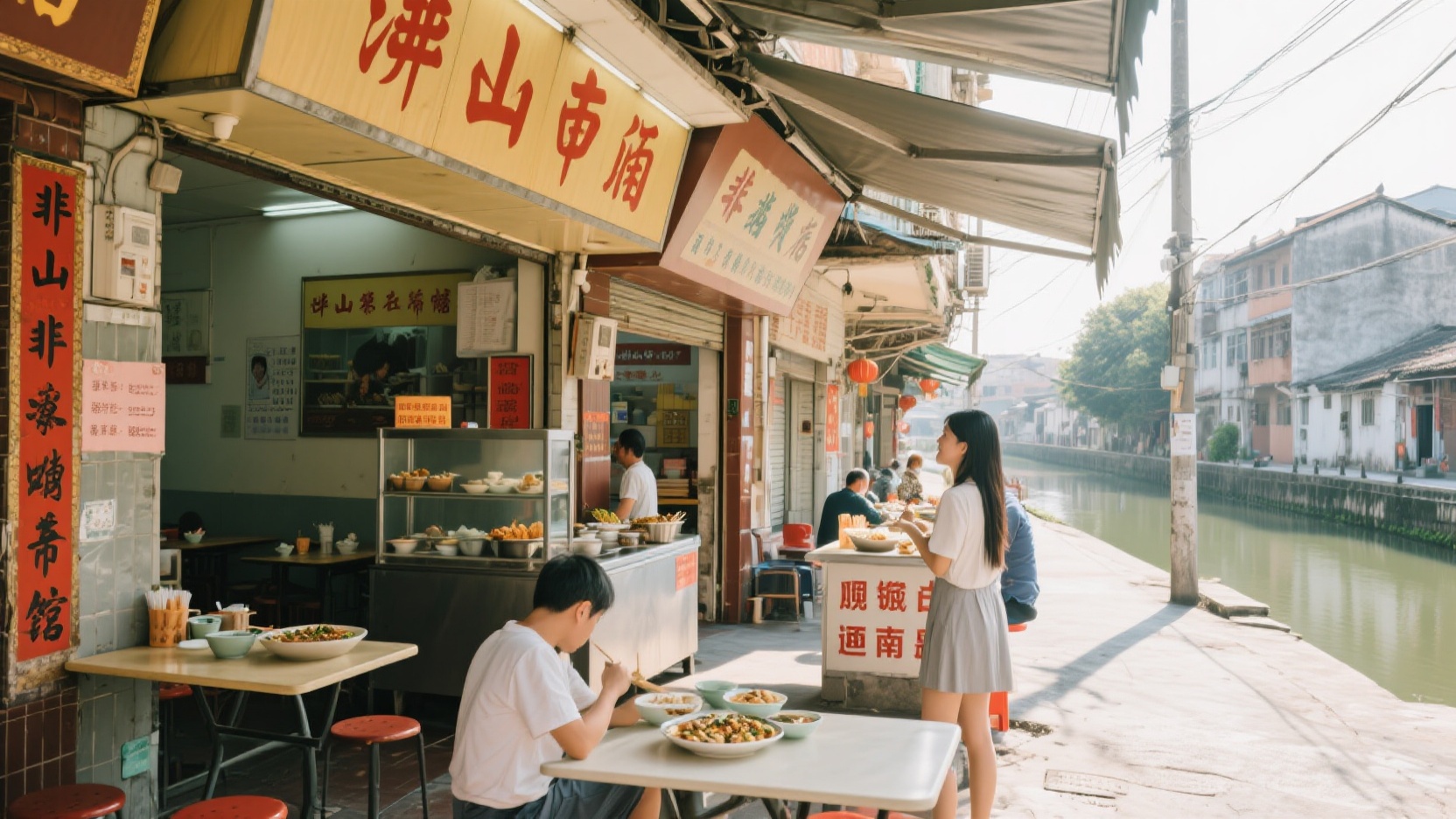
When looking for food in Foshan, the worst thing you can do is follow the "must-eat list." I've fallen into the trap of those trendy restaurants the first two times. The third time, I simply put down my phone, ventured into old neighborhoods, and queued with the locals in flip-flops. That's how I managed to find these 8 restaurants that don't do marketing or fake reviews. Each of these is based on my personal experience, and the order is not ranked. A word of caution: most of these restaurants are hidden in old alleys, old markets, and riverbanks. Their opening hours are unpredictable; some only serve breakfast and lunch, while others don't open until 4 PM.
I. The "Bamboo Noodle Uncle" and "Sweet Soup Granny" in the Old Town of Chancheng
The bamboo-pressed noodle shop is located under an old arcade building on Liaoyuan Road. It has no proper signboard, just a bamboo pole for pressing noodles at the entrance. The reason it's worth visiting is straightforward: the noodles are pressed by an uncle who gets up at four every morning, resulting in a mild alkaline taste and a springy, not hard, texture. The broth is made with dried flounder and pork bones, clear but not bland. For the signature dishes: order the "fine wonton noodles," which are filled with hand-chopped pork and shrimp—not whole shrimp, but very fragrant; also order a side of braised beef brisket, stewed until tender but not falling apart, with soft tendons. You can also buy something nearby: there's a stall selling handmade chili sauce at the alley entrance—a small bottle is perfect for mixing with your noodles at home.
The dessert vendor is in the same neighborhood, and she only sets up her stall in the afternoon. Worth a visit: she makes the almost lost art of "stinky herb mung bean soup," using only a touch of stinky herb, and cooking the kelp and mung beans until they're soft and mushy, resulting in a very low sweetness level. What to order: the mung bean soup with "pulled sweet potato soup," made with high-mountain sweet potatoes that are soft, powdery, and have a honey-like flavor, not cloyingly sweet. Something you can buy nearby: the "chicken biscuits" from the bakery across the street smell amazing when they're fresh out of the oven; you can buy half a pound to enjoy slowly.
II. The "Dragon Boat Rice Sister" and "Pork Offal Congee" at Diejiao and Pingzhou Old Market in Nanhai
The dragon boat drifting in Diejiao, Nanhai is famous, but the dragon boat rice made by the local woman isn't near the scenic area, but under the big banyan tree at the village entrance. Worth a visit: the rice, stir-fried in a large pot over a wood fire, is perfectly separated, and the toppings include sausage, squid, mushrooms, and peanuts. It's fragrant but not greasy, and is a dish only made by the villagers for festivals. What to order: Just order a dragon boat rice, and be sure to add her homemade pickled radish; the sourness cuts through the richness. If you see the "dried vegetable and pig lung soup," don't miss it either. Nearby purchases: the village's general store sells handmade "fermented bean curd peanuts," perfect with drinks.
There's a pork offal congee stall in Pingzhou Old Market, located inside the old market. It's busiest from 5 AM to 10 AM. Worth a visit: the pork offal is selected by the owner from the meat processing plant in the early morning; the congee base is thin, the rice grains are fluffy, and the pork liver and kidneys are cooked just right, without any unpleasant smell. How to order: You don't need to choose yourself; the owner will prepare the ingredients according to the number of people, with added goji leaves. The fried dough sticks must be soaked in the congee until they're half-crispy and half-soft for the perfect consistency. Nearby, at the entrance of the old market, an old lady sells "water buffalo milk" in glass bottles; it's slightly sweet.
3. The "Diesel Engine Factory Claypot Rice" and "Riverbank Fish Tofu Stall" in Ronggui and Leliu, Shunde.
Near the Ronggui Diesel Engine Factory renovation area, there's a claypot rice restaurant that's been open for over 20 years. It's not one of those trendy places that's piled high with toppings. Worth a visit: they use long-grain glutinous rice, resulting in a golden-brown crust that isn't black, and the cooking time is perfectly controlled. What to order: The beef and egg rice with a side of Chinese sausage is served. First, drizzle half a circle of soy sauce over it, then let it simmer for 20 seconds before uncovering and mixing. The beef is marinated local water buffalo meat, chewy but not tough. Nearby, you can buy: the "Five-Flower Tea" from the herbal tea shop next door isn't sweet, making it a perfect accompaniment to the claypot rice.
The fish tofu stalls along the Leliu River embankment are more discreet, only opening in the evening. Worth a visit: the fish tofu is freshly made and fried, using a mixture of dace and egg whites stirred until it becomes sticky, then puffs up into small balls in the pan, crispy on the outside and soft on the inside, with a fishy flavor but not fishy. How to order: a serving of plain fish tofu, sprinkled with a little salt and pepper, no dipping sauce; or you can buy half a pound to take home and cook with loofah soup. Nearby: farmers along the river embankment sell "Jun'an pickled mustard greens," pickled to a salty and fragrant perfection, excellent for steaming with pork belly.
IV. The "Second Floor Morning Tea at the Market" and "Auntie Lai Fun" in Sanshui Southwest and Gaoming
On the second floor of the old market in Sanshui Southwest, there's a dim sum stall with a faded signboard. Worth a visit: the customers are mostly middle-aged and elderly locals who have finished shopping. The steamers are all small portions; chicken feet, ribs, and siu mai are less than a bite-sized piece. What to order: Don't worry about the ambiance, just grab a basket of "pork belly siu mai" and "purple rice cake." The pork belly is thickly sliced, and the purple rice cake is slightly sweet with a coconut flavor. Nearby: There's a stall on the first floor that sells freshly ground sesame paste; you can get a cup to go.
Aunt Gaoming Lai Fen (rice noodle soup) is located in a village alley in Hecheng, only serving breakfast and lunch. Worth a visit: the rice noodles are made from rice flour, varying in thickness, and have a smooth, slippery texture. The broth is made with pork bones, crushed peanuts, and pickled mustard greens. What to order: Order the "Assorted Lai Fen," topped with beef brisket, pork offal, and fish cakes. Remember to add a spoonful of her stir-fried pickled cabbage; its tangy flavor enhances the broth's freshness. Nearby: At the village entrance, there's a stall selling freshly made "Gaoming Heshui Kudzu Root," crisp, sweet, and fiberless, with the best quality in autumn and winter.
V. Blogger's Summary and List of Useful Tips
My deepest impression from these three trips is that the truly delicious restaurants in Foshan often don't spend time on packaging. They might only have two or three tables, and might only sell one or two items, but the taste is much more consistent than many chain restaurants. If it's your first time going, I suggest going before noon or around 4 pm, avoiding peak meal times, otherwise the long lines of locals will deter you.
Three tips to avoid these pitfalls: First, "don't go during mealtimes," as these shops have limited seating and waiting times exceeding half an hour are common. Second, "don't just order the signature dishes," as many shops' side dishes, such as soup, side dishes, and sweet soups, are actually the hidden stars. Third, "remember to bring cash," as some stalls and old markets only accept cash, and some older vendors don't have QR code signs.