
Avoid trendy tourist spots in Foshan | Locals test a 5km walking route – don't be fooled by guidebooks!
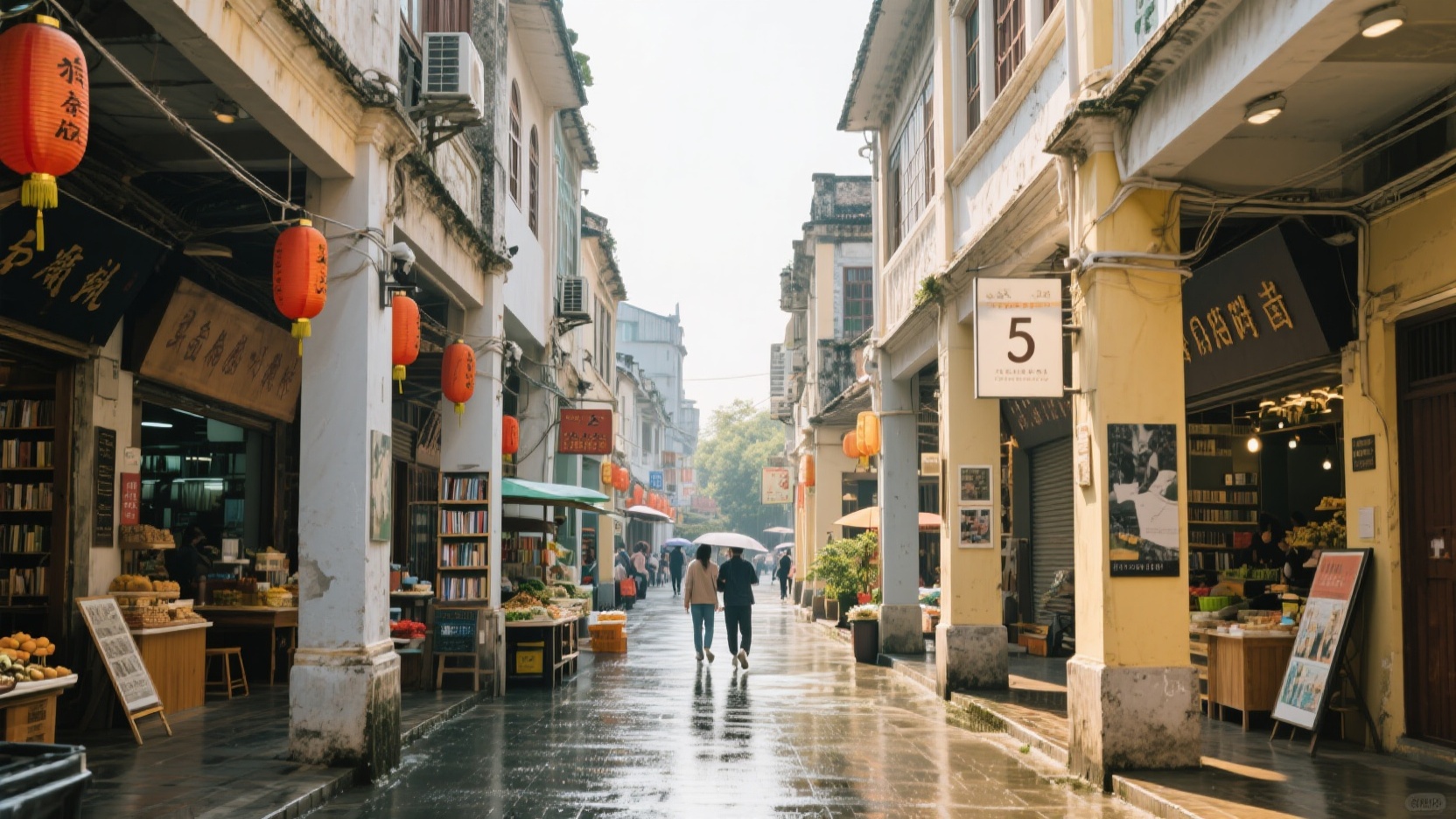
The most magical scene of the Foshan cultural tour is that you hold up your phone for ten minutes in the "Internet celebrity lantern alley" and in the end you can only take pictures of the heads of people in front, behind and to the sides - locals don't even stop walking by.
I've lived in Foshan for almost seven years and walked through the old town of Chancheng no less than twenty times. To be frank, the truly enduring culture and art of Foshan isn't found in the brightly lit, loudly advertised, and expensive tourist spots recommended in travel guides, but rather along a daily route frequented by the locals for grocery shopping, strolling, and watching performances. Today, I'll break down this roughly 5-kilometer "native arts and culture route" for you, and also point out three pitfalls along the way.
Many tourists equate Foshan's arts and culture with Lingnan Tiandi and creative parks, but these are actually compressed slices of life created by social media platforms. Locals prefer to take a stroll along the old town route from Chuihong Road to Pujun Market, where they can experience authentic life without spending money or queuing.
Avoidance #1: Don't try to squeeze into the "Lantern Street" in Lingnan Tiandi.
Lingnan Tiandi itself is worth visiting, but locals really won't go into those small exhibition halls labeled "Immersive Light and Shadow" or "Starry Sky Pavilion." The lighting is so dim that your phone can only capture noise, the space is so small that you'll bump into someone's bag when you turn around, and you have to walk around the shopping street to get out. If you want to photograph Lingnan architecture, the exterior walls of the Jian Family Villa and the old building of Longtang Poetry Society are ten times quieter than inside.
Why the photos look bad: These kinds of exhibition halls often use colored LEDs and mirrors, resulting in overexposed or cluttered backgrounds that can't be salvaged in post-processing. The lighting in the old alleyways, on the other hand, is softer.
Key to avoiding pitfalls: If you see a line of people taking selfies at the entrance, turn around immediately. The real best spots are on the stone-paved road on the east side of Zumiao Street. Before 9 a.m., when there's no one there, the blue brick walls and sliding doors give you the feel of old Foshan.
Avoidance #2: Don't go to the night market on the main street of the creative industry park thinking it's for artsy people.
Foshan Creative Industry Park is a converted old factory, but the main street has become a mix of cooking fumes and live-streaming stalls. Locals usually walk straight through the side old factory buildings and don't stop at the stalls selling glow sticks and trendy drinks. The so-called "artistic night market" is mostly just a backdrop.
If you absolutely must come, remember: avoid the main street after 8 pm on Friday nights. The artsy parts are hidden behind old chimneys in the fire escape stairwells, on weathered slogan walls, and in the occasional local craft markets that appear on weekend afternoons—not in the brightest spots.
Thirdly, avoid buying the "pottery experience ticket" at Nanfeng Ancient Kiln.
The dragon kiln at Nanfeng Ancient Kiln is worth seeing, but it's packaged as a "pottery experience" package, which is rather superficial: you have to queue for half an hour in front of the potter's wheel, the instructors are too busy to handle everything, and you have to pay extra for firing the finished product. Locals who want to take their children to pottery studios around Shiwan Figurine Street prefer to go there because it's less crowded and the experienced potters are more willing to chat.
If you've already gone, the best spot for taking a panoramic photo of the dragon kiln is on the second-floor platform of the residential building opposite; don't crowd around the kiln opening. The truly captivating view is the wall where the chimney of the old factory building next door is intertwined with the old banyan tree.
First half: Xianxing Library—Chuihong Park—Tongxin Lane
Let's start with the starting point of this 5-kilometer route: "Xianxing Bookstore" on Chuihong Road. This is an independent bookstore located on the ground floor of an old residential building, with an old tree at the entrance filtering out dappled sunlight. It's worth stopping for 10 minutes because the window display changes its theme with the seasons, and elderly passersby often sit on the stone steps at the entrance flipping through newspapers. The best shooting spot is across the street, using the plane trees as a foreground; around 4 PM is ideal. Nearby, try the wonton noodles at "Yingji Noodle Shop"—affordable and a local favorite since childhood.
Walk 200 meters south from the bookstore to enter "Chuihong Park". This isn't a tourist attraction, but a community park: people practicing Tai Chi, playing chess, and taking care of their grandchildren. Stopping for 10 minutes isn't about capturing the scenery, but about seeing the slow pace of life in Foshan. The best spot is on the stone bench on the south side of the park, shooting upwards at the old banyan tree and the people doing their morning exercises; be careful not to point the camera directly at people's faces. There's a rice noodle roll stall near the back gate of the park, only open in the morning; a plate costs just a few yuan, with thin skin and flavorful sauce.
Turn into the "Yinggang Street - Tongxin Lane" area. Old brick houses, narrow alleys bathed in slanting sunlight, and occasionally a handmade workshop with its door half-closed. There are no signs here, only clothes hung on bamboo poles by locals and ferns growing from the cracks in the walls. It's worth stopping for 10 minutes, because this is an old alley that hasn't been eaten up by uniform shop signs. The best spot is at the corner of the alley entrance; wait for an electric scooter to pass by, and the sense of history begins. There are dessert shops nearby; the mung bean soup isn't too sweet, and it costs only a few dollars per person.
Middle section: Kuaizi Road – Pujun Market, a true cross-section of arcade buildings and vegetable market.
Walk through Tongxin Lane and Fuxian Road to the "Kuaizi Road - Kuaizi Road" arcade street. It's usually quiet, but before the Spring Festival, it's filled with stalls selling handwritten couplets, red paper with black characters covering the entire street. Even on ordinary days, you can see the weathered gray plaster of the arcades and old signs. Stop for 10 minutes to take a picture of the arcades and old signs side-by-side; the best spot is slightly east of the center line of the road, where there's less traffic, but still be careful. Nearby, try the braised pig's trotters at "Dexinzhai," a long-established brand, not too expensive—just enough to eat while walking.
Walk another ten minutes or so to "Pujun Market". This is a genuine local market; the ground is always slightly damp, and the sounds of vendors hawking their wares and chopping roasted meats mingle together. Don't worry about the dirt; the colors and lively atmosphere here are more vibrant than any filter. Stop for ten minutes to photograph the layers of green vegetables and the glistening oil from the roasted meat stalls. Position your camera at the entrance, looking up at the market sign to avoid people's faces. The claypot rice at the market entrance is crispy on the outside and fragrant with cured meats; it costs a few dozen yuan per person, perfect for lunch.
The second half: an open mic night on the side of the old factory building—the true artistic touch is revealed at the end.
From Pujun Market, walk east along Tongji Road to the side wing of the "Foshan Creative Industry Park". Don't go into the main street; go directly to the old factory area and find the wall with the fire escape stairs and old chimney. Stop for 10 minutes to photograph the contrast between the old structure and the new graffiti. Take a shot from the middle of the stairs, looking up at the sky. Nearby, eat at the food stalls outside the park; try stir-fried beef noodles and congee—it's only a few dozen yuan per person, and the wok hei (wok aroma) is great.
If you happen to be there on a weekday evening, there's a local theater in the creative park that hosts an open mic night for improv comedy. The stage is small, so the audience sits close together, and the performers joke about local life. Even just 10 minutes of watching the opening act gives you a glimpse into the unpretentious side of Foshan's young people. The camera was positioned in the last row of the audience, capturing silhouettes of the stage lights and the backs of the audience's heads. After the show, grab a bowl of sweet soup nearby—perfect for wrapping things up.
In conclusion
Don't ask the locals if I haven't told you: 1. These places are best visited in spring and autumn, or on rainy days. Summer afternoons are too hot, and the old alleyways offer no shade. 2. Don't wear white shoes to the market, and don't point a large camera at people's faces. 3. The calligraphy fair on Chopsticks Road is only lively for the month before Chinese New Year; don't be disappointed if you go at other times. 4. You're more likely to find local handmade craft markets in the Creative Park on weekend afternoons than on weekend evenings. 5. This route is free; wear soft-soled shoes, walk slowly, and don't rush.