
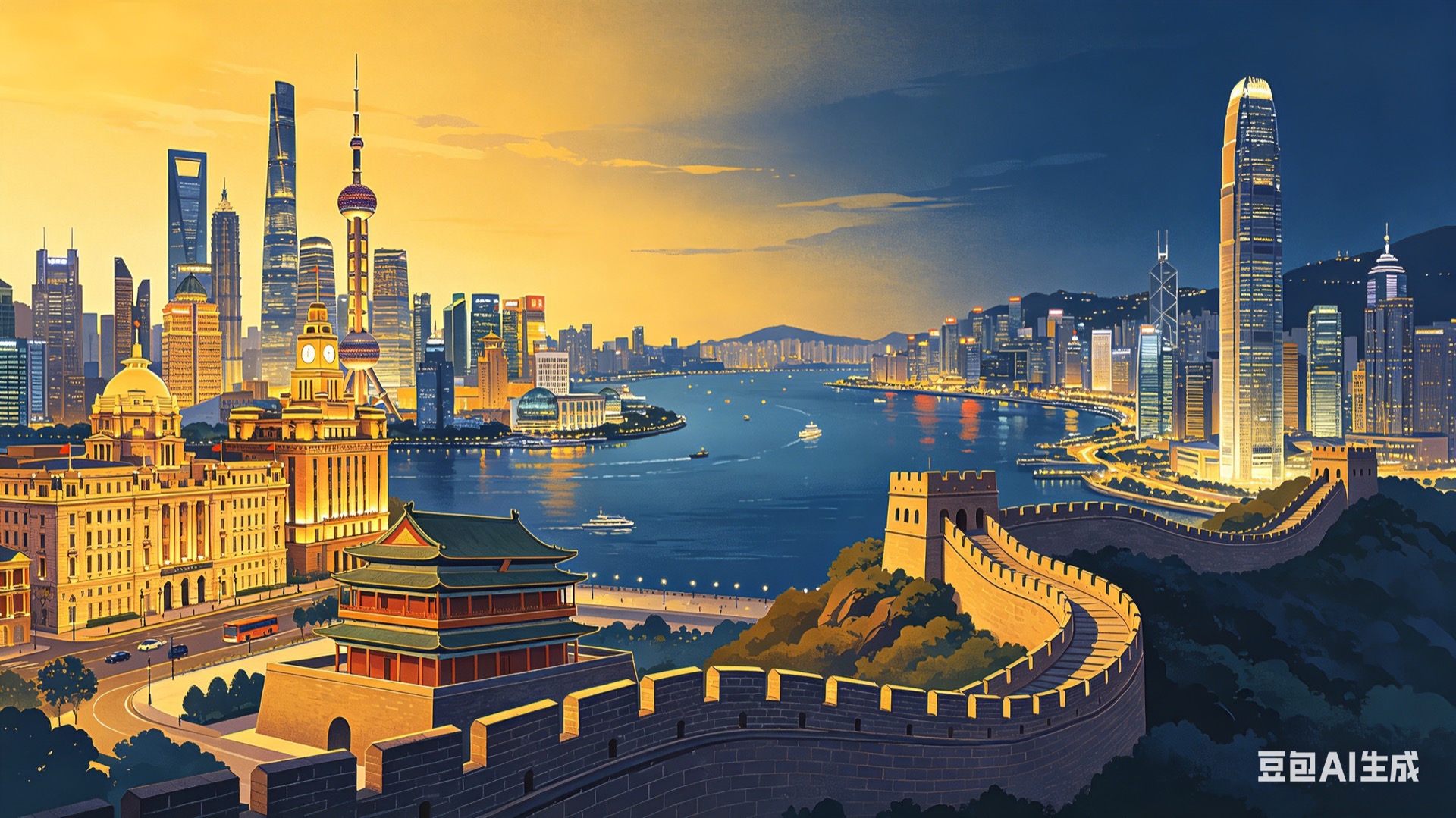
This summer's nighttime tourism has become a hit, showcasing the vibrant energy of the cultural and tourism industry.
This summer, the nighttime tourism market has been booming in many places. Nighttime tourism has moved beyond the traditional model of simply sightseeing, evolving into a comprehensive experience integrating sightseeing, activities, and consumption. Currently, public demand for nighttime tourism continues to rise, with new ways to enjoy nighttime activities and new spaces constantly emerging, continuously stimulating consumption potential and revitalizing the cultural and tourism market.
From "light shows" to "immersive theater"
As dusk settles, the Hetou Old Street in Tangshan, Hebei Province, is ablaze with lights. Nearly a hundred performers are scattered throughout the scenic area, allowing visitors to truly experience the feeling of "entering the scene and becoming part of the drama." On the Grand Tang Avenue, a parade of royal guards, golden-armored warriors, and court ladies slowly marches forward, with performers interacting with tourists along the way by performing ancient rituals. The poets' contingent, including "Li Bai" and "Du Fu," occasionally stops to engage tourists in poetry recitations and flower-recitation games. A performer on a tall pole bends down to shake hands and interact with tourists. The scenic area deeply integrates dynamic parades, scattered performances, and immersive interactive NPC experiences throughout the area, creating a Tang Dynasty night tour experience that is visually appealing, engaging, and interactive, with a truly immersive atmosphere.
The Mutianyu Great Wall in Beijing offers exclusive nighttime tours during the summer, providing a tailored all-day itinerary for both domestic and international visitors: daytime panoramic views, quiet sunset viewing, and nighttime light and shadow experiences. At night, the scenic area illuminates the Great Wall's magnificent silhouette with laser light shows and immersive interactive projections. Special nighttime performances such as "Chinese Martial Arts: Hard Qigong" and "The Safe Country: Qi Jiguang's Army" are staged in rotation, accompanied by elegant palace lantern dances and traditional Chinese music, allowing visitors to immerse themselves in the grandeur of the Great Wall at night. The scenic area also offers a starry sky cinema and educational workshops, catering to diverse needs such as relaxation and family cultural education.
Many cultural and museum venues across the country have also unlocked new ways to experience nighttime culture. The Guangzhou Museum of Art launched the "A Thought of Dunhuang" grotto art exhibition, innovatively setting up NPC-only nighttime sessions to break away from the traditional "passive listening and one-way viewing" model, allowing visitors to immerse themselves in the charm of Dunhuang culture. The Zhaojun Museum in Hohhot launched a brand-new nighttime immersive performance, "The Long Song of Changle: Zhaojun," during the summer, integrating cutting-edge light and shadow technologies such as naked-eye holography and laser projection, allowing visitors to walk, see, and experience simultaneously, reflecting on the history of Zhaojun's journey to the border.
Wei Jian, head of the Mafengwo Tourism Research Institute, told reporters that this summer's nighttime tourism market is shifting from "light shows" to "immersive dramas." Tourists are no longer passive viewers, but rather participants and creators of the nighttime story. Live-action NPCs are being used extensively in nighttime tours; they are no longer simple background figures, but key figures driving the plot and deeply interacting with tourists. Tourists are transforming from "spectators" to "characters in the play," gaining unique and unforgettable nighttime experiences through participation and interaction.
Combining local characteristics and innovation
Immersive experiences attract visitors to nighttime tourism, while diverse nighttime consumption scenarios further unleash the potential of nighttime tourism spending. This summer, new nighttime consumption scenarios such as cultural and museum venues, city landmarks, trendy markets, and food night markets have emerged rapidly, reshaping the landscape of nighttime cultural and tourism consumption.
Qi Chunguang, Vice President of Tuniu.com, introduced that a number of nighttime tourism destinations that integrate local characteristics and innovative scenarios are gaining popularity. The stargazing and camping in the Mingsha Mountain Desert and the massive stargazing concert create a fantastic atmosphere; NPC interactive performances and Hanfu (traditional Han clothing) photo shoots at Xi'an's Datang Everbright City have become iconic nighttime tourism projects, continuously attracting tourists; the "Ulan Phantom" firefly rainforest night tour launched by the Xishuangbanna Tropical Botanical Garden of the Chinese Academy of Sciences integrates nocturnal animal observation, stargazing, and interactive ecological science games into an immersive natural classroom, which is very popular with families.
Many cities are actively expanding new nighttime tourism scenarios, revitalizing urban landmarks and street spaces, and launching trendy markets and night markets featuring fireworks displays. In Yangzhou's Slender West Lake, the Rainbow Bridge Square launched the "Rainbow Bridge Moonlit Poetry, Wine, and Tea Talk" themed night market, integrating local delicacies, Jiangnan cultural and creative products, and traditional Chinese performances to create a waterfront nighttime tourism scene that combines sightseeing, consumption, and experience, effectively boosting nighttime visitor traffic. In Qingdao, old city areas such as Zhongshan Road and Pichaiyuan are innovating nighttime tourism spaces, gathering food night markets, street performances, and trendy consumption to revitalize established commercial districts at night.
Some cities are leveraging their unique resources to innovate diverse nighttime tourism experiences. According to the Beijing Municipal Bureau of Culture and Tourism, this summer, Beijing has integrated resources from its central axis, waterfront spaces, Great Wall water towns, and trendy commercial districts to launch a series of distinctive nighttime tourism activities. The "Dreamy Cloisonné Night Experience Season" has created a unique nighttime tourism destination that combines the cultural heritage of the ancient capital with the vibrancy of urban life. Commercial districts and streets in Beijing, such as Qianmen Street and Chaoyang Park, are continuously innovating their nighttime tourism offerings, including traditional Chinese style markets, trendy garden parties, and nighttime food. Chongqing, relying on the night view of the Yangtze River, has created diverse formats such as light and shadow performances, riverside night markets, and riverside leisure activities, effectively boosting nighttime tourism consumption along the river.
Multiple business formats combined to boost consumption
Based on immersive experiences and diverse scene layouts, various regions continue to promote the cross-sector integration of nighttime tourism, activating the synergistic effects of complementary business formats and mutual traffic flow. This summer, nighttime tourism has deeply collaborated with other formats such as light and shadow performances, nighttime water tours, rural intangible cultural heritage, and cultural and sports events, creating a new nighttime tourism ecosystem of "one trip, multiple consumptions" and continuously releasing the vitality of consumption aggregation.
The Chimelong International Ocean Resort in Hengqin, Guangdong, is launching an international ocean fireworks festival this summer, featuring themed fireworks shows and a 49-day summer nighttime extravaganza, featuring the brand-new "High-Altitude Ocean Light Wheel" fireworks and a 700-drone formation performance. Under the night sky, hundreds of drones will take turns changing into 3D patterns of marine life and landmarks from various countries, combined with a cool laser show and dynamic water jetpack performances, creating a visually and aurally stunning immersive nighttime spectacle.
Happy Valley Group's "Summer Wave Carnival" summer nighttime activities have been launched nationwide, creating innovative and differentiated nighttime experiences for each city. The Chengdu park features a dreamlike starlight and illusion scene, the Shanghai park showcases a dazzling sky fireworks display, the Tianjin park presents a spectacular intangible cultural heritage iron flower performance, the Shenzhen park features a cool drone formation show, the Xiangyang park creates a beautiful castle light and shadow effect, and the Nanchang park presents a phoenix flying through the sky light and shadow effects. These unique and differentiated nighttime activities in various locations extend visitors' stay, effectively driving continuous growth in nighttime ticket sales, annual pass sales, and secondary consumption.
Rural nighttime tourism is also showing its charm. Villages across the country are revitalizing their local nighttime tourism resources with intangible cultural heritage performances and unique nighttime entertainment, driving the transformation from short-distance daytime travel to in-depth overnight tourism. For example, the fish lantern parade and the intangible cultural heritage iron flower display in Xixinan Town, Huangshan City, Anhui Province, illuminate the ancient village at night; the intangible cultural heritage market in Rongchang, Chongqing, and the grassland music concert in Linqing, Shandong Province, enrich rural nighttime tourism.
Zhao Yijing, head of the nighttime tourism research project at the China Tourism Academy, believes that for nighttime tourism to achieve long-term, differentiated development, it needs to rely on customer segmentation, local cultural empowerment, and a tiered business layout. Currently, nighttime tourism is moving from a single-point "ticket economy" of scenic spots to a comprehensive consumption economy involving the entire region. Zhao Yijing suggests that various regions should coordinate planning to address the issues of fragmented and homogenized business formats; scenic spots should upgrade and improve supporting businesses to create multi-functional nighttime tourism destinations; rural towns should cultivate local characteristics to stimulate repeat visits and consumption; and at the same time, deepen the integration of scenes, performances, and consumption to broaden consumption conversion channels. Creating distinctive nighttime tourism IPs and forming unique nighttime tourism memories will shape a new cultural tourism advantage of "city prosperity due to night and people flocking to the city for night." (Source: People's Daily Overseas Edition)