
Zhengzhou's Three Meals a Day: A Local Food Menu from Spicy Soup in the Morning to Beef Tripe Hot Pot Late at Night
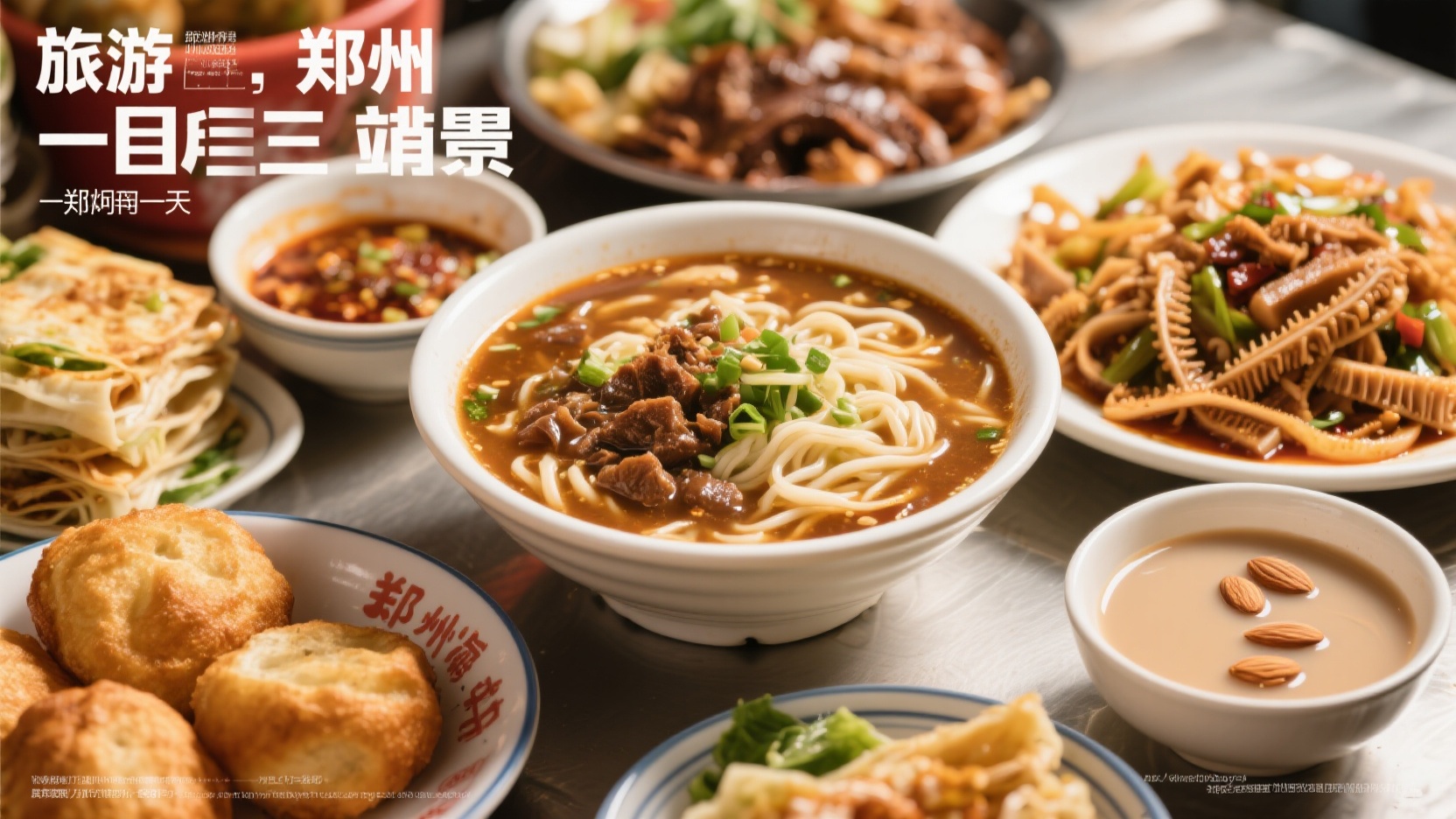
The essence of Zhengzhou's flavor profile isn't simply spicy or salty, but a complex system with noodles as its framework, soups as its core, and pepper and sesame paste as its memorable elements. To understand this city, instead of checking off trendy restaurants, spend a day eating with the locals: from breakfast stalls at six in the morning to street food stalls until the early hours of the morning.
Early Morning: Spicy Soup and Fried Dough Sticks
Hulatang (spicy soup) is the starting point of breakfast in Zhengzhou. The broth is made from beef or lamb bones, thickened with the water from washing gluten, then topped with hand-shredded gluten, wood ear mushrooms, daylily buds, peanuts, and sweet potato noodles. Before serving, it's seasoned with plenty of black pepper, Sichuan peppercorns, and a small amount of chili. The soup is thick and coats the spoon, with a spicy kick followed by a rich aroma, the pungent pepper and the mellow broth alternating. Locals rarely order a bowl of Hulatang alone; pairing it with freshly fried youmotou (fried dough sticks) is the standard practice. Youmotou are small portions of leavened dough fried directly in oil, shorter and thicker than youtiao (fried dough sticks), crispy on the outside and soft on the inside. They are torn apart, pressed into the soup to soak up the flavor, and then eaten. This combination sets the tone for the day's flavors for most Zhengzhou residents.
Early Morning · Bean Paste
People in Zhengzhou who prefer a lighter taste often choose doumo (a type of millet porridge) for breakfast. Doumo is made with millet paste as a base, mixed with soybeans, crushed peanuts, vermicelli, and chopped greens. It is slowly stirred over low heat until it becomes a paste, and sesame paste and five-spice powder are added before serving. Its texture is smoother than that of hot and sour soup, with a prominent aroma of grains and nuts, and very low spiciness. Doumo is often found in breakfast stalls in the old city, kept warm in large aluminum pots, and is a familiar "light breakfast" for the elderly and children.
Lunch: Zhengzhou-style braised noodles
In Zhengzhou, lunchtime is all about braised noodles. Traditionally, the broth is made with mutton and bones, resulting in a milky white color. The dough is made by repeatedly kneading high-gluten flour with salt, alkali, and warm water, then rolling it into wide strips, stretching them, and cooking them in boiling water. The bottom of the bowl is lined with kelp strips, tofu strips, and glass noodles. The noodles are then added, followed by the broth, a few slices of flavorful braised mutton, and a sprinkle of chopped cilantro. The proper way to eat braised noodles is to first drink the broth, then pick up the noodles. The wide noodles are smooth on the outside and chewy on the inside, and the mutton broth has a slightly milky aroma without being gamey. It's served with pickled garlic and chili oil, which both cuts through the richness and adds another layer of flavor. For locals, braised noodles aren't a banquet dish, but rather a filling midday meal.
Lunch: Braised Pork in a Jar with Flatbread
Alongside the braised noodles is a dish of braised flatbread. Thinly baked flatbread is cut into thick strips and stir-fried in a wok with sliced pork belly, garlic sprouts, or bean sprouts. Broth is added, and the wok is covered and braised. The flatbread strips absorb the meat juices in the steam, transforming from dry and hard to tender and chewy, with a firm surface and a satisfyingly chewy center. The traditional method requires the broth to be reduced until it's almost gone and the oil to seep in, resulting in a glossy but not dripping flatbread, tender pork slices, and crisp garlic sprouts. This dish was once a common lunch for laborers in Zhengzhou's commercial district; high in calories and quick to prepare, it's still a popular combination in small restaurants today: a bowl of braised flatbread and a bowl of broth.
Afternoon Tea - Almond Tea
Afternoon snacks are typically sweet and refreshing. Almond tea is made by mixing almond powder and glutinous rice flour into a paste, then pouring boiling water over it to create a translucent consistency. Sugar, candied fruit peel, raisins, and chopped hawthorn are added. It has a slightly bitter almond flavor, a restrained sweetness, and a thick but not sticky consistency. It's not a trendy dessert, but rather a common afternoon snack found on old town street corners; a few bites are enough to recharge, making it a perfect buffer between lunch and dinner.
Late at night, stir-fried mung bean jelly
In Zhengzhou's night markets, the sound of stir-fried mung bean jelly precedes its aroma. The jelly is made by boiling sweet potato starch with water, then cooling and cutting it into cubes. These cubes are placed in a flat-bottomed iron pan with minced garlic, fermented bean paste, chili powder, and dark soy sauce, and stir-fried while being pressed down with a spatula. At high temperatures, a crispy crust forms on the surface of the jelly, while the inside remains soft, smooth, and translucent. Before serving, chopped garlic sprouts are sprinkled on top, infusing the crust with the aroma of garlic and soy sauce. When eating, it's enjoyed with a small spoon, the crispy exterior and soft interior a delightful combination of salty and spicy flavors with a hint of sweetness from the sweet potato starch.
Late night hot pot with beef tripe
The day's flavors often culminate in hot pot with beef tripe. The prepared tripe is sliced diagonally into thin skewers, then repeatedly dipped in boiling beef bone broth for a few seconds until it curls slightly. After being removed, it's brushed with a sauce made of sesame paste, chili oil, and cumin. The tripe is tender and slightly chewy, with the nutty and spicy flavors of the sauce clinging to its folds. The deeper the night, the stronger the steam rises from the stall. Unlike a formal meal that follows a set order, it's more like a series of "supplements" that Zhengzhou locals give themselves at the end of the day.
From a bowl of spicy soup in the morning to a skewer of hot pot tripe late at night, Zhengzhou's flavors are unadorned, yet they connect the most authentic rhythm of local life through time and a feeling of fullness. From the streets to the alleys, experience the city through its food in a day.