
Another side of Zhengzhou: Routes to avoid crowds – old factories, independent bookstores, and private art galleries
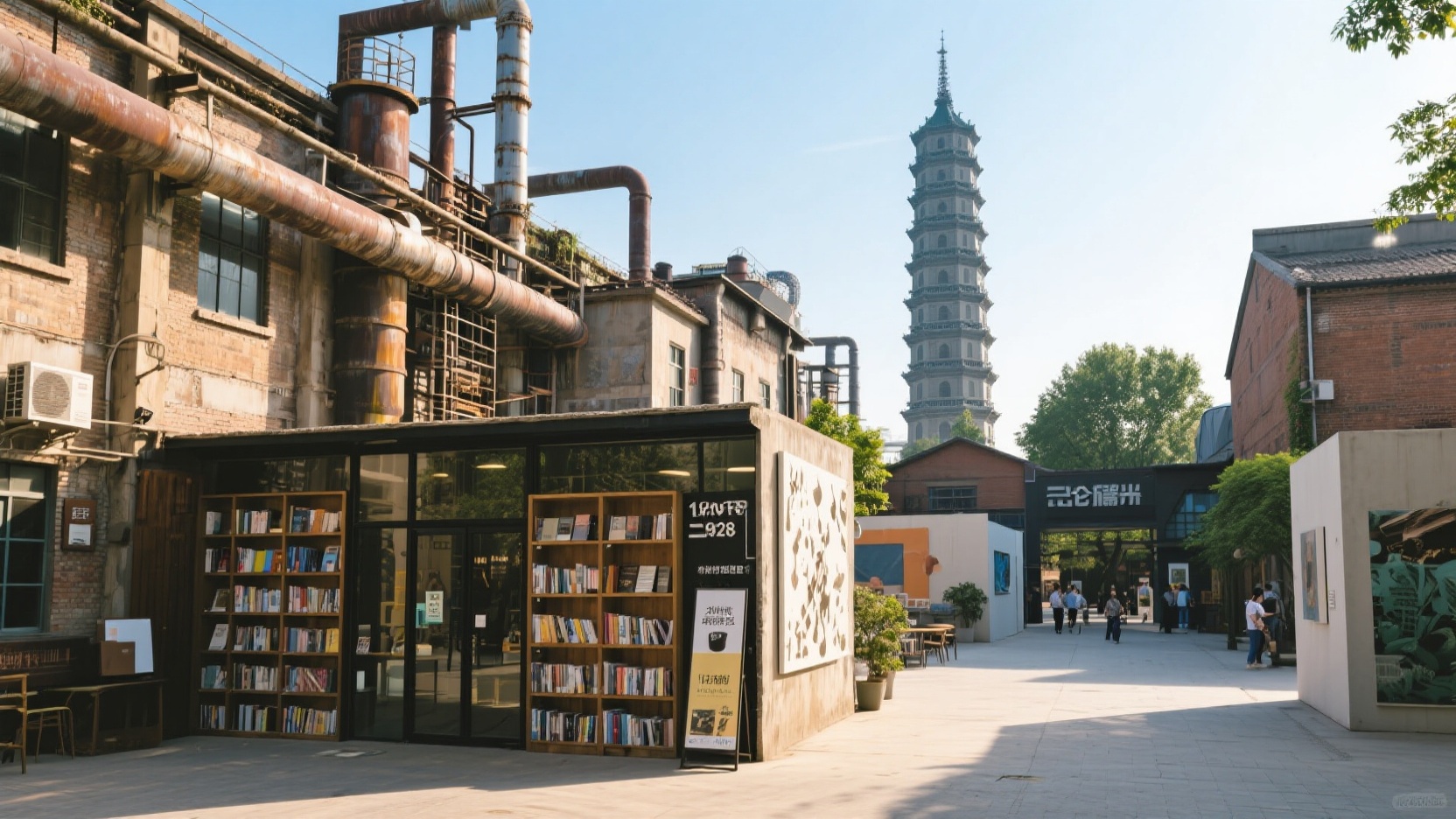
Zhengzhou's main urban area is often described as "a city brought by trains," but if you shift your focus away from the Erqi Tower and the Henan Museum, you'll discover another "spiritual undercurrent" comprised of old factories, independent bookstores, and small art spaces. This route avoids crowds, starting from the old industrial belt in the Zhongyuan District and extending into the old city communities and the gaps in the eastern district. Most of the eight points are within a 15-minute drive of each other, making it suitable for a half-day to a full day of walking and short connecting trips.
Ersha Cultural and Creative Park: The rugged lines within the Bauhaus factory buildings
Formerly the Zhengzhou No. 2 Grinding Wheel Factory, it retains its red brick walls, arched domes, and massive grinding wheel equipment. The park is spacious, with old plane trees and industrial components creating a strong geometric order, resulting in a relaxed and restrained atmosphere with minimal commercial influence. Highlights include the repetitive arched windows of the main factory's connecting corridors, the bases of old machines, and a few outdoor design studios. Photography tips: Use low-angle sidelighting in the morning or evening to capture silhouettes of people against the red brick arched windows; the repetitive lines of the connecting corridors are best compressed with a telephoto lens, and placing people at a distance creates a scale contrast.
Sesame Street 1958 Innovation Park: A Public Art Space in the Former Coal Machinery Factory
Transformed from the old Zhengzhou Coal Mining Machinery Plant, the red-brick factory buildings, gantry cranes, and industrial parts have been turned into public art installations. The park is more "community-oriented" than the Second Sandwich Plant, with commuters and families with children frequently seen on weekdays, and outdoor cafes and design studios mingling together. Highlights include the gantry crane frames, chairs made from old machine tools, and constantly changing temporary exhibitions. Photography tips: Capture the contrast between the warm colors of the factory buildings and the cool colors of the sky during the blue hour of dusk; use the gantry crane frames as a foreground, placing people in the distance to emphasize the industrial scale.
Ruiguang Creative Factory: A Cluster of Vintage Items and Graffiti in a Printing Plant
Converted from a printing factory, the space is compact yet densely packed with content. The highlights are the graffiti-covered staircase, old machine parts, a small warehouse-style flea market, and an illustration studio. Many spaces retain a raw, factory-like feel, perfect for browsing vintage items and independent publications. The vibe leans towards a younger demographic, becoming even more lively on weekends when a market is held. Photography tips: the colorful graffiti walls and iron staircase complement high-saturation outfits; avoid using flash inside the flea market, instead utilizing natural light from the windows to photograph still life and close-ups of hands.
Kunlun Wangyue Art Museum: Private Collection Orientation in a White Box
This private art museum is small in size, primarily featuring contemporary painting, video, and installation art, with frequent exhibition changes. The museum has few visitors and even lighting, making it ideal for focused viewing. It also has a small collection of archival materials on local artists, supplementing the understanding of contemporary art in Zhengzhou. The atmosphere is quiet and restrained; it's not a typical tourist attraction. Photography tips: Leave ample negative space in front of the white walls and use small-scale figures in your composition; for installations, use floor reflections or LED strips as guiding lines, and be mindful of the no-flash rule.
Entrance Space: An Experimental Gallery in the Community
This independent, non-profit art space leans towards experimental and conceptual projects, often hosting young artist residencies. The space is minimalist, with detailed exhibition labels and artwork descriptions that require slow, deliberate reading. It feels more like an art event than a gallery; those with a strong interest in contemporary art will find it information-dense. Photography tips: Focus on capturing exhibition details, material textures, and spatial depth; natural light at the entrance is ideal for photographing the building facade and people; turn off flash once inside the gallery to avoid disturbing others.
Songshe Bookstore: A "spiritual living room" for humanities and social science book selections.
This is a representative independent bookstore in Zhengzhou, focusing on humanities, social sciences, history, and local culture. A special "Henan-themed" shelf is often located near the entrance. The store features a lecture area and frequent salon events, exuding a calm and sophisticated atmosphere. The books are meticulously categorized, making it suitable for spending at least half an hour browsing rather than just a quick photo op. Photography tips: Utilize the perspective of the bookshelf aisles, placing people at the far end; take photos of the reading area from above the steps or mezzanine, being mindful of quiet and avoiding obstructing other readers.
City Lights Bookstore: The immersive experience of a long-established independent bookstore
Located near a university for many years, this bookstore combines a bookstore, folk music performance venue, and small exhibition space. The selection leans towards literature and music, with vinyl records and old magazines tucked away in the corners, creating a relaxed and free atmosphere. During the day, it's a quiet reading space, but the atmosphere changes completely when there are performances in the evening, making it a suitable stopover midway through your trip. Photography tips: In the afternoon, natural light by the window is ideal for photographing book pages and coffee; in the performance area, use warm-toned table lamps for supplemental lighting, avoid direct flash, and don't obstruct the musicians' view when taking photos.
Let coffee art space: a community node where coffee and gallery coexist.
This community-style coffee space also serves as a small exhibition area, with the bar and exhibition walls sharing the same space. The coffee quality is consistently good. It has a friendly atmosphere, making it a good place to relax after visiting the previous spots and casually check out a light exhibition. The highlights are the regularly changing wall art and the local roast bean menu. Photography tips: Use the backlighting at the bar to capture the coffee crema and latte art; use mid-range shots in front of the exhibition walls to include the surrounding environment and avoid disturbing other guests.
The eight locations listed above are not tourist attractions or "check-in" lists, but rather slices of Zhengzhou's cultural production from different periods. Scattered across the western industrial belt, old city communities, and the gaps between the eastern districts, they are connected by short distances, making them ideal for travelers interested in the city's fabric. Explore the spiritual corners of this city on foot.