
Xining, the Pure Land | A 3-Day, 2-Night Family-Friendly Slow Travel Guide to the Gateway to the Qinghai-Tibet Plateau
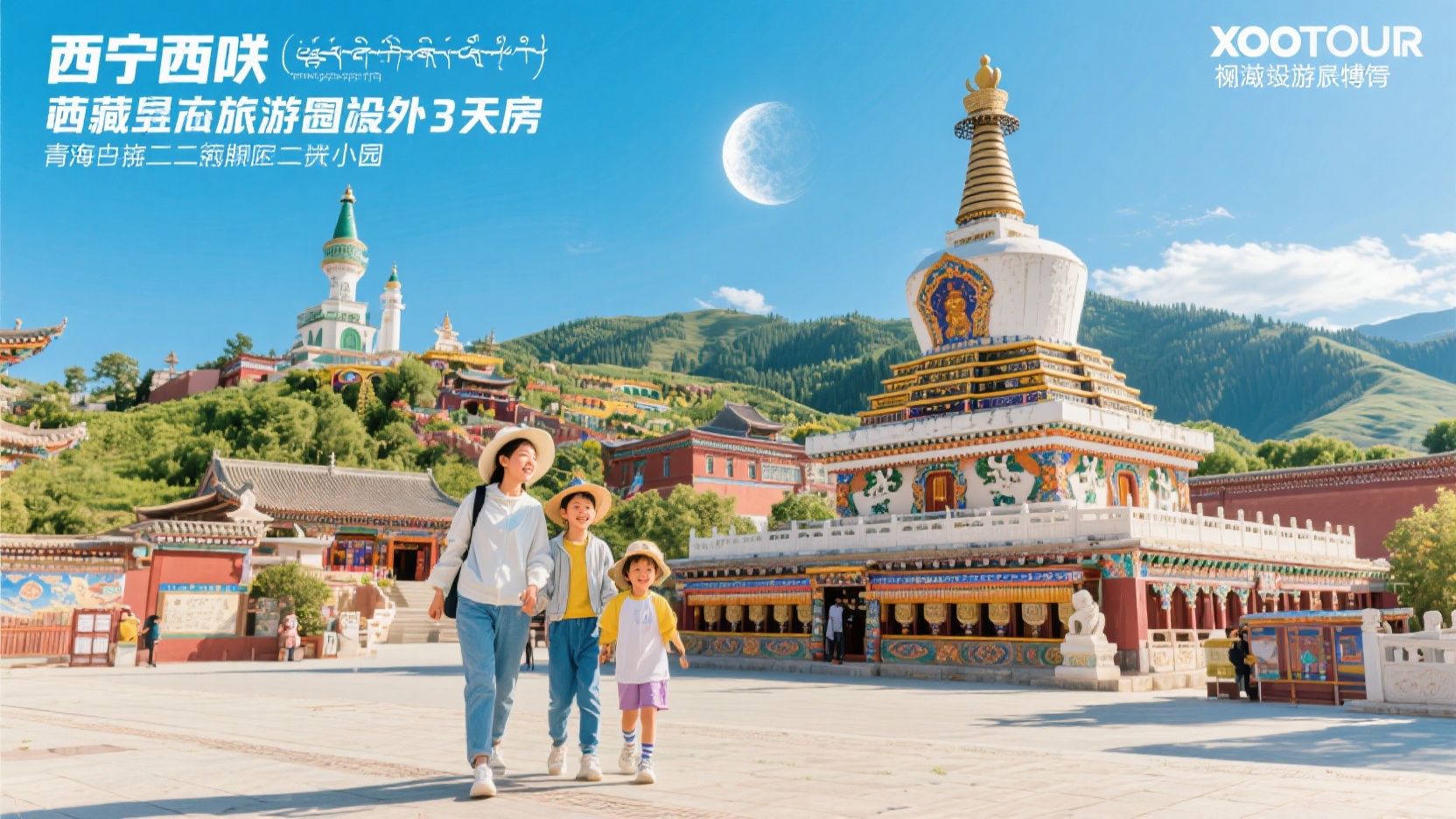
Xining, as the eastern gateway to the Qinghai-Tibet Plateau, is a crossroads of diverse ethnic cultures and boasts unique plateau scenery and a profound cultural heritage. This guide will present a relaxed 3-day, 2-night in-depth experience of Xining, perfect for family trips, aiming to allow you and your family to feel the charm and tranquility of this city in the embrace of the plateau.
Overview of a 3-day, 2-night itinerary in Xining
Day 1: Dongguan Great Mosque → Qinghai Provincial Museum → Shuijing Lane Commercial Street
Day 2: Kumbum Monastery → Qinghai Tibetan Culture Museum
Day 3 (Choose one): Riyue Mountain & Daotang River or Huzhu Tu Ethnic Homeland Park
Day 1: Cultural Exploration and Urban Charm
Upon arrival in Xining, it is recommended to check into your hotel and rest for a while to acclimatize to the high-altitude climate. Xining city is at an altitude of approximately 2260 meters; newcomers may experience mild altitude sickness. Stay relaxed and avoid strenuous activity.
Morning: Dongguan Grand Mosque
As one of the four major mosques in Northwest China, the Dongguan Grand Mosque is Xining's most representative landmark. Its unique architectural style blends Han, Tibetan, and Islamic art, creating a magnificent spectacle. The mosque's solemn atmosphere makes it an ideal place to learn about Islamic culture and experience religious ambiance. When visiting, please dress appropriately; ladies are advised to wear headscarves and remain quiet.
Lunch: Enjoy authentic halal cuisine
There are many halal restaurants around the mosque where you can sample Xining's local specialties such as hand-pulled mutton, liangpi (cold skin noodles), and sweet fermented rice. The hand-pulled mutton is tender and delicious, the liangpi is smooth and refreshing, and the sweet fermented rice is cool and thirst-quenching.
Afternoon: Qinghai Provincial Museum and Shuijing Lane
The Qinghai Provincial Museum serves as a window into Qinghai's history, culture, natural geography, and the diverse ethnic customs. Its rich collection includes painted pottery, Thangka paintings, and Tibetan Buddhist art, making it particularly suitable for families with children learning about the evolution of the Qinghai-Tibet Plateau. A visit to the museum is recommended to last 2-3 hours.
If you have enough time or aren't particularly interested in museums, you can choose to visit Shuijing Lane Commercial Street . This is Xining's long-established commercial district, a hub for various snacks, local specialties, and daily necessities, brimming with local flavor. You can buy local products or continue sampling local snacks.
Dinner: Choose a restaurant in Shuijing Lane or near the hotel to enjoy local home-style dishes.
Day 2: Natural Scenery and Religious Art
Morning: Kumbum Monastery
Kumbum Monastery is one of the six major monasteries of the Gelug school of Tibetan Buddhism in China, and the birthplace of Master Tsongkhapa. The monastery's architecture is built against the mountainside, creating a magnificent spectacle, and it boasts the "three wonders" of art: butter sculptures, murals, and appliqué embroidery. A visit to Kumbum Monastery is a journey to experience the influence of Tibetan Buddhist culture and appreciate exquisite art. Hiring a guide is recommended for a better understanding of its history and cultural significance. The monastery is at a relatively high altitude, and there is a lot of walking involved; please be mindful of your pace and prepare drinks and snacks for children.
Lunch: You can have lunch around the Ta'er Monastery scenic area or return to Xining city.
Afternoon: Qinghai Tibetan Culture Museum
The Qinghai Tibetan Culture Museum is the world's only comprehensive museum dedicated to Tibetan medicine and culture, making it an excellent place to learn about Tibetan history, culture, art, and medicine. The museum displays a vast collection of Tibetan medical artifacts, Thangka paintings, and Tibetan folk items, most notably the "Grand View of Chinese Tibetan Culture and Art Painting," the world's longest Thangka scroll, which is truly breathtaking. For families with children, the museum offers a unique learning experience, allowing children to appreciate the profoundness of Tibetan culture in a relaxed atmosphere.
Dinner: You can choose to enjoy Qinghai-style hot pot in the city, such as yak meat hot pot, and experience the unique flavor of highland cuisine.
Day 3: Suburban nature experience (choose one)
On the third day, depending on the family's interests and physical condition, they can choose a nearby scenic spot for an in-depth experience.
Option 1: Riyue Mountain & Daotang River
Riyue Mountain is a pass Princess Wencheng passed through on her journey to Tibet, and also marks the boundary between Qinghai's agricultural and pastoral areas. Climbing Riyue Mountain offers a unique geographical view of "farmland to the east, pastureland to the west." It's windy at the summit, so dress warmly. Daotang River is the only river in China that flows from east to west, said to have been formed from Princess Wencheng's tears of homesickness, adding to its legendary charm. Both attractions are about a 1.5-2 hour drive from Xining city, suitable for a half-day trip, allowing you to experience the intertwining of highland natural scenery and historical culture.
Option 2: Huzhu Tu Ethnic Homeland Park
Huzhu Tu Ethnic Homeland Park is the only scenic area in China themed around Tu ethnic culture, located about an hour's drive from Xining city. It showcases the unique folk customs, architectural art, clothing culture, and traditional sports such as the "Wheel Swing." You and your family can watch Tu song and dance performances, sample Tu specialties, and experience the charm of the "Rainbow Tribe." It's an excellent choice for families wishing to delve deeper into minority cultures. The park also features children's play facilities for kids to enjoy.
Lunch: Depending on the chosen option, you can have lunch near the attraction or back in Xining city.
Afternoon: Depending on your flight/train schedule, proceed to the airport or train station to conclude your pleasant trip to Xining.
Transportation
- Arrival and Departure: Xining Caojiabao International Airport (XNN) is approximately 30 kilometers from the city center, accessible by airport shuttle bus, taxi, or ride-hailing service. Xining Railway Station is the starting point of the Qinghai-Tibet Railway, offering convenient transportation with multiple bus lines, taxi, and ride-hailing services.
- City Transportation: Xining boasts a well-developed public transportation network covering major tourist attractions and commercial areas. Taxis and ride-hailing services are also readily available.
- Transportation between attractions: For Ta'er Monastery, you can take a dedicated bus or hire a car from Xinning Road Bus Station in Xining City. For Riyue Mountain, Daotang River, and Huzhu Tu Ethnic Homeland Park, it is recommended to hire a car or drive yourself, or you can join a local day tour.
Travel tips and pitfall avoidance guide
- Altitude sickness: Xining has a high altitude, so newcomers should avoid strenuous exercise, drink plenty of water, and ensure sufficient sleep. It is advisable to bring medications such as Rhodiola rosea to combat altitude sickness. Children should be closely monitored.
- Sun protection and warmth: The ultraviolet radiation is strong at high altitudes, and the temperature difference between day and night is large. Be sure to protect yourself from the sun (sunscreen, hat, sunglasses) and bring warm clothing. In summer, it is also recommended to bring a light down jacket or windproof jacket.
- Food: Xining primarily serves halal cuisine; please respect local customs. When trying local snacks, pay attention to hygiene. Upon arrival at high altitude, it's advisable to eat light meals and avoid overeating.
- Cultural Respect: When visiting temples and mosques, please respect local religious customs, keep quiet, do not make loud noises, ask for permission before taking photos, and do not take photos of Buddha statues, monks, or Muslim believers without permission.
- Childcare: High-altitude areas have complex terrain, with many scenic spots featuring mountain paths or stone steps. It is essential to supervise children closely to prevent them from getting lost or having accidents. Prepare comfortable shoes, sunscreen, and commonly used medications for your child.
- Drinking water: The climate at high altitudes is dry, so drinking plenty of water can help alleviate altitude sickness and keep the body hydrated.
We hope this 3-day, 2-night family-friendly slow travel guide to Xining will provide you with practical references for your trip. XOOTOUR is committed to providing you with professional and in-depth travel experiences. We wish you a pleasant and unforgettable trip to Xining!