
Xi'an Travel Guide for Parents | Blogger's Personal 5-Day, 4-Night Checklist: Avoiding Common Pitfalls in Elevators, Toilets, and Hospitals (For Seniors Only)
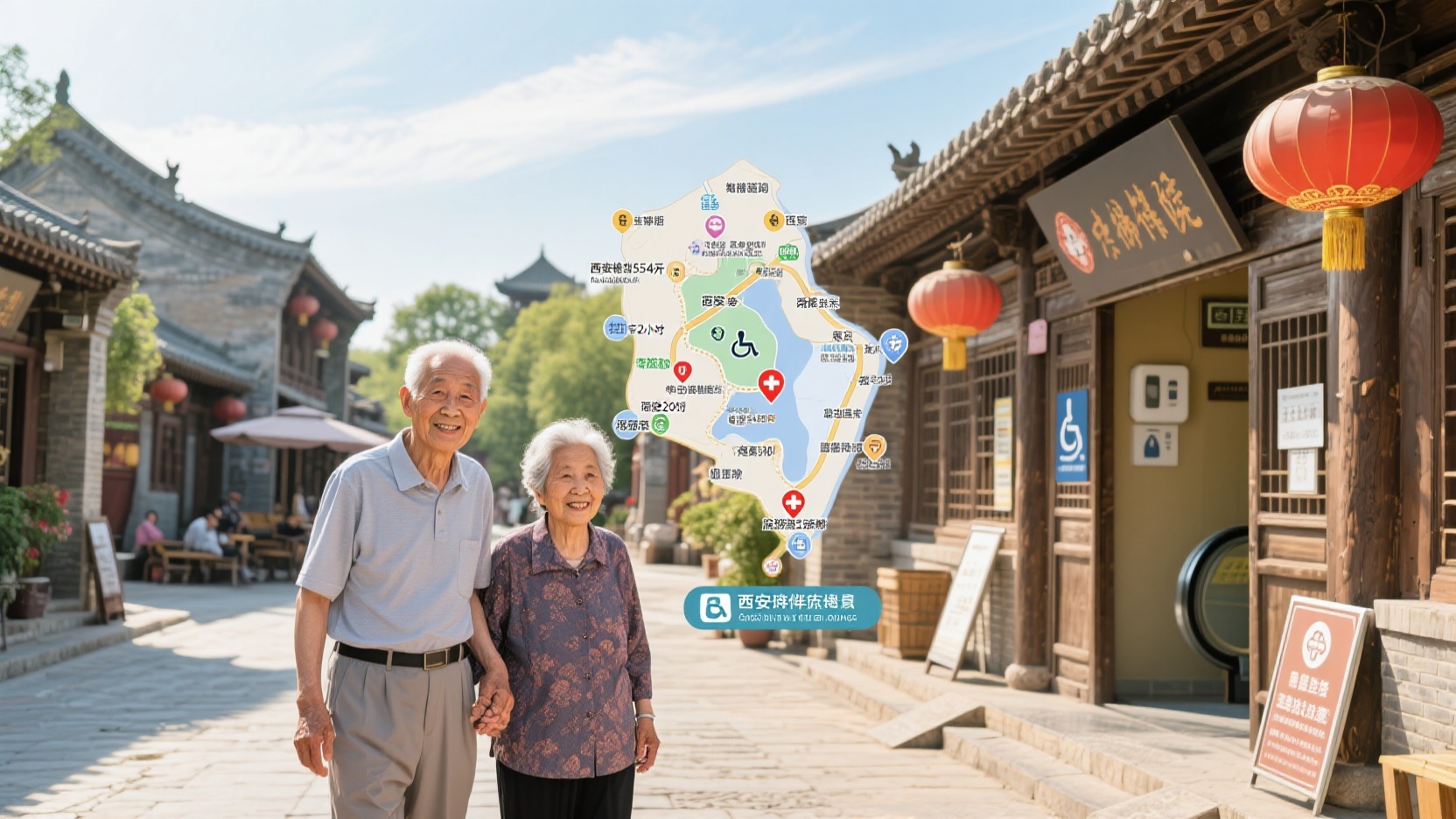
Having spent four nights in Xi'an with my parents, my biggest takeaway isn't which restaurant serves the best paomo (pita bread soaked in mutton soup), but rather, "Don't design your elders' itinerary with the limitations of a young person's." This time, I chose a hotel within a five-minute walk of the Bell Tower subway station, with a branch of a secondary hospital downstairs. I forced them to return to the hotel for a two-hour nap each day, and after five days, my parents never complained of leg pain. Below is a personally tested itinerary based on my experience, suitable for seniors with average legs who need to sit frequently.
Accommodation location: The "three proximities principle" is more important than attractions.
When traveling with elderly people to Xi'an, the primary criteria aren't proximity to tourist attractions, but rather "closeness to elevators, hospitals, and paved roads." This time, I chose a mid-range chain hotel near the Bell Tower. The lobby had a public restroom, and the room was marked as being closest to the elevator, saving me from waiting in line. Many guesthouses in the old alleys inside the city walls don't have elevators, and dragging suitcases along the cobblestone streets is extremely tiring, so I avoided those areas.
The hotel is within a 15-minute taxi ride to the nearest level-two or higher hospital; it's also about a 5-minute walk to the subway station, which has elevators and restrooms. This location allows my parents to quickly return home or seek medical attention if they feel unwell. When booking, be sure to confirm whether the elevator stops on every floor, whether there's a ramp in the lobby, and how many steps it is from the room to the elevator.
Day 1-2: Walk around the south gate of the city wall for only half an hour + leisurely stroll around the Big Wild Goose Pagoda Square
On the first morning, we only visited the South Gate (Yongning Gate) of the Ming City Wall. There are accessible ramps and elevators leading up the wall, but the toilets on the wall are spaced quite far apart, so we let the elderly use the toilets before going up. We only walked for half an hour, found a bench to sit on and look at South Street, and didn't rent bicycles or go around the city. After lunch, we returned to the hotel for a two-hour nap. After waking up in the afternoon, we walked 300 meters along the street from Shuyuanmen. The ground was flat, and there were stone benches on both sides where we could sit down at any time.
The next morning, we went to the South Square of the Big Wild Goose Pagoda. There were many restrooms, the ground was open, and there was plenty of shade; the entire path was flat. The Great Ci'en Temple has many steps leading up to the pagoda and no elevator, so it's not recommended for seniors to go inside; viewing the pagoda from outside the square is sufficient. After lunch, we returned to the hotel for a two-hour rest. After 4:30 PM, we went to the Tang Paradise, only exploring the first part, and left before 7 PM while it was still light and less crowded.
Day 3: Choose between the ancient town and the hot springs; don't try to do both.
The third day is for your legs to rest, so make only one choice. Option A: Yuanjia Village. Wheelchairs can be rented at the visitor center. The main street is smooth, and there are many toilets in the food street, but it gets very crowded on weekends, so it's recommended to go on a weekday morning. Option B: Lintong Hot Spring Area. Don't let the water get too hot, soak for 20 minutes and then rest. The changing area and rest hall have toilets and handrails, suitable for elderly people who don't want to walk.
Both options share the principle that "lunch break cannot be cancelled." If you choose Yuanjia Village, you'll have brunch before setting off and return to the hotel for a nap before 3 PM; if you choose the hot springs, you'll soak in the hot springs and then take a nap in the lounge, with an evening walk of no more than twenty minutes. Definitely don't add Huaqing Pool or Lishan Mountain to your itinerary, otherwise the third day will turn into a military-style march.
Days 4-5: Visit the Terracotta Warriors in the afternoon to avoid peak hours + only explore the outer areas of the Muslim Quarter.
On the fourth day, we slept in until we naturally woke up, had brunch at 11:00 AM, returned to the hotel for a nap at noon, and then set off for the Terracotta Warriors at 2:00 PM, thus avoiding the morning rush hour. There are electric shuttle buses within the scenic area to the pit entrance. Although Pit 1 was crowded, there was an accessible ramp. Elderly people walked along the left-hand handrails to avoid crowding the center. Some areas inside the pit have steps, and the ground is occasionally slippery; holding onto something is the safest option.
On the morning of the fifth day, we visited the Xi'an Museum and the Small Wild Goose Pagoda. These were less crowded than the Shaanxi History Museum, with more shade and gentler paths, making them a good place to wrap things up. The main street of the Muslim Quarter is not friendly to the elderly; the cobblestone streets are narrow and crowded, so we only walked along the flat outer perimeter of the Muslim Quarter and avoided all the alleys. In the afternoon, we returned to the hotel early to rest, allowing an hour to unpack and use the restroom.
Personal experience to avoid pitfalls: Four bottom lines for elevators, toilets, hospitals, and lunch breaks
The biggest takeaway from this trip: the fame of a tourist attraction isn't important; what matters is whether you can sit down whenever you want. The elevator at the south gate of the city wall, the Big Wild Goose Pagoda Square, the Xi'an Museum, and Yuanjia Village are passable; the Terracotta Warriors require electric carts, and some routes are quite demanding on your legs. Regarding toilet density, Yongxingfang, the Big Wild Goose Pagoda, and Yuanjia Village are acceptable; there are few toilets on the city wall, and the underground passage of the Bell Tower is not very friendly to the elderly.
Regarding walking distance, I strictly limit each segment to no more than 500 meters; if I exceed that, I find a chair or return to the hotel. As for nearby hospitals, there's a secondary hospital near the Bell Tower, a top-tier hospital in the Big Wild Goose Pagoda area about a 20-minute drive away, and a community health center in the Lintong Hot Spring area. Taking a two-hour lunch break every day isn't laziness; it's a necessary condition for stable blood pressure. If any of these four bottom lines are not met, I switch to another attraction.
Blogger's Summary + 20 Items for Seniors' Package and 5 Categories of Commonly Used Medications
The key to this slow-paced trip to Xi'an is "one close, two less, three more": stay close to the hospital, visit fewer attractions each day, and have plenty of toilets and chairs. Slowing down isn't wasteful; it's the safety baseline for senior travelers. Check off the following two lists before you go.
"20 Items to Pack for Seniors Traveling": 1. Lightweight wheelchair or walking aid; 2. Two pairs of non-slip soft-soled shoes; 3. Portable folding stool; 4. Large-capacity thermos; 5. Commonly used medication containers; 6. Blood pressure monitor and blood glucose meter; 7. Disposable toilet seat covers; 8. Alcohol wipes and small packs of tissues; 9. Sun hat and sunglasses; 10. Light jacket (it gets quite cool inside); 11. Raincoat or folding umbrella; 12. Photocopies of identification documents and emergency contact card; 13. Mobile phone lanyard and power bank; 14. Change and transportation card; 15. Spare batteries for reading glasses and hearing aids; 16. Knee pads and back support; 17. Individually packaged snacks; 18. Hotel business card or address card; 19. Portable urine bag (for emergencies on highways); 20. Lightweight slippers.
"Five Categories of Commonly Used Medications Reminder": Category 1: Antihypertensive drugs; Category 2: Hypoglycemic drugs; Category 3: Cardiovascular emergency medications such as nitroglycerin; Category 4: Gastrointestinal and antidiarrheal medications; Category 5: Cold and cough medicines. Pack all of these in your carry-on bag, do not check them in, and include a small card with a summary of your medical records and your emergency contact person. This way, even if you need to see a doctor urgently, they can quickly understand your situation.