
Artistic Codes Along the Canal | Wuxi's Niche Culture Map: 8 Old Factories, Bookstores, and Cafes
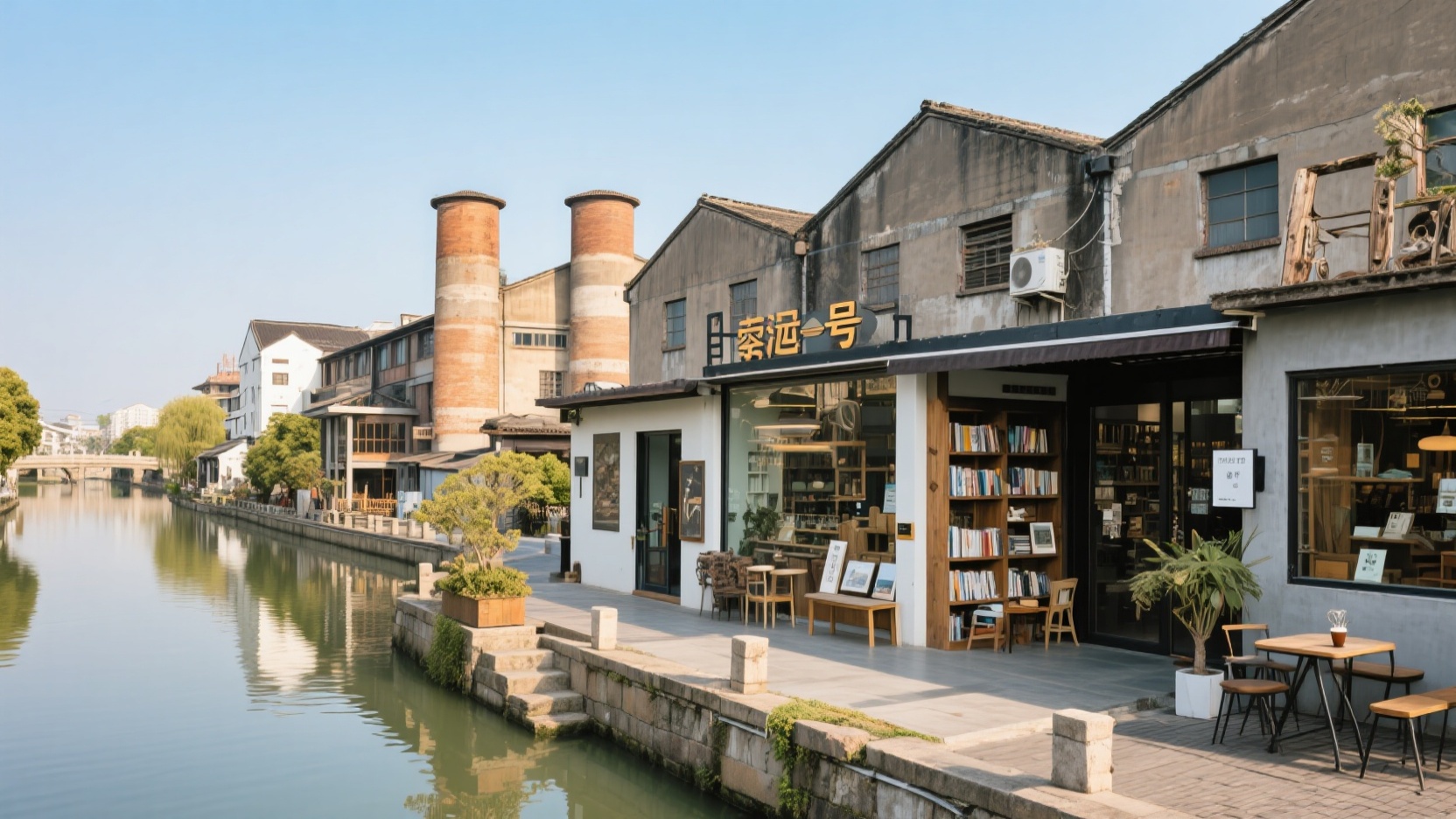
In Wuxi, shifting your focus away from Taihu Lake and gardens reveals a city cultural map comprised of old warehouses, independent bookstores, and community cafes. The following eight locations can be connected on foot or by bicycle, perfect for a leisurely day of exploration—quieter than tourist attractions and closer to the daily lives of local youth.
Beicangmen Living Art Center: Red Brick Exhibition Area in a Silk Warehouse
This building was converted from an old silk warehouse along the canal, preserving its original industrial architectural features with exposed red bricks, wooden beams, and cargo ramps. Currently, the interior mainly houses small contemporary art exhibitions, craft studios, and a tea space. It's not crowded, and the exhibits change frequently. The highlight is the building's details, especially the arched windows and the texture of the old walls. For photography, it's recommended to do so around 4 PM, standing on the opposite bank of the canal to capture the reflection of the red bricks in the water; inside, use the side lighting from the arched windows to photograph the stairs and wooden beams, which will darken the background and emphasize the outlines.
Rongyun No.1 Cultural and Creative Park: Graffiti and Studios in an Old Factory Area
The park was formerly an old factory area, with low-rise buildings and wide roads, making it more scattered than centralized commercial areas. Graffiti walls, design studios, photography studios, and small cafes often appear around corners, making it a gathering place for local freelancers. The highlights are the occasional craft markets and studio open days, where you can directly see the production process of leather goods, pottery, and other crafts. For photography, it's recommended to wear solid-colored clothing and use a wide-angle lens to take full-body shots in front of the graffiti walls; the area near the old workshop's iron gate is suitable for shooting with depth of field, but avoid shooting directly at white walls during midday overhead lighting to prevent overexposure.
The Canal Bund: A Waterfront Regeneration of a Machine Tool Factory
The canal waterfront area was transformed from an old machine tool factory site, juxtaposing industrial trusses, red brick walls, and gray building boxes, with a waterfront promenade running alongside the canal. Old machine components have been preserved as public installations, forming an open-air industrial exhibition space. The highlights are the contrast of building materials from different eras and the changing light on the river surface at dusk. For photography, it's recommended to use the old steel frames as a foreground for portraits in the distance from the riverside promenade; during blue hour, the contrast between the glass curtain walls and the warm and cool tones of the red bricks is stronger, making it suitable for environmental portraits.
Old Goods Warehouse Wuxi Warehouse: A retro lifestyle store featuring old objects
This place is like an accessible museum of vintage items, with old furniture, patterned tiles, wooden crates, and old appliances displayed chronologically in high density. Rather than a nostalgic setting, it's more like a display of everyday life, perfect for slowly appreciating the details of the objects. Highlights include enamelware, old-fashioned radios, and a large collection of old wooden furniture, the materials and wear patterns of which are very photogenic. For photography, it's recommended to use warm indoor lighting to take photos of your profile, avoiding direct flash from the front; the old sofa and old TV wall are classic scenes, where you can sit down and take half-body photos, with hand gestures appearing more natural than looking at the camera.
Baicaoyuan Bookstore: Local Humanities Book List and Handwritten Recommendations
Baicaoyuan is a long-established local humanities bookstore in Wuxi, focusing on literature, history, art, and Jiangnan local culture, with few bestseller displays. Its distinctive features include handwritten recommendation cards and a dedicated section for local culture, and it often hosts small book clubs. The appeal isn't the spatial design, but rather the book selection and reading atmosphere. For photos, it's recommended to take silhouettes or back views in front of the bookshelves to avoid disturbing readers; the handwritten recommendation card area is best photographed from above, capturing the book titles and handwriting clearly – these are more visually appealing than typical check-in photos.
Huishan Bookstore: A Reading Area Inside an Ancestral Hall and Old House
Avoiding the crowds on the main street of Huishan Ancient Town, turning into Huishan Bookstore offers a much quieter experience. The bookstore is converted from an old ancestral hall courtyard, preserving its courtyard, wooden doors, gable walls, and old wooden frame. The reading area connects to the courtyard. The selection leans towards humanities and social sciences, but also includes a local culture corner. The highlight is the interplay between the old building's layout and the books' arrangement. For photography, it's recommended to shoot upwards from the courtyard, looking up at the gable walls and the natural light. Around 3 or 4 pm, the sunlight streaming through the wooden windows is ideal for photographing the reading areas by the window. The interior lighting is dimmer, so use a wide aperture to increase the shutter speed.
Sanli Art Museum: A Small Experimental Exhibition Space by the Canal
The Sanli Art Museum, though small in size, is located next to the canal and benefits from natural light streaming in through high windows in the old factory building. Its exhibitions primarily feature contemporary ink painting, printmaking, and solo exhibitions by young artists, with frequent updates. The highlight is the close-up viewing experience offered by its small size; the interplay of artworks, walls, and light is easier to observe than in larger galleries. For photography, it's recommended to capture the silhouettes of visitors from behind at the entrance under the high windows, ideal for black and white processing. During setup, there are often geometrically designed wall structures; use doorways as foreground elements to capture spatial depth.
Camellia Coffee: A Japanese-style window under a residential building
This neighborhood café is located on the ground floor of a residential building. A wooden bar, pour-over equipment, and old magazines form the main elements of the small space. Outside the window, you see the daily life of the old neighborhood – quiet, with few crowds, it's perfect as the last stop on a cultural journey. The highlights are the constantly changing pour-over coffee menu and the owner's selection of equipment. For photography, I recommend sitting on a high stool by the window and shooting with backlighting. Placing newly purchased books or old items in a corner of the bar creates a more narrative feel than simply photographing coffee cups.
From old warehouses to community cafes, from printed materials to vintage items, these locations represent another, unassuming side of Wuxi. Explore the city's spiritual corners on foot.